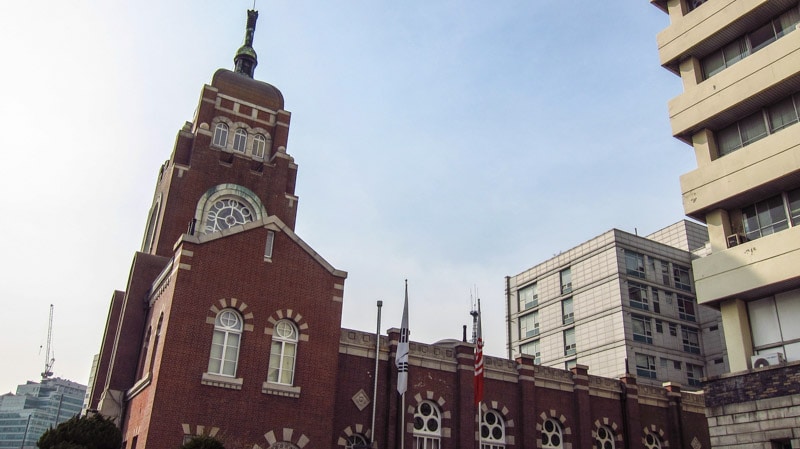
When Cheondogyo Central Temple was built between 1918 and 1921 it was used as a temple of Cheondoism, a 20th century Korean religious movement. Cheondogyo literally means “religion of the Heavenly Way.”
The roots of Cheondoism are based on the Confucian movement with an emphasis on Taoism, Buddhism, Korean nationalism, and ideas of peace, personal virtues, and morals while on earth. The religion rejects the idea of an afterlife but focuses on paradise on earth.
Cheondogyo Central Temple is the headquarters of the homegrown Korean religion of Cheondogyo. The religion became popular in the 1860s by combining elements of Buddhists, Confucians, and Christians.
The church was originally part of the Donghak, or Eastern Learning, reform that focused on the idea that all human beings were equal. This idea was a new concept at the time.
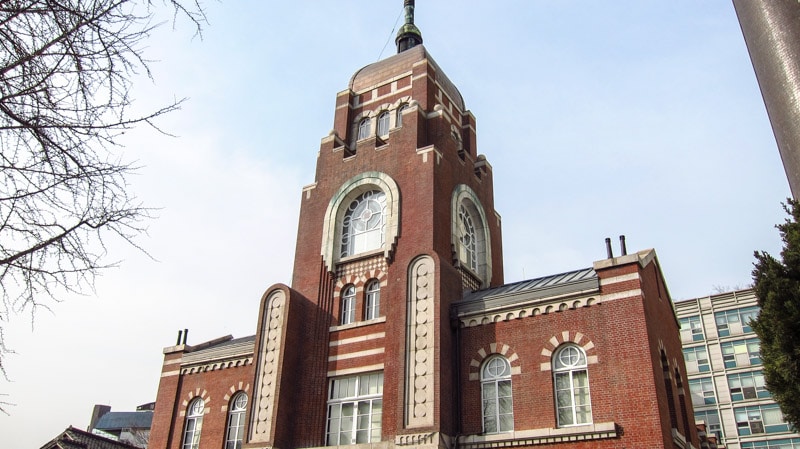
Construction on the Cheondogyo Central Temple was started in 1918 by mainly Chinese laborers. The construction of the building coincided with the March 1st Independence Movement. Construction was delayed for a year as building costs were instead spent for the movement.
At completion in 1921, the temple was considered one of the most magnificent and tallest buildings in Seoul along with Myeongdong Cathedral and Japanese General Government Building, once located near Gwanghwamun Gate.
The temple also stood as a symbol for the building up of the nation and for the people against the Japanese invasion and occupation of Korea.
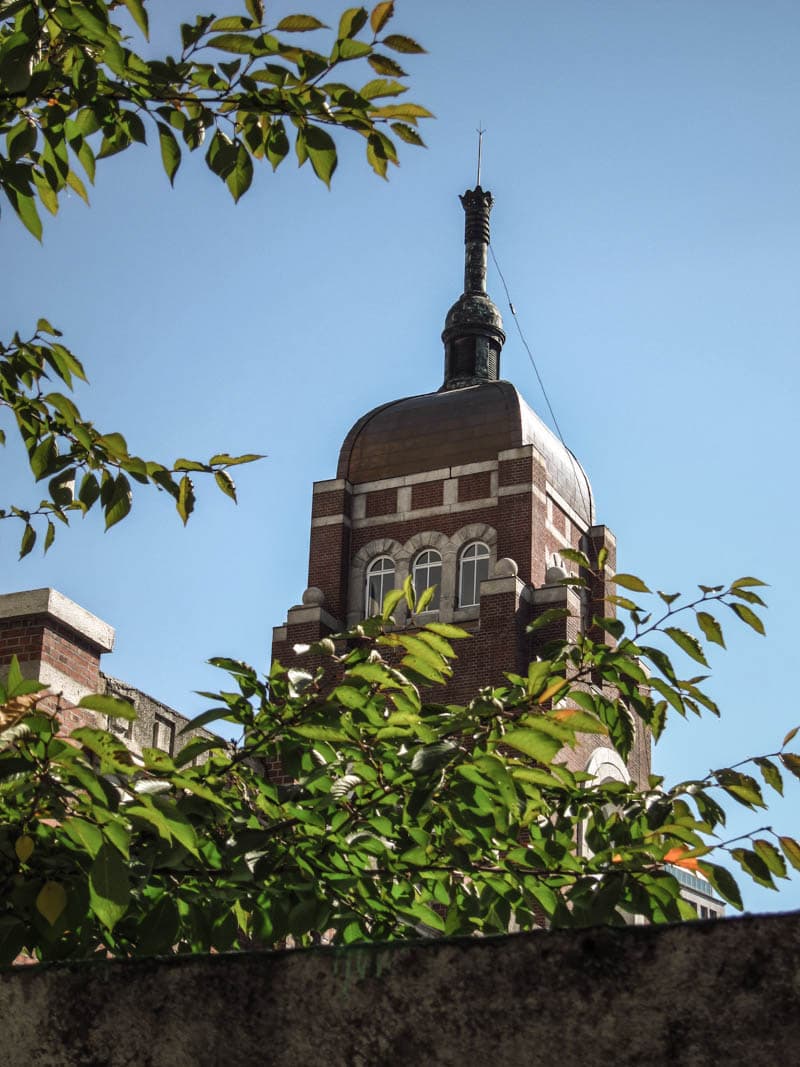
The structure was built in Vienna Secession style architecture by Japanese colonial era architect Nakamura Yoshihei. The design also features German influences, thanks to Anton Feller, an assistant of Yoshihei from Germany. The style of the temple was very rare for modern Korean architecture at the time. The material used was mainly red bricks with granitic stones.
If you have time, try to check out the inside of the building. The temple features an ornate art nouveau interior with an impressive meeting hall that is held up without a single pillar. The assembly hall covers a considerable amount of space.
Office rooms can be found on the wings of the 1st and 2nd floors.
Along with Old Seoul Station, Cheondogyo Central Temple is without a doubt one of the most impressive examples of colonial architecture.
The temple is located just east of the popular and traditional neighborhood of Insa-dong.
Cheondogyo Central Temple Information
Hours
Monday: 9:00 AM – 6:00 PM
Tuesday: 9:00 AM – 6:00 PM
Wednesday: 9:00 AM – 6:00 PM
Thursday: 9:00 AM – 6:00 PM
Friday: 9:00 AM – 6:00 PM
Saturday: 9:00 AM – 6:00 PM
Sunday: 9:00 AM – 4:00 AM
Admission
Free
Address
457 Samil-daero, Jongno-gu, Seoul, South Korea
GPS Coordinates: 37.575050, 126.985917
How to Get Here
Take Subway Line 3 to Anguk Station (Exit 5).
Walk straight for 1 minute.
The temple will be on the right.
Cheondogyo Central Temple Video
Map
Additional Resources
Klook
Klook offers discounted tickets and reservations for attractions and services in Seoul, from theme parks and museums to tours and transportation.
Viator by TripAdvisor
Book tours, activities, and unique experiences in Seoul, from sightseeing to cultural events and outdoor adventures, offered by local providers.
Rakuten
Save with cashback on hotels and travel services. Sign up and you could earn $30 cashback on your first purchase over $30.
Book Recommendations
Prefer a physical guide? Fodor’s Seoul offers detailed recommendations, maps, and travel tips for the city.
Nearby Sights
Ssamzigil

Ssamzigil, also known as Ssamziegil, is a colorful shopping and culture complex in Insa-dong that features cafes, galleries, and workshops. The complex's design uniquely blends contemporary elements with traditional Korean charm. The complex opened in 2004 and is now a…
Insa-dong
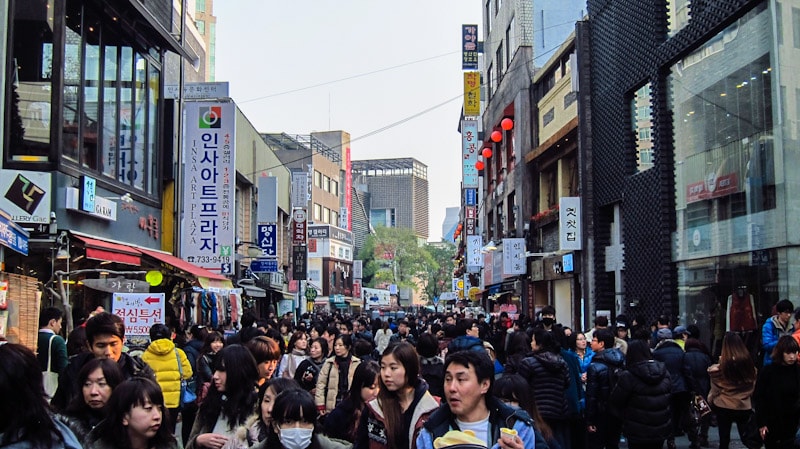
Insa-dong is a popular neighborhood in the heart of Seoul that is often visited by locals and tourists wanting to experience traditional culture of Korea. Streets and narrow back alleys are lined with art galleries, wooden tea houses, restaurants, cafes,…
Unhyeongung Palace
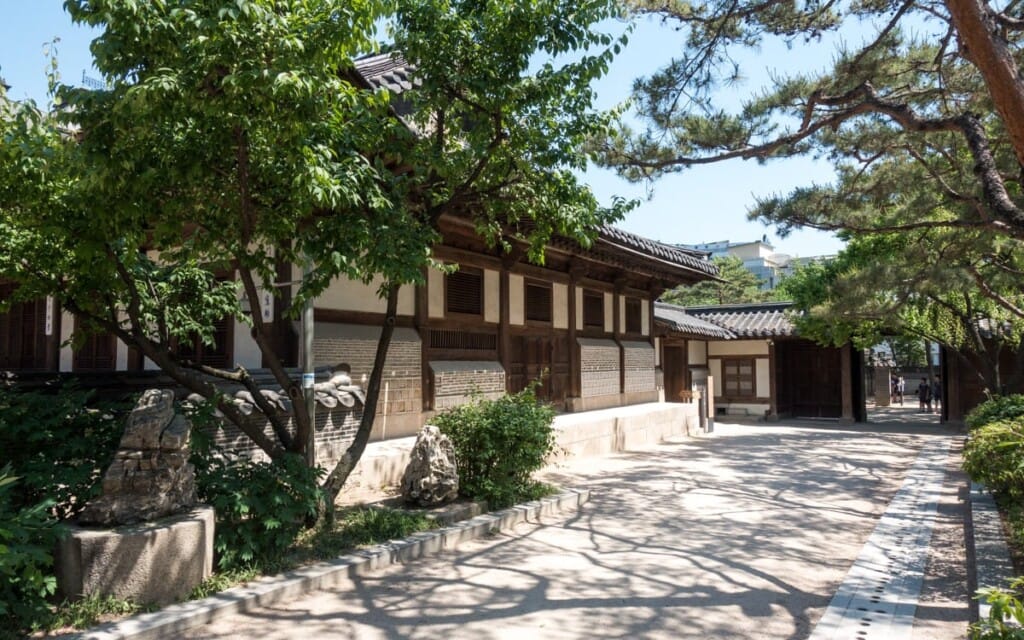
Unhyeongung Palace, also known as Unhyeongung Royal Residence, is a small palace located in the center of Seoul. Gojong, the 26th king and emperor of Korea, was born at Unhyeongung Palace on September 8, 1852. He lived here until age…
Ujeongchongguk (Central Post Office)
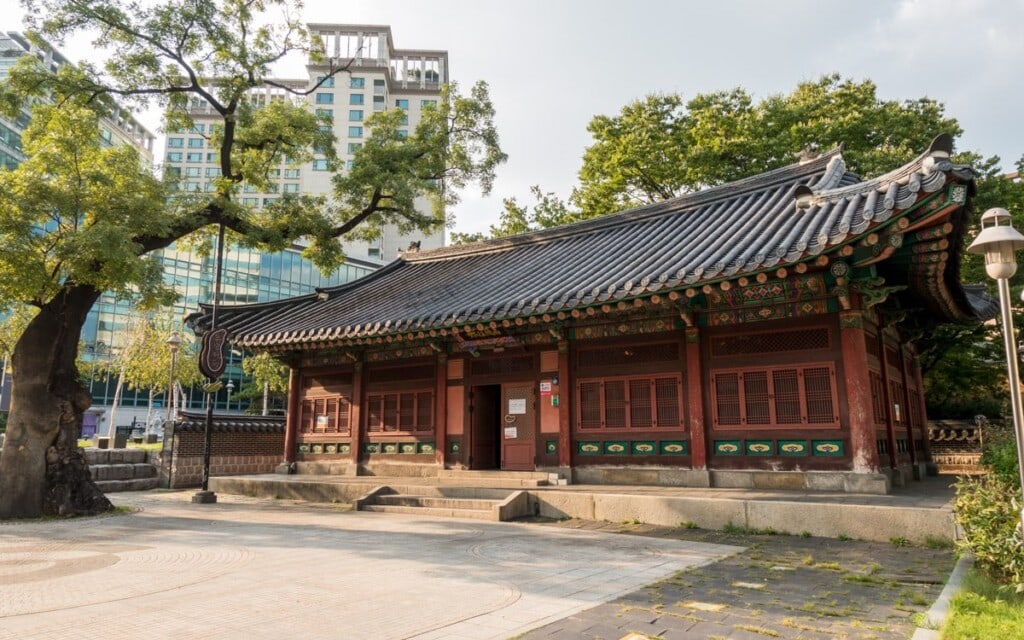
Ujeongchongguk (Central Post Office) was established as the first post office of Korea on April 22, 1884, during the reign of King Gojong. Postal service began on November 18, 1884. It was the first modern postal service. Service was suspended…
Jogyesa Temple
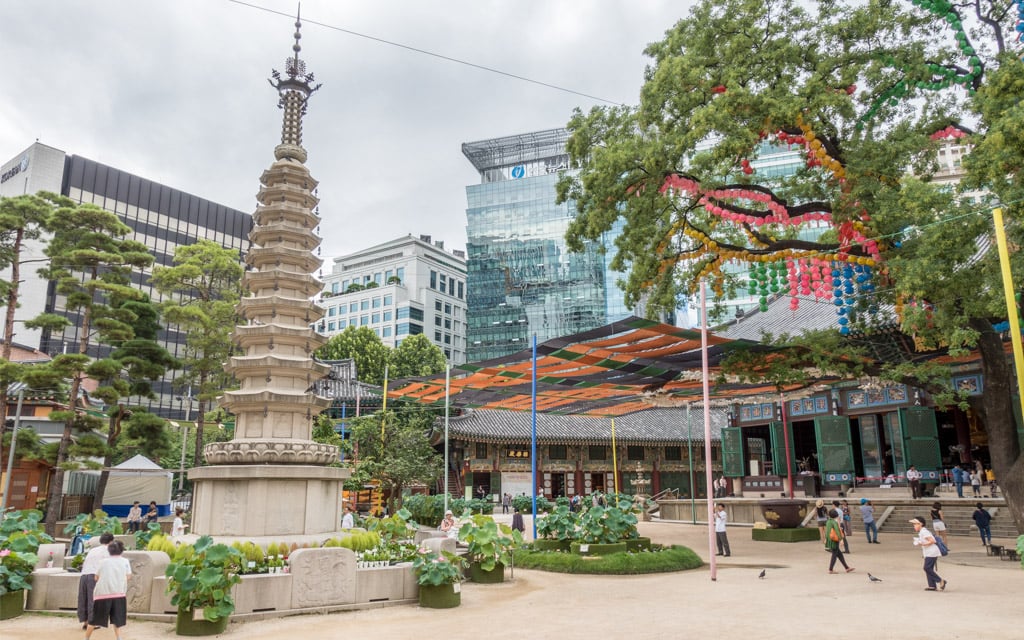
Jogyesa Temple is one of the most important Buddhist temples in Korea and a symbol of Korean Buddhism. It is located in the heart of the city near Insa-dong. Since 1936, it has been the head temple of the first…
Seungdong Presbyterian Church
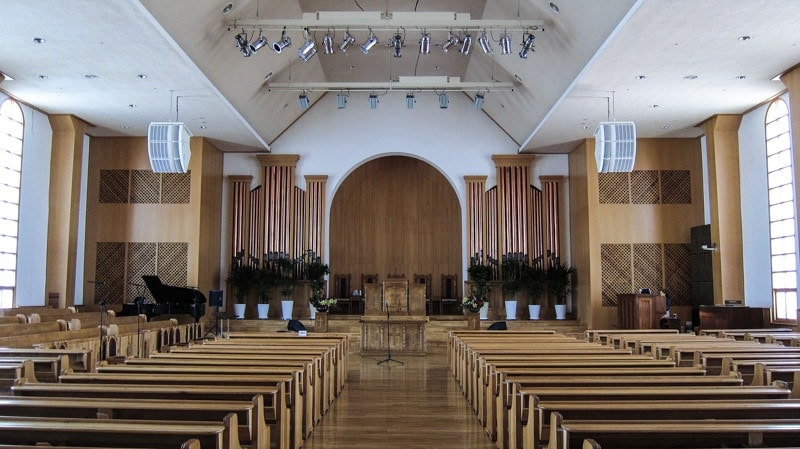
Seungdong Presbyterian Church, located near Insa-dong, was established in 1893 by Samuel Foreman Moore (1860-1906). Over the years, the church has been relocated and renamed many times. Before being renamed Seungdong, it has been known by as Gondanggol, Jungang, and…
Last Updated on Feb 6, 2026