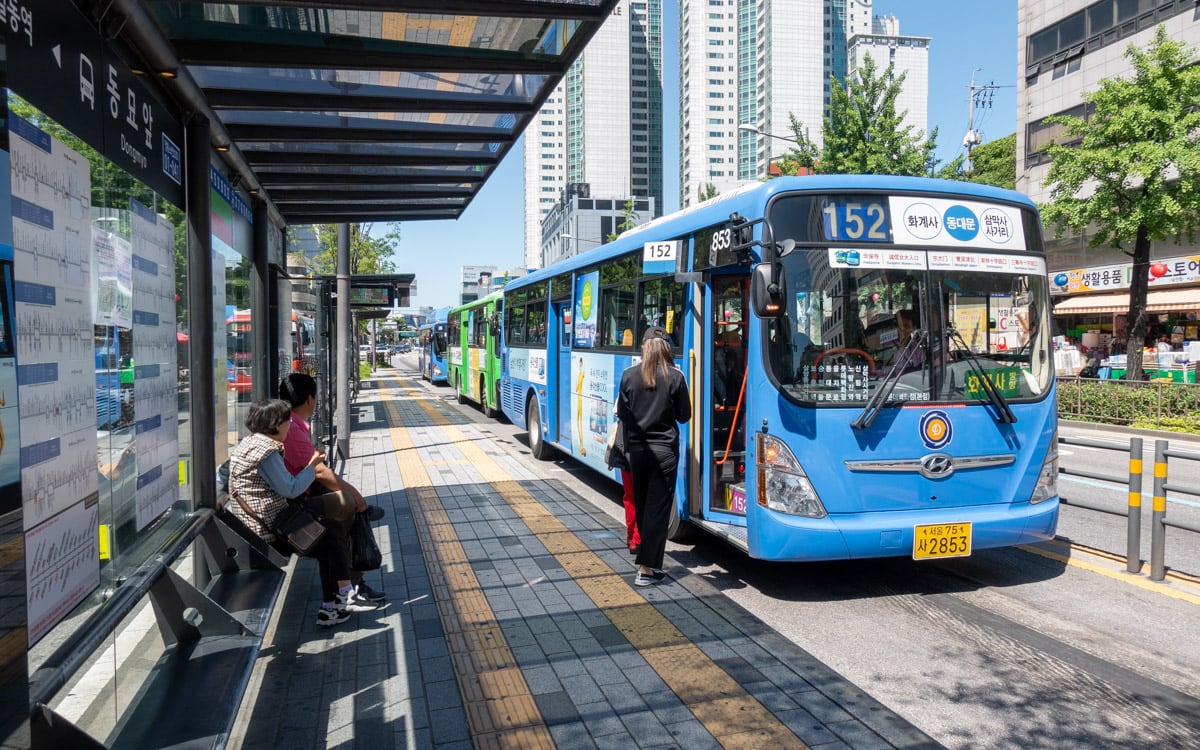
The Seoul bus system offers a convenient, affordable, and extensive way to navigate the city with routes covering every corner of Seoul. Buses also provide a reliable alternative to the subway, especially in areas where the subway does not reach.
As of 2025, Seoul has over 400 bus routes. The buses are divided by color, with each type covering different parts of the city and surrounding areas.
The system might seem confusing for first-time visitors, but it quickly becomes easy once you understand the different bus types, payment methods, and boarding procedures.
With its affordability, frequency, and extensive routes, the bus is an excellent way for visitors to explore the city.
Types of Buses in Seoul
Blue Bus (Trunk Bus)
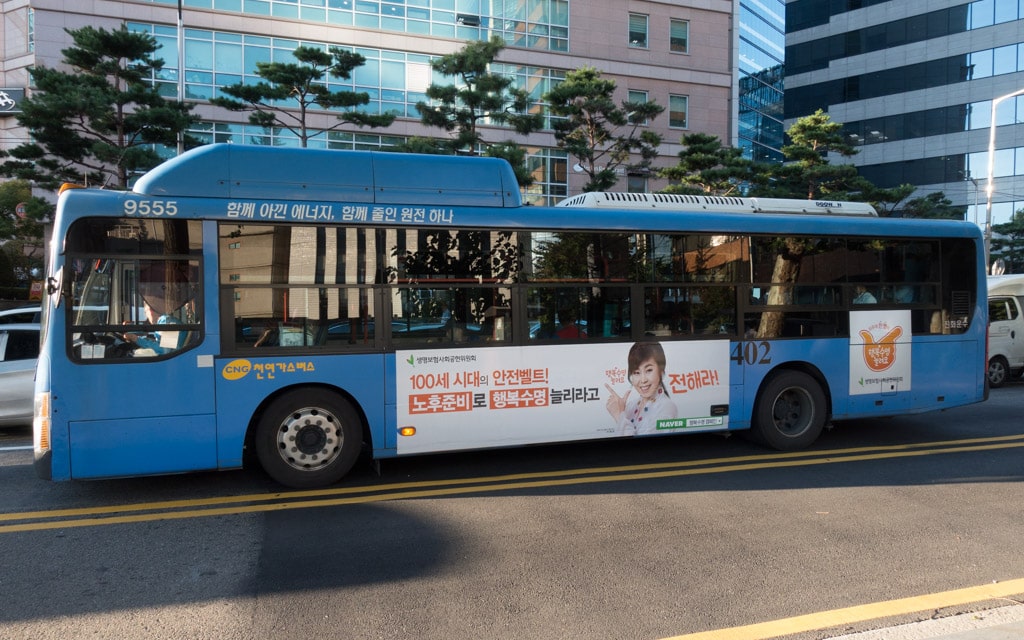
Blue Buses, sometimes called trunk or mainline buses, serve as the primary routes in Seoul’s public transit network. These trunk lines connect the city’s major areas.
These buses cover longer-distance routes through central areas and connect major districts, including Myeong-dong, Gangnam, Hongdae, and Itaewon, with downtown Seoul.
Blue Buses run frequently throughout the day and travel faster than local or neighborhood buses.
Most Blue Buses have three-digit route numbers. The first digit represents the district or region served:
- Central Seoul and nearby areas
- Northeastern Seoul, including Dongdaemun and Seongbuk
- Southeastern Seoul, including Gangnam, Seocho, and Songpa
- Southwestern Seoul, including Yeongdeungpo and Guro
- Northwestern Seoul, including Mapo and Eunpyeong
- Special routes or cross-town services
- Often longer-distance routes passing through multiple major districts
As Blue Buses connect popular tourist areas and run frequently, they are a convenient option for visitors planning to explore different parts of the city.
| Blue Bus Fares | Transportation Card (T‑Money) |
|---|---|
| Adults | 1,500 won |
| Teenagers | 900 won |
| Children | 550 won |
Green Bus (Branch Bus)
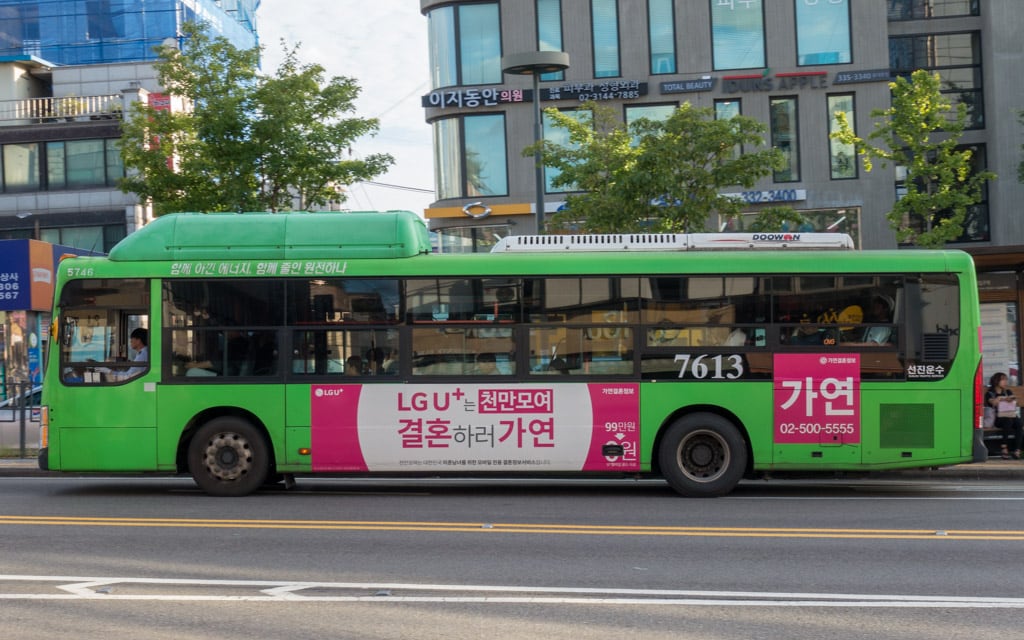
Green Buses, sometimes called branch or feeder buses, operate on short-distance routes.
Most Green Buses have four-digit route numbers. The first two numbers indicate the primary area served, and the last two digits represent specific routes within the area.
These buses link neighborhoods and residential areas to subway stations and major transit hubs.
Green Buses operate at slower speeds and make more stops over shorter distances. Many of these buses stop at major transit hubs, such as subway and bus stations, in downtown Seoul and suburban areas.
These buses are ideal for reaching places the Blue Buses don’t cover, like residential neighborhoods and smaller roads off the main routes.
| Green Bus (Branch Bus) Fares | Transportation Card (T‑Money) |
|---|---|
| Adults | 1,500 won |
| Teenagers | 900 won |
| Children | 550 won |
Red Bus (Express Bus)
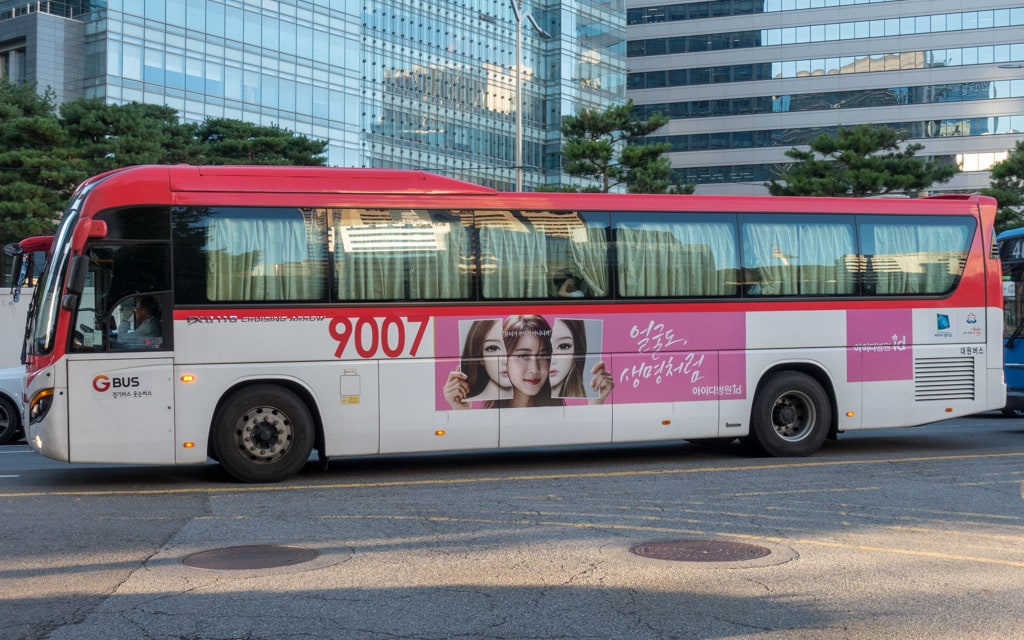
Red Buses, also known as express or intercity buses, run between Seoul and nearby suburbs and surrounding cities. These express buses are designed for longer-distance travel and make minimal stops along the way.
Red Buses are great for commuters who need a fast, direct ride over longer distances. They are especially popular with office workers who live outside Seoul but work in the city since they make fewer stops and save time.
Because of their longer routes and express service, at 3,000 won, Red Buses are more expensive than other city buses.
| Red Bus Fares | Transportation Card (T‑Money) |
|---|---|
| Adults | 3,000 won |
| Teenagers | 1,700 won |
| Children | 1,500 won |
Yellow Bus (Circular Bus)
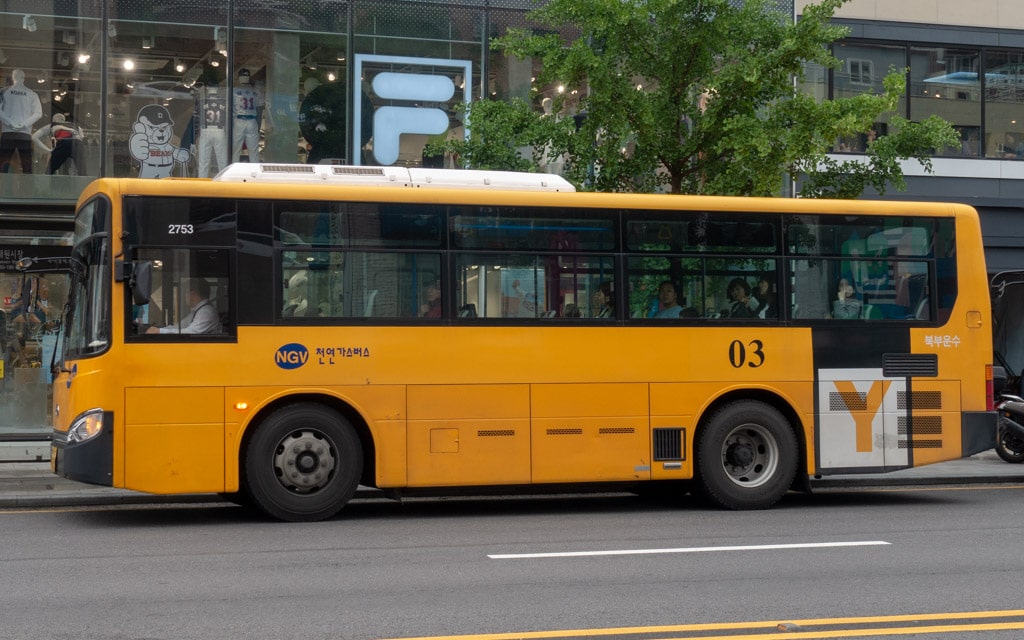
Yellow buses, known as circular or loop buses, operate on routes that circle limited areas within downtown Seoul. Yellow buses, with two-digit route numbers, often loop around tourist areas, local neighborhoods, and central business areas.
As Yellow buses run on circular routes, they are ideal for short trips within specific neighborhoods or districts without taking long-distance routes. These buses are also great for areas where subway coverage is limited.
These buses also stop at Blue Bus stops, allowing commuters to connect to areas in central Seoul and the suburbs easily.
| Yellow Bus Fares | Transportation Card (T‑Money) |
|---|---|
| Adults | 1,400 won |
| Teenagers | 800 won |
| Children | 500 won |
Maeul Bus (Village Bus)
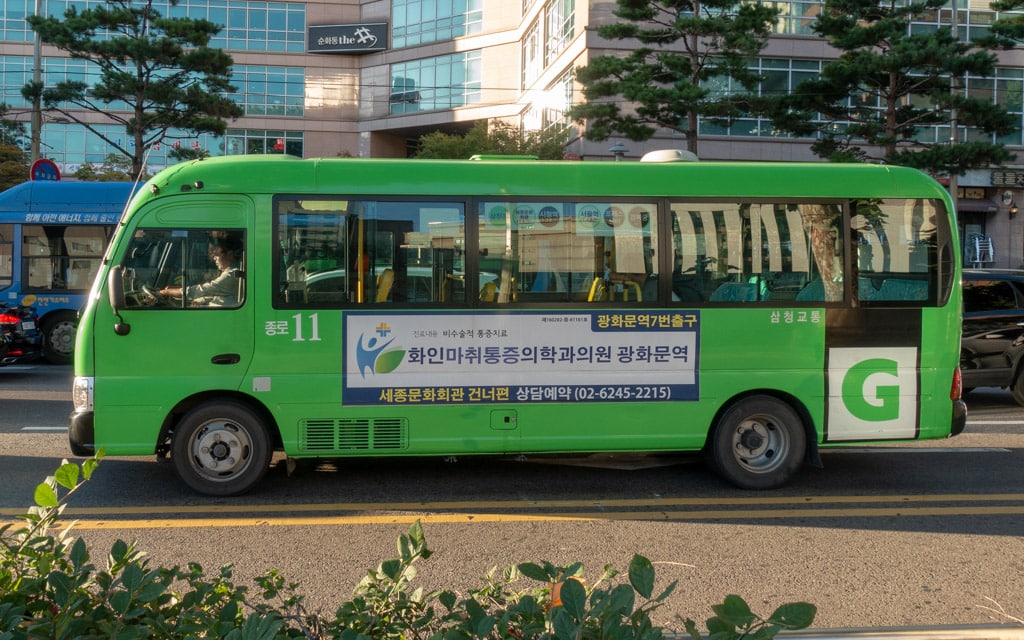
Maeul Buses, or Village Buses, are local buses that operate on short routes within smaller neighborhoods not fully served by the main bus network.
They connect local communities to major transit centers such as subway stations and main bus stops, making it easier for residents to access the broader transportation system.
Maeul Buses use smaller vehicles to navigate narrow streets and areas that can’t accommodate larger buses. They also make frequent stops to serve the community better.
At 1,200 won, Maeul Buses are one of Seoul’s most affordable public transportation options. They are especially convenient for locals, senior citizens, and students who need budget-friendly ways to travel from their neighborhoods to other bus stops and subway stations.
| Maeul Bus Fares | Transportation Card (T‑Money) |
|---|---|
| Adults | 1,200 won |
| Teenagers | 600 won |
| Children | 400 won |
Night Bus (Owl Bus)
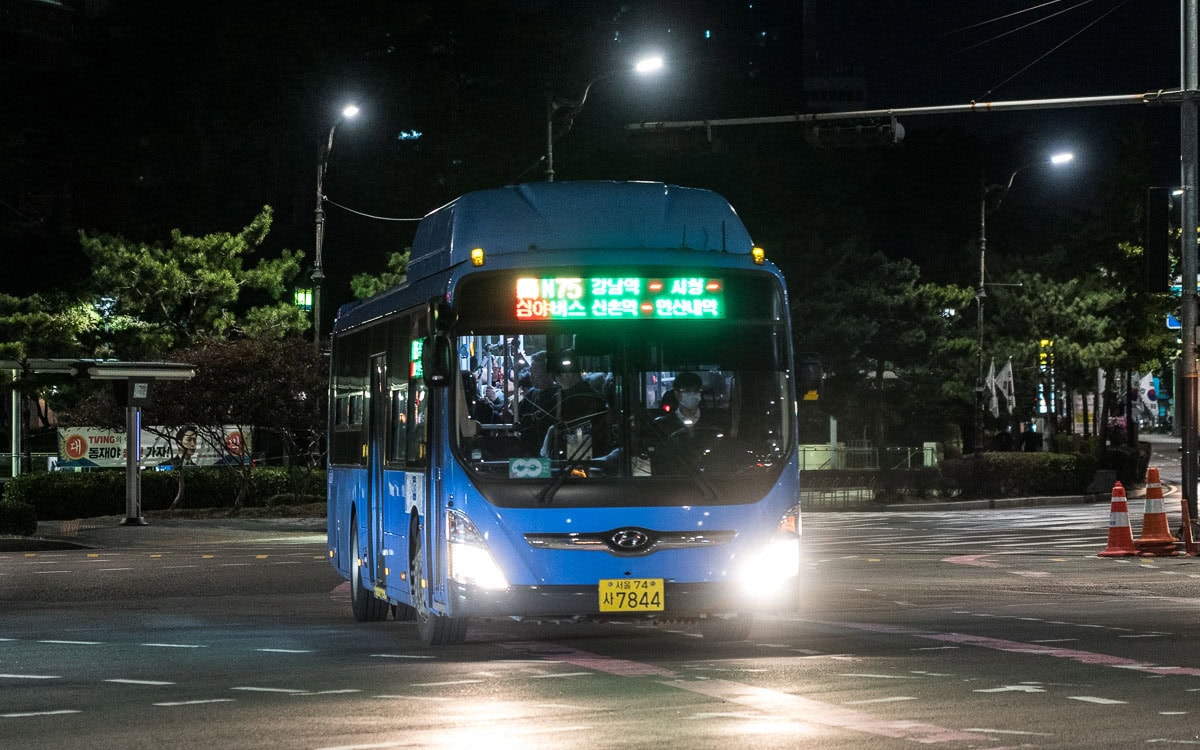
| Night Bus Fares | Transportation Card (T‑Money) |
|---|---|
| Adults | 2,500 won |
| Teenagers | 1,600 won |
| Children | 1,400 won |
Additional Resources
Klook
Klook offers discounted tickets and reservations for attractions and services in Seoul, from theme parks and museums to tours and transportation.
Viator by TripAdvisor
Book tours, activities, and unique experiences in Seoul, from sightseeing to cultural events and outdoor adventures, offered by local providers.
Learn more about Viator by TripAdvisor
Rakuten
Save with cashback on hotels and travel services. Sign up and you could earn $30 cashback on your first purchase over $30.
Book Recommendations
Prefer a physical guide? Fodor’s Seoul offers detailed recommendations, maps, and travel tips for the city.
Last Updated on Feb 12, 2026