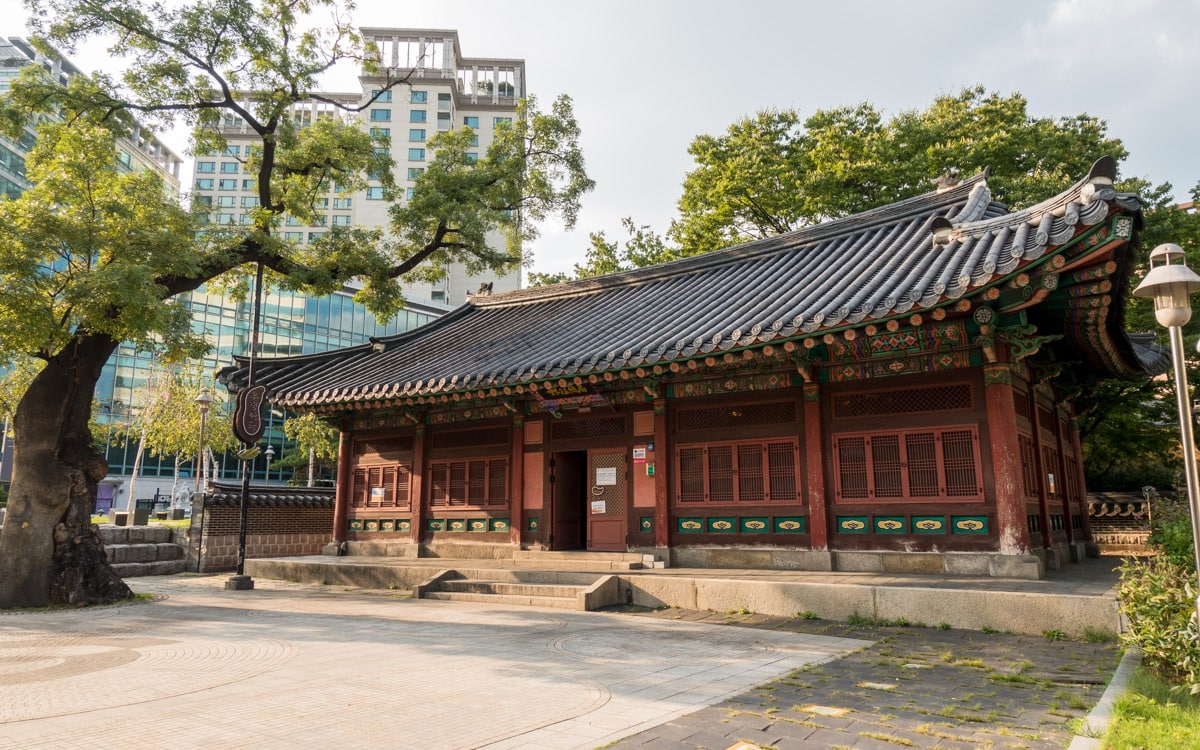
Ujeongchongguk (Central Post Office) was established as the first post office of Korea on April 22, 1884 during the reign of King Gojong. Postal service began on November 18, 1884. It was the first modern postal service. Service was suspended during the Gapsin Coup on December 4, 1884. Service was resumed on July 22, 1895.
In 1904, a patriotic organization known as Boanhoe held a massive anti-Japan rally at this location.
In October 1970, Ujeongchongguk was recognized as Historical Site Number 213. It is one of the oldest non palace buildings in Seoul.
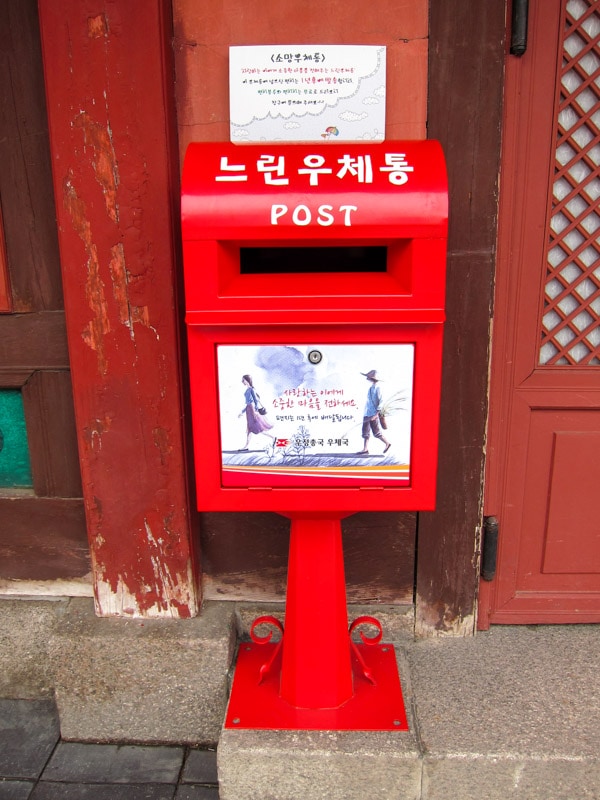
The post office was reopened for service on August 28, 2012. It has since become a symbol of Korean patriotism during the occupation and as a historic piece of Korean postal history.
The building was used as a school during the occupation of Korea. After the occupation, the building was not used as it was considered a former Japanese building. It faced demolition but was saved by the Ministry of Post and Communication. They purchased the building in 1956.
Ujeongchongguk (Central Post Office) Information
Hours
Admission
Free
Address
59 Ujeongguk-ro, Jongno District, Seoul, South Korea
GPS Coordinates: 37.574413, 126.982601
How to Get Here
Take Subway Line 3 to Anguk Station (Exit 6).
Continue for 120 meters.
When you reach Ujeongguk-ro (just past the black sculpture on the corner), cross the street and turn left.
Continue for another 120 meters to reach the destination on the right.
Ujeongchongguk (Central Post Office) Video
Map
Additional Resources
Klook
Klook offers discounted tickets and reservations for attractions and services in Seoul—from theme parks and museums to tours and transportation.
Viator by TripAdvisor
Book tours, activities, and unique experiences in Seoul—from sightseeing to cultural events and outdoor adventures—offered by local providers.
Rakuten
Save with cashback on hotels and travel services. Sign up and you could earn $30 cashback on your first purchase over $30.
Book Recommendations
Prefer a physical guide? Fodor’s Seoul offers detailed recommendations, maps, and travel tips for the city.
Nearby Sights
Jogyesa Temple
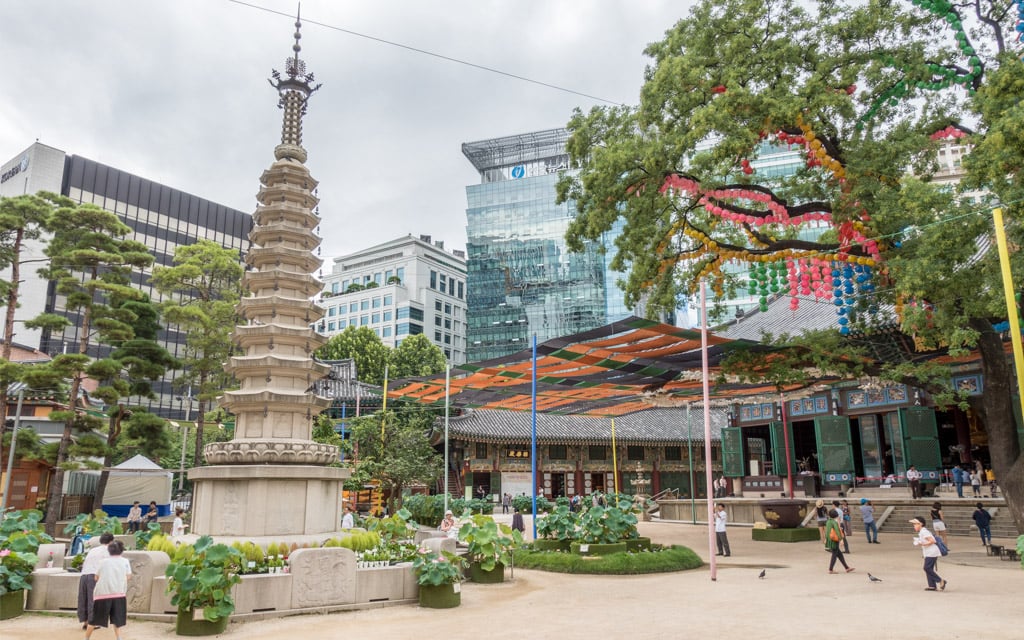
Jogyesa Temple is one of the most important Buddhist temples in Korea and a symbol of Korean Buddhism. It is located in the heart of the city near Insa-dong. Since 1936, it has been the head temple of the first…
Insa-dong
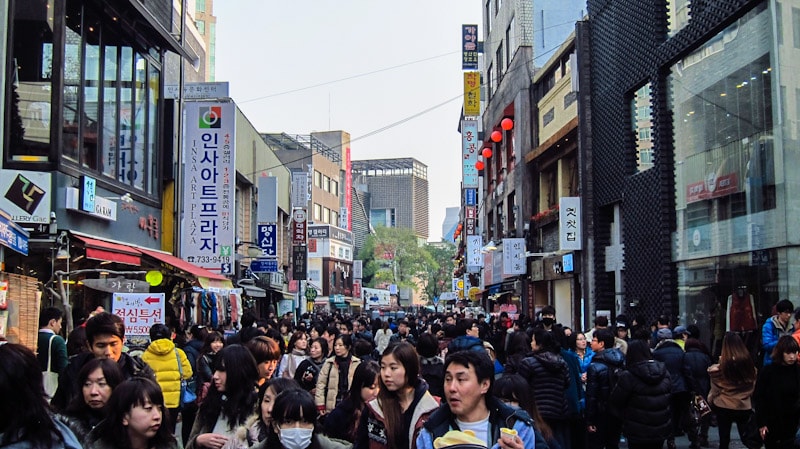
Insa-dong is a popular neighborhood in the heart of Seoul that is often visited by locals and tourists wanting to experience traditional culture of Korea. Streets and narrow back alleys are lined with art galleries, wooden tea houses, restaurants, cafes,…
Ssamzigil
Ssamziegil, also known as Ssamziegil, is a colorful shopping and culture complex in Insa-dong that features cafes, galleries, and workshops. The complex's design uniquely blends contemporary elements with traditional Korean charm. The complex opened in 2004 and is now a…
Cheondogyo Central Temple
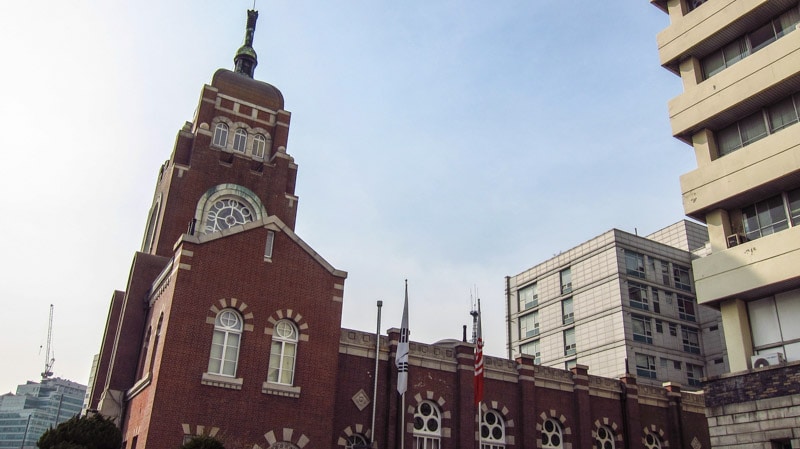
When Cheondogyo Central Temple was built between 1918 and 1921 it was used as a temple of Cheondoism, a 20th century Korean religious movement. Cheondogyo literally means "religion of the Heavenly Way." The roots of Cheondoism are based on the…
Seungdong Presbyterian Church
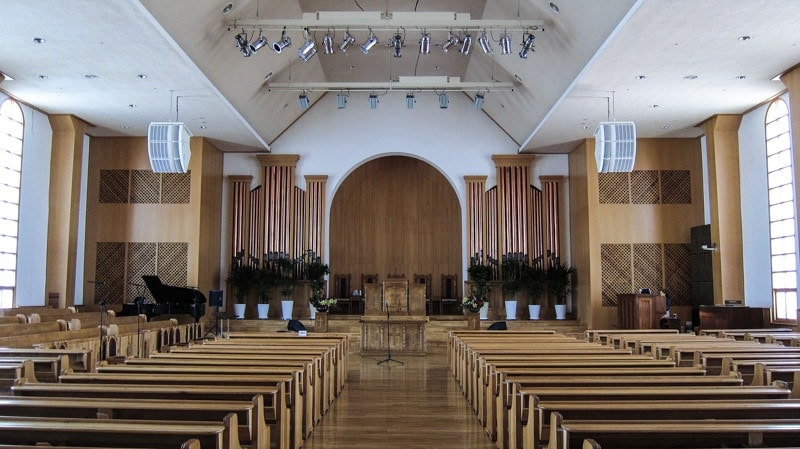
Seungdong Presbyterian Church, located near Insa-dong, was established in 1893 by Samuel Foreman Moore (1860-1906). Over the years, the church has been relocated and renamed many times. Before being renamed Seungdong, it has been known by as Gondanggol, Jungang, and…
Unhyeongung Palace
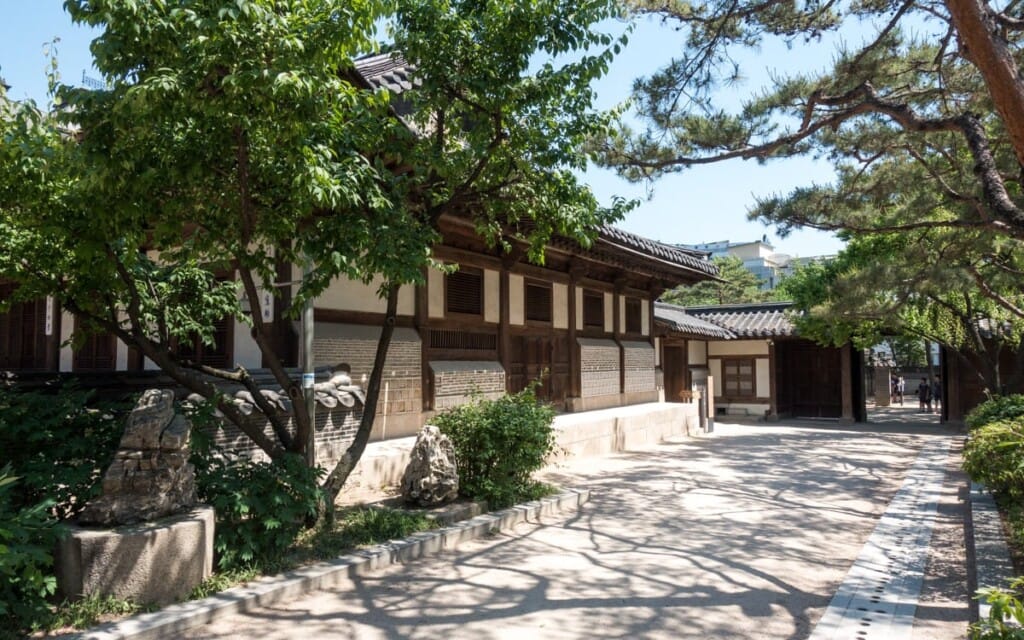
Unhyeongung Palace, also known as Unhyeongung Royal Residence, is a small palace located in the center of Seoul. Gojong, 26th king and emperor of Korea, was born at Unhyeongung Palace on September 8, 1852. He lived here until age 12…
Last Updated on Feb 6, 2026