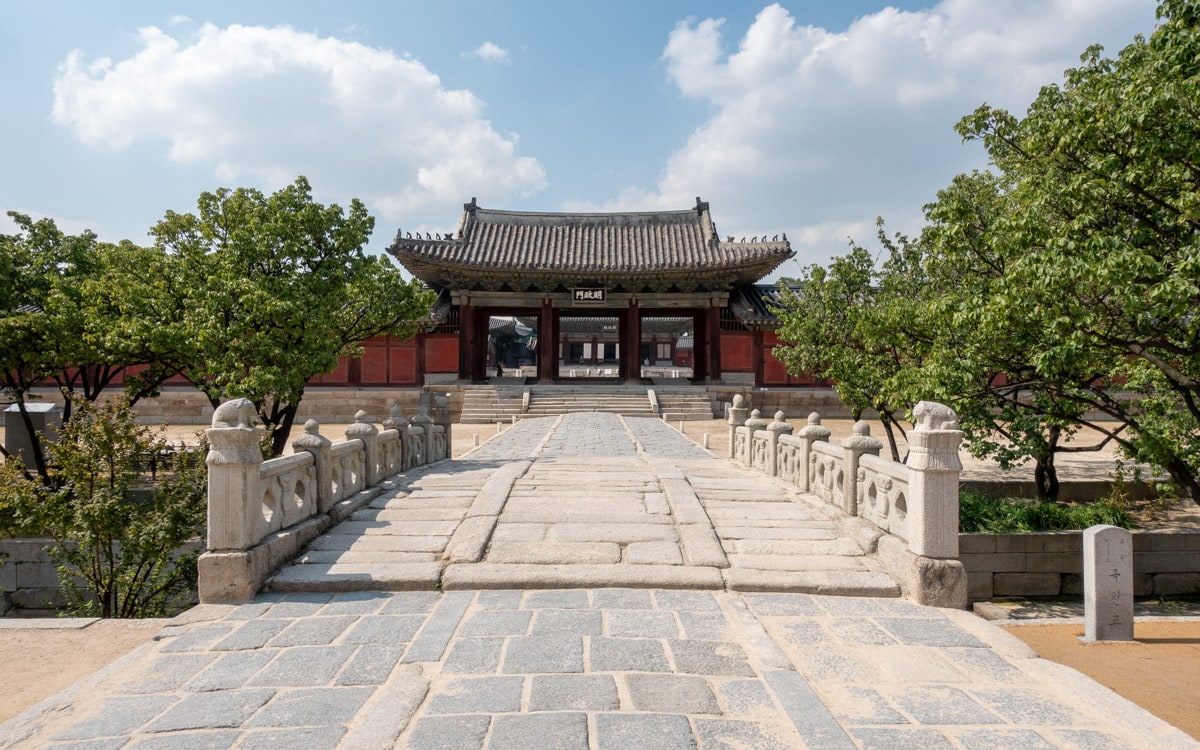
Changgyeonggung Palace, located in the heart of Seoul, has been used as a royal residence and and as a secondary palace for queens and the king’s father.
A summer palace known as Sunganggung was first built at this location in 1104 during the reign of King Sukjong of the Goryeo Dynasty.
In 1392, at the beginning of the Joseon Dynasty, the capital of Korea was moved from Kaesong, in present day North Korea, to Seoul, known then as Hanyang. The first king of the Joseon Dynasty, Taejo, resided here while nearby Gyeongbokgung Palace was being built.
Admission is included with the Integrated Ticket Of Palaces.
Closed on Mondays
In 1418, King Sejong built a new royal residence for his father, King Taejong at this location. In 1483 and 1484, buildings at the palace were expanded by King Seongjong for the widows of King Sejo. At this time, the royal residence was renamed Changgyeonggung Palace.
Changgyeonggung Palace, along with Changdeokgung Palace, were together known as Donggwol, or the East Palace. Both shared the rear garden.
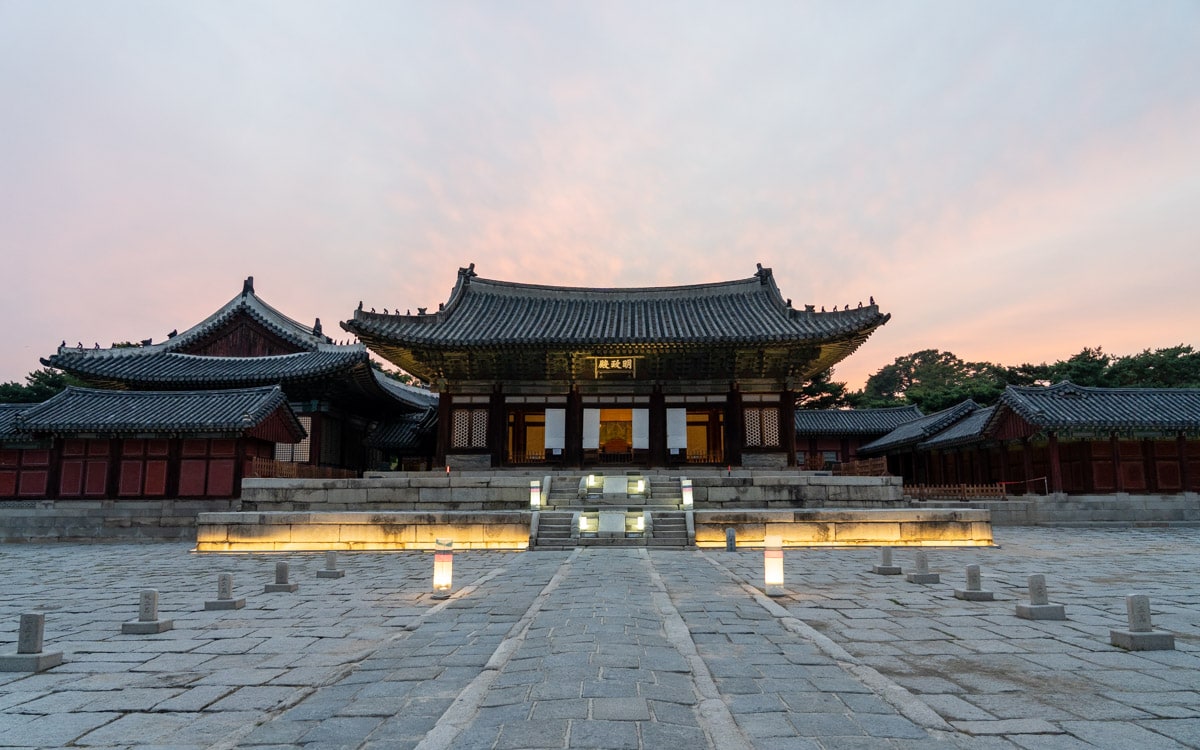
Other Joseon Dynasty palaces in Seoul were built in accordance with strict royal principles regarding design and featured a north-south orientation. Changgyeonggung Palace was built differently. It features a more liberal design in an east-west orientation which was common during the Goryeo Dynasty.
Myeongjeongjeon, the main throne hall, Myeongjeongmun Gate, and Honghwamun Gate each face towards Mount Naksan to the east. Joseon Dynasty structures at this time faced to the south.
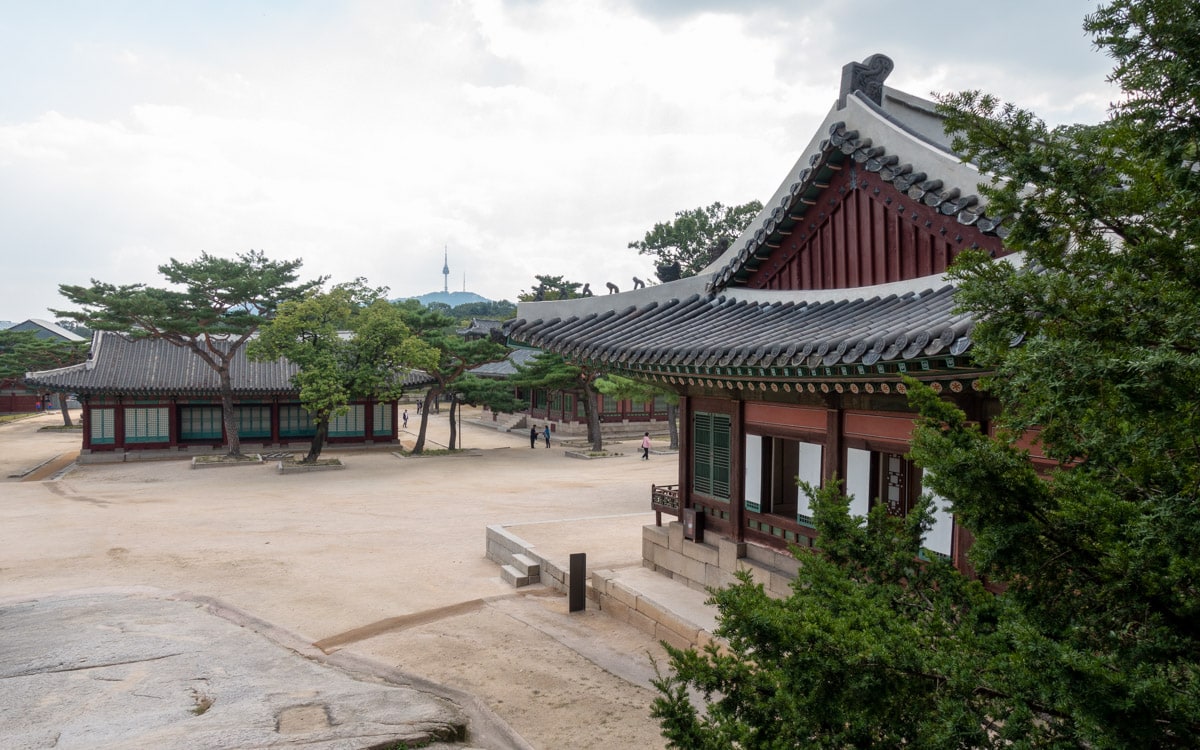
A lack of living space at Changdeokgung forced Changgyeonggung to be used for residential purposes. Many attendants, princesses, and concubines lived on the grounds here.
Changgyeonggung Palace was destroyed by fires during the Japanese invasion from 1592 to 1598.
In 1616, the palace was rebuilt and restored starting with Myeongjeongjeon Hall, Myeongjeongmun Gate, and Honghwamun Gate. These structures are the oldest remaining buildings here.
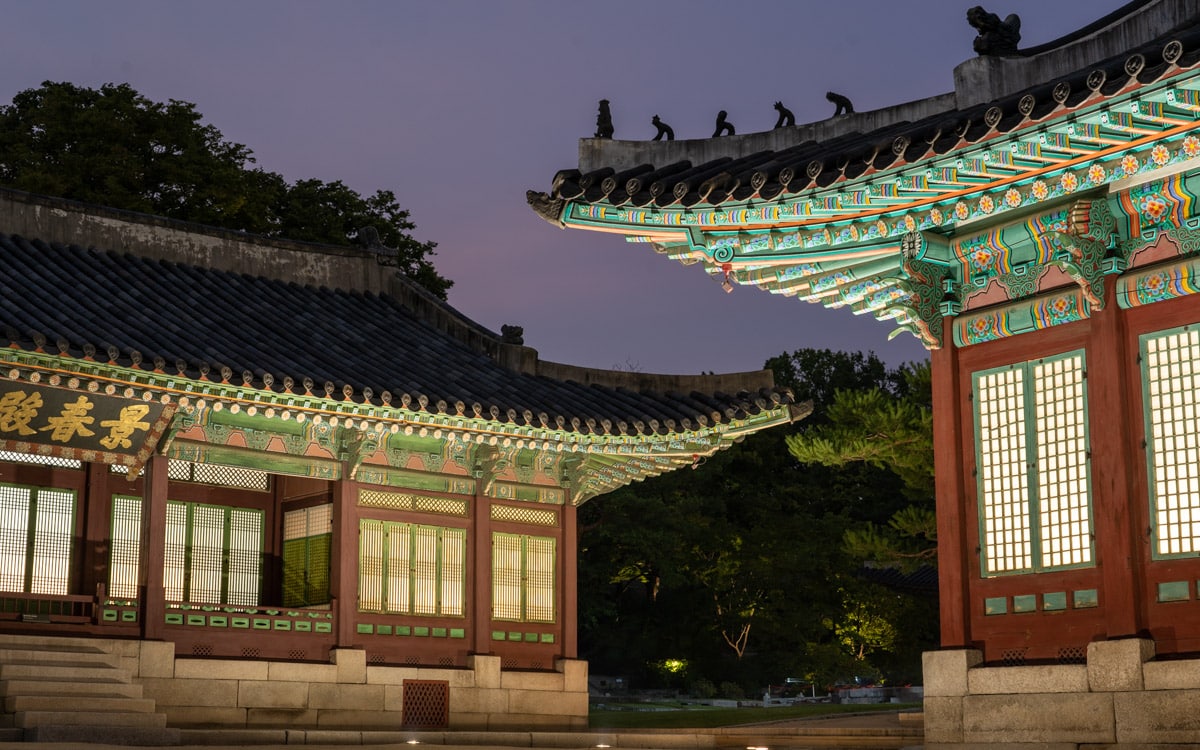
One of the most interesting and famous events to happen on the grounds of Changgyeonggung Palace was the murder of Crown Prince Sado. Sado, who was the son of King Yeongjo, was born mentally ill and often would kill people unnecessarily.
Heir to the throne, the royal family worried about the consequences if Sado were to become king. To prevent this, Yeongjo escorted his son Sado to Seonninmun Gate on the eastern side of the palace. Sado was locked inside of rice casket where he eventually started to death.
The wife of Sado, Hyegyong, kept the murder a secret until the death of Yeongjo in 1776. She revealed the secret in her memoir.
The son of Sado, Jeongjo, became the next king of the Joseon Dynasty after the death of Yeongjo. King Jeongjo, a much respected ruler, eventually built Hwaseong Fortress to house the remains of his murdered son.
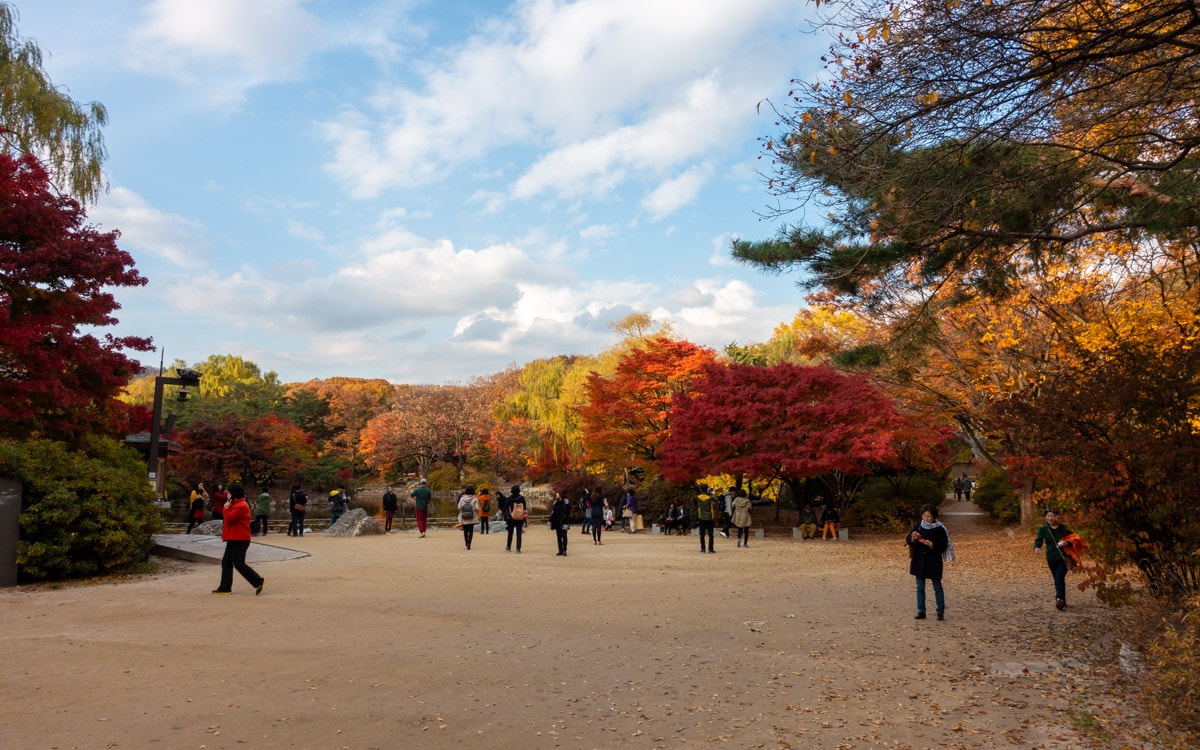
During the 1800s, life at the here was peaceful. The complex was crowded with royal wives, concubines, residences, government offices, and gardens. This harmonious time was depicted in a painting know as Donggwoldo.
The palace was yet rebuilt again after a fire in 1834.
During the Japanese occupation of Korea from 1910-1945, Changgyeonggung was known as Changgyeonggungwon (Changgyeong Garden). It was converted from a beautiful royal palaces into a resort with a zoo and botanical garden.
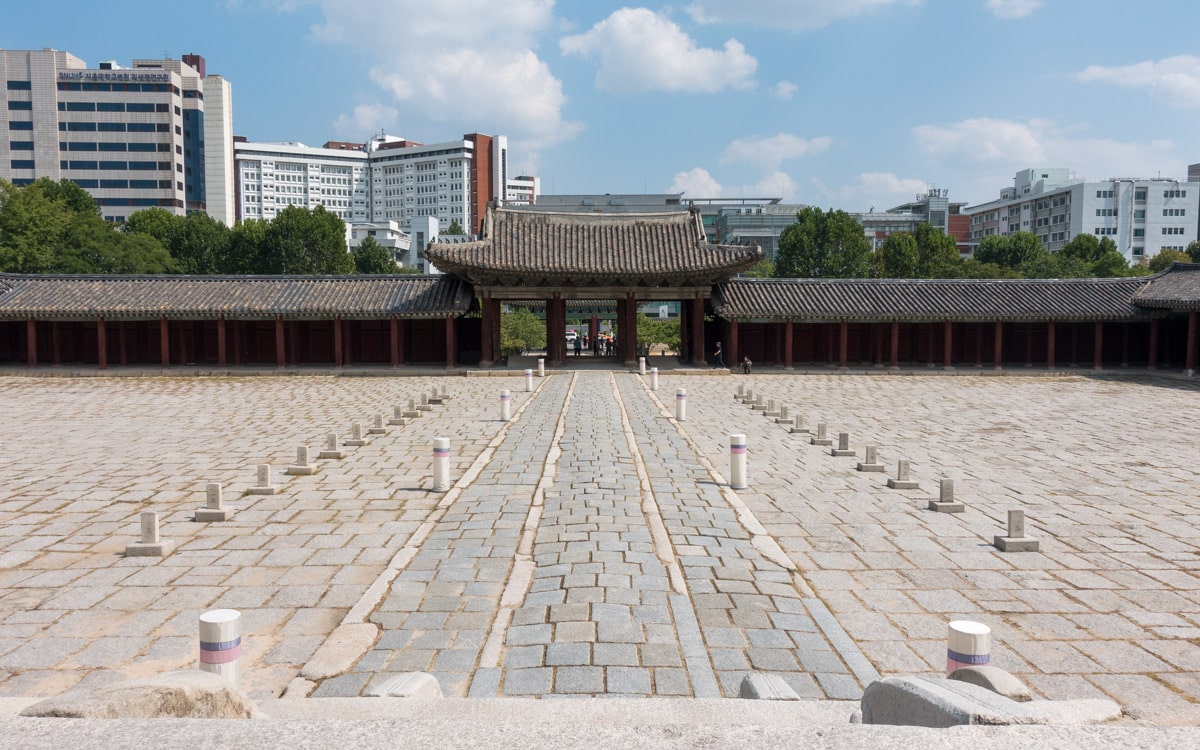
In 1983, the government of Korea removed the zoo and began work to restore the palace to its original appearance and beauty. Today, the botanical garden and cherry trees that were once planted remain. The work still continues to this day.
Various events are held on select weekends from spring to autumn. These events include tea ceremonies, reenactment of the king’s birthday, and marriage ceremonies.
What to see at Changgyeonggung Palace
Angbuilgu Sundial
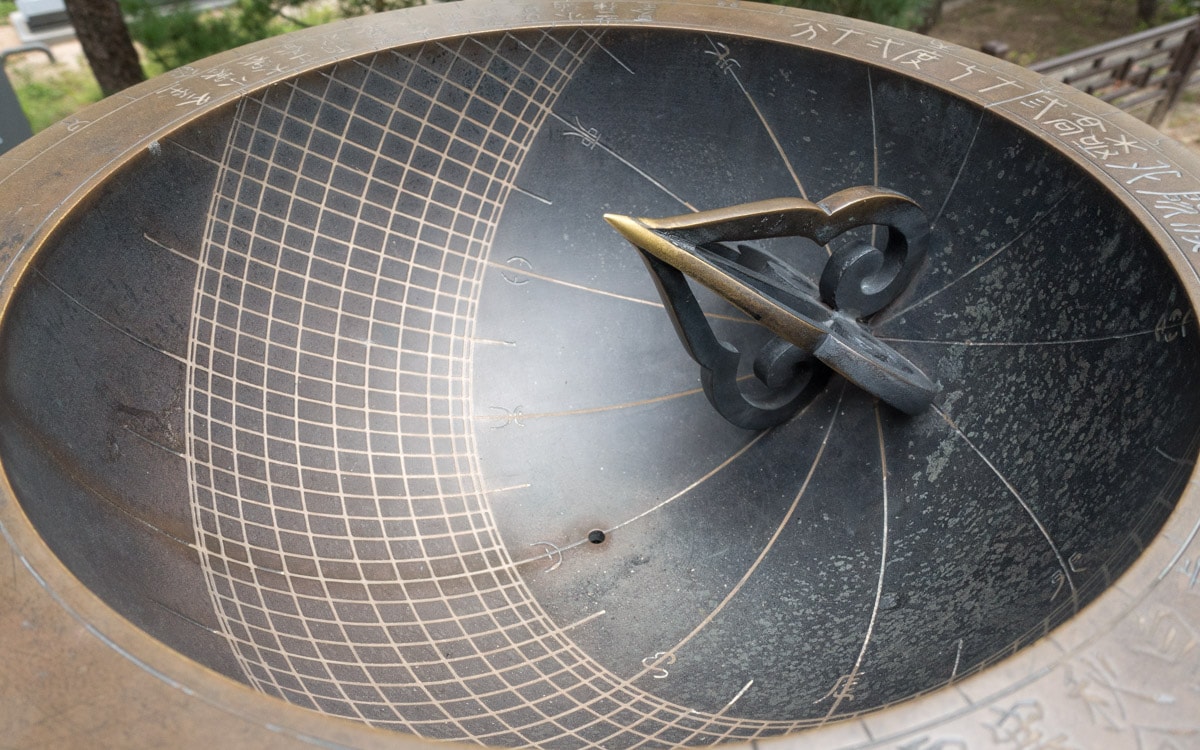
The Angbuilgu Sundial, also referred to as the Hemispheric Sundial, was an important and widely used astronomical scientific device used to tell time. It was invented in 1434 during the 16th year of the reign of King Sejong. It got its name, Angbuilgu, from the pot shape design. It literally means “upward looking kettle that catches the shadow of the sun.”
The Angbuilgu has the shape of a hemisphere which helps express the shape of the sky. Even small sundials can be used to decipher time and seasons.
The gnomon, the triangular blade that casts its shadow, faces towards the north. There are also 13 horizontal and 7 vertical lines inlaid with silver which indicate time and seasons of the year.
The needle, known as yeongchim, indicates the true solar time. A correction is then used to adjust time to mean solar time which is used today.
These sundials were considered the first public time systems in Korea.
Chundangji Pond
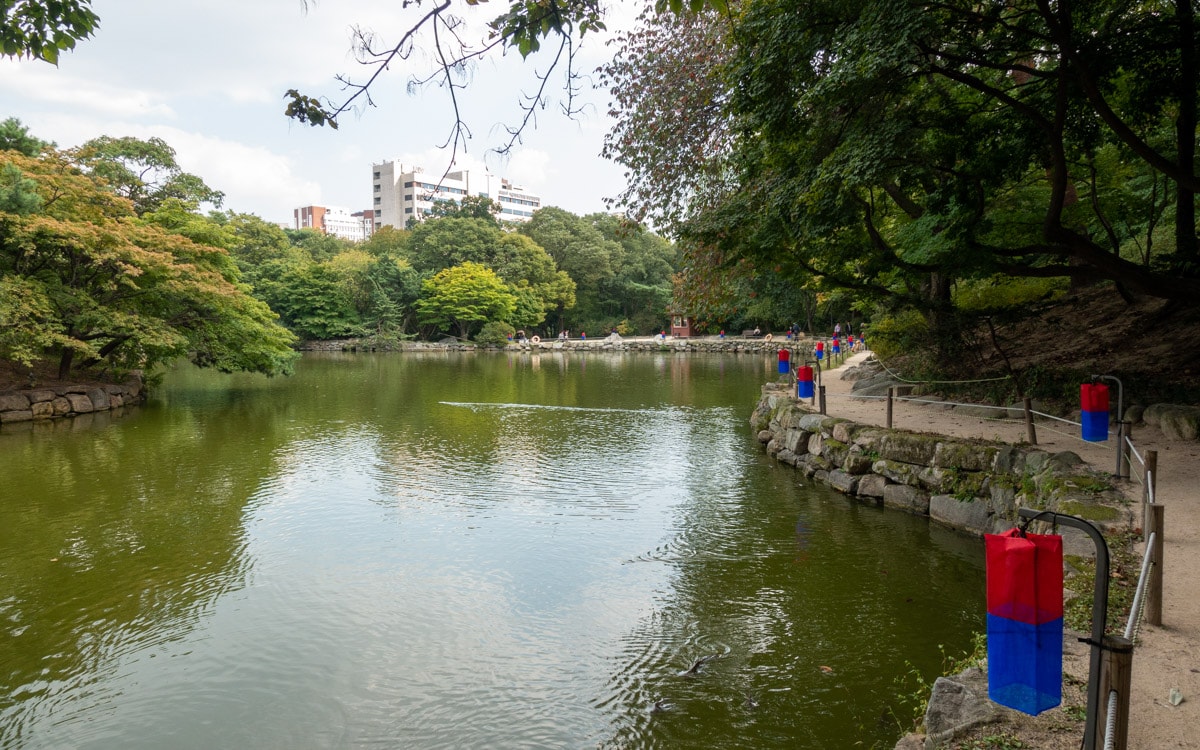
Chundangji Pond, located near Daeonsil (Great Greenhouse), consists of two ponds, Daechundangji and the smaller Sochundangji. The smaller of the two was created in 1909 by a process called naenongpo, which involved combining eleven rice paddies.
The surrounding land was used as royal farmland and as a residential area for the ladies and the maids of the royal family.
The king and queen gained experience in farming, learned how to care for rice paddies, mulberry fields, and even how to raise silkworms.
In 1830, a great fire destroyed many small buildings that surrounded the water. The ones that survived were dismantled during the Japanese occupation of Korea.
The island seen in the middle of the pound was created in 1984.
Daeonsil (Great Greenhouse)
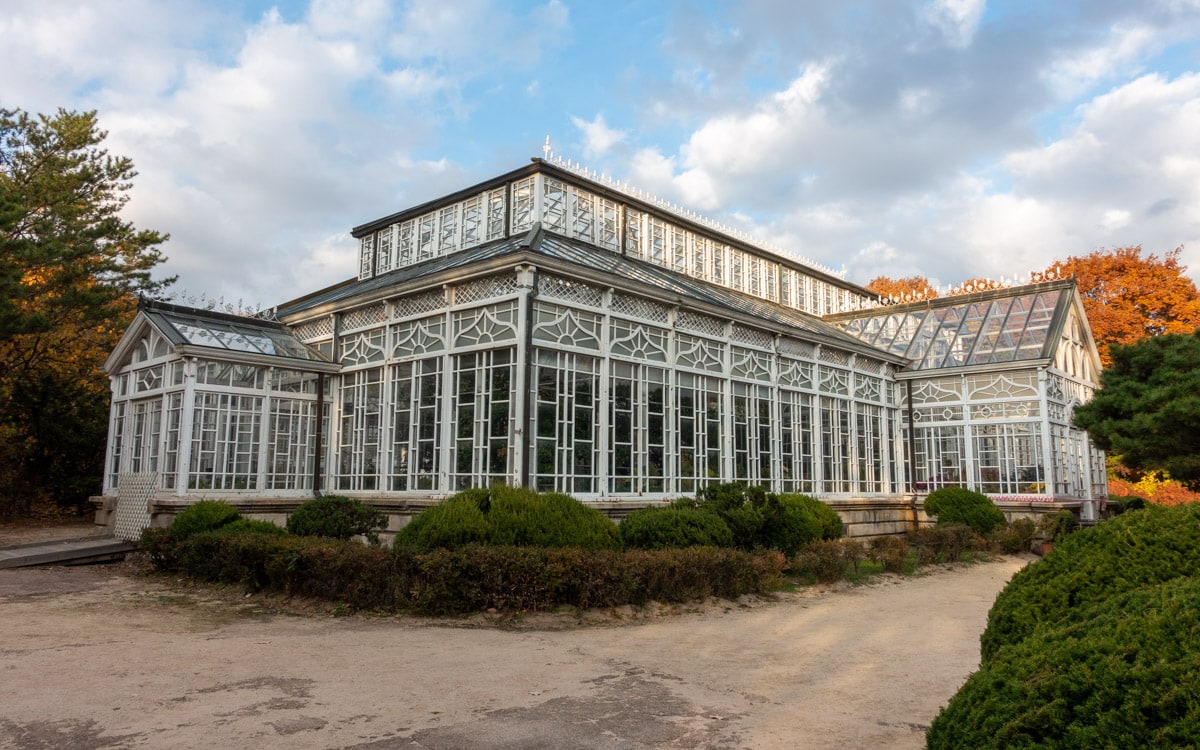
Daeonsil (Great Greenhouse) is an enclosed botanical garden that was built in 1909 and features a royal motif roof with a repeated plum design. The design of the greenhouse, which features pointed arches and window frames, is based on the design of The Crystal Palace in London, England.
A Renaissance style fountain and intricate garden with many paths can be found in front of the greenhouse.
Gwandeokjeong Pavilion
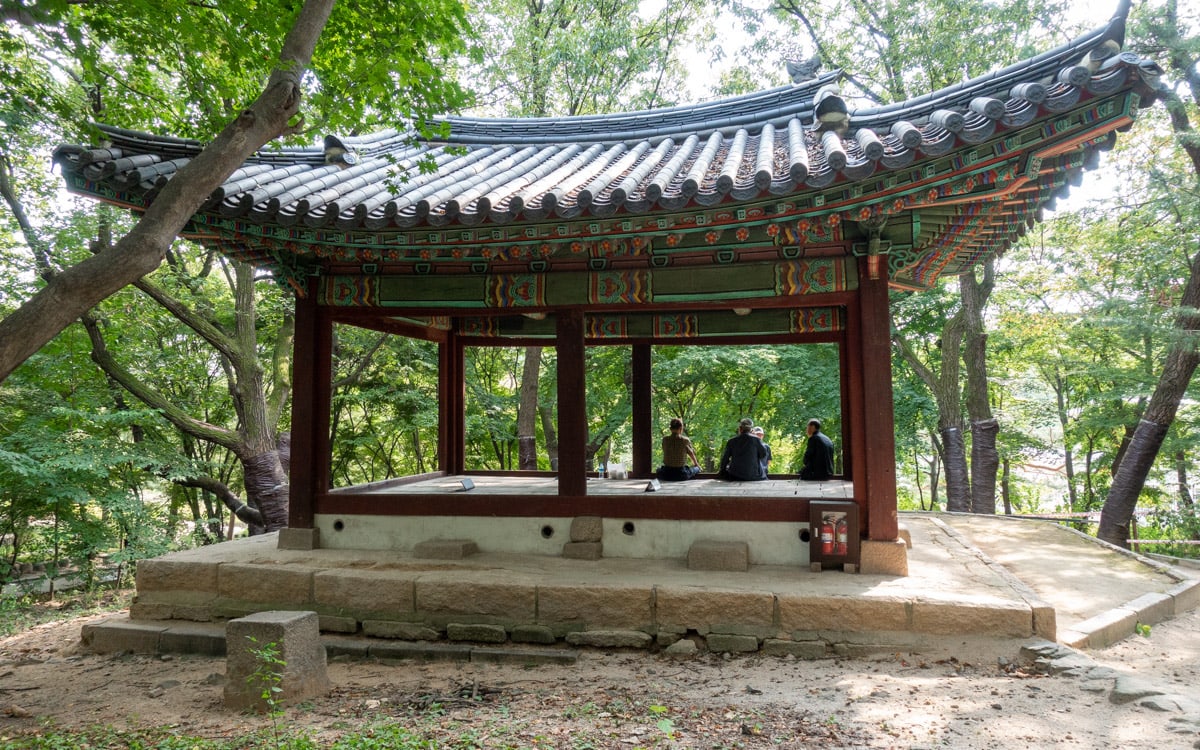
Gwandeokjeong Pavilion, meaning “take advantage by shooting arrows”, is a open sided building located near Chundangji Pond and Daeonsil (Great Greenhouse).
From 1642 to 1664, it was known as Chuimijeon. It was built for archers as the surrounding area was used for military training.
The structure is located in the north eastern corner of Changgyeonggung Palace.
Gyeongchunjeon Hall
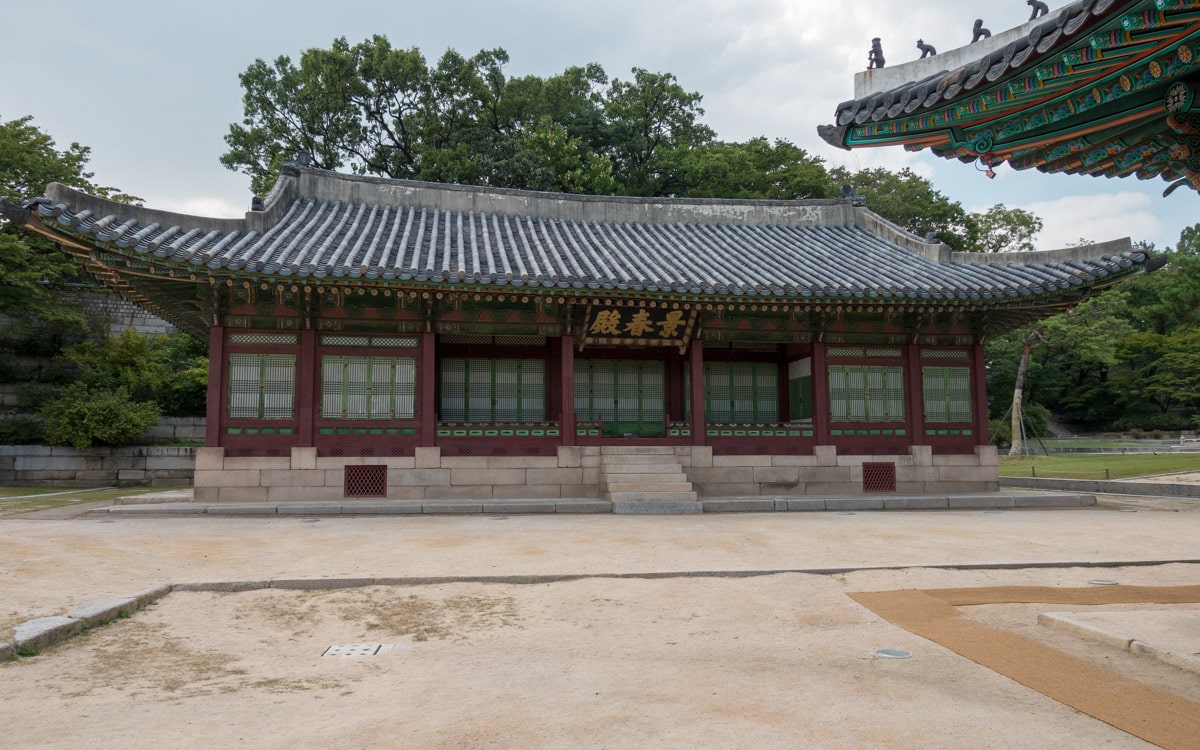
Gyeongchunjeon Hall, next to Hwangyeongjeon, was the sleeping residence of the wife of the deceased king at Changgyeonggung Palace. It was also here where multiple Joseon kings were born.
The building was originally built in 1483 during the reign of King Seongjong. He was the 9th Joseon Dynasty king and ruled from 1469 until 1494.
The pavilion was destroyed by the Japanese invasion in 1592, rebuilt in 1616, and then destroyed again by fire in 1830. The building seen today was built in 1834.
Gyeongchunjeon was also used for births. King Jeongjo, the 22nd king of the Joseon Dynasty was born here in October, 1752. King Heonjong, the 24th king of the Joseon Dynasty was born here in September, 1827.
King Jeongjo named this building “Birth Hall” and even wrote and hung a plaque himself and hung it above the entrance of the building.
King Jeongjo’s mother, Lady Hyegyeong, passed away here in January, 1816
Next to the hall was a haenggak, which was a small structure used for palace workers and for storage.
Haminjeong Pavilion
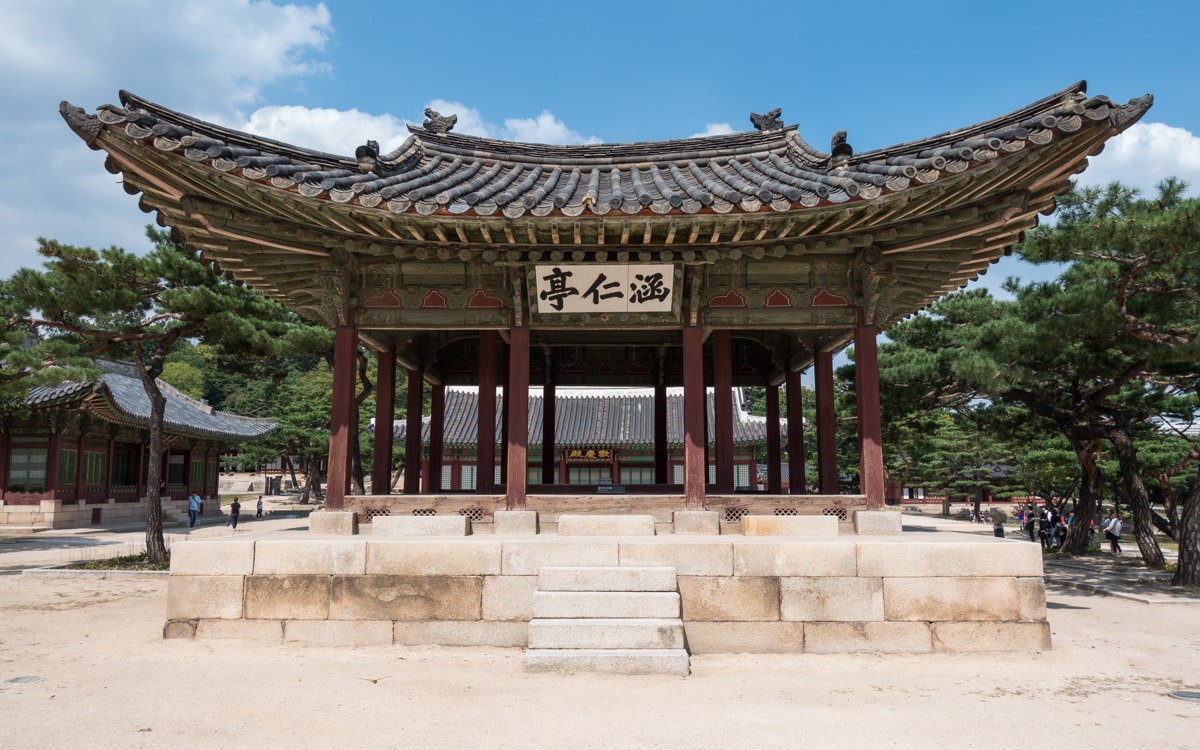
Haminjeong Pavilion was where banquets were held and where the king received high performing civil and military officials at the palace. The name means “the whole world is soaked with the benevolence and virtue of the king.”
Originally built in 1633 on the former site of Inyangjeon Hall. It was destroyed by a fire in 1830 later rebuilt in 1833.
Today, the building is open on all four sides. In a painting known as “Painting of the Eastern Palace”, the pavilion is depicted with walls on three sides. The courtyard in front of the pavilion looks exactly how it was depicted in the painting. This paintings helps us imagine what banquets and performances must have been like here hundreds of years ago.
Honghwamun Gate
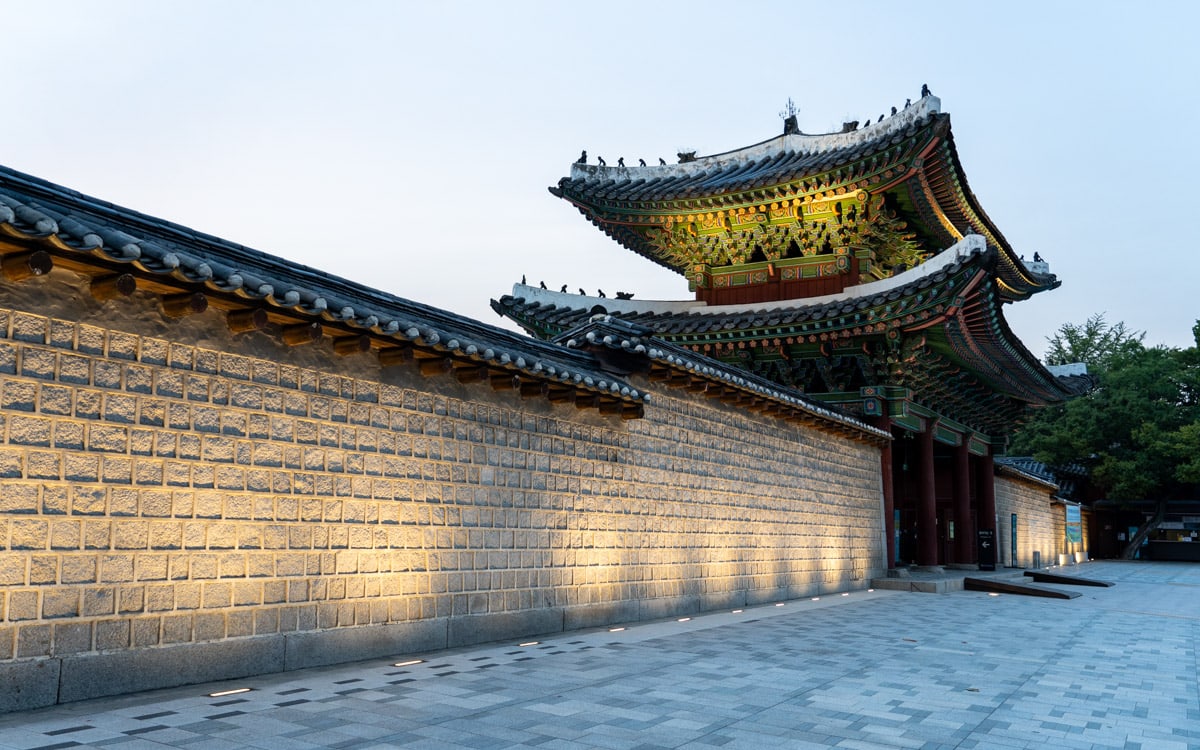
Honghwamun Gate, first constructed in 1484, is the main gate of Changgyeonggung Palace. It was here were the king received ordinary people and citizens. The design of is quite modest for a royal residence. This reason led to the addition of a pair of sipjagak (bell pavilions) on each side of the structure.
In 1616, the gate was rebuilt after being destroyed during the Japanese invasion of 1592.
The bridge seen in front is known as Okcheongjo Bridge. The bridge, which is over 500 years old, is a symbol of entry into the courtyard. The stream which flows below the bridge is known as Geumcheon Stream. This feature is common at other royal palaces in Seoul.
Hwangyeongjeon Hall
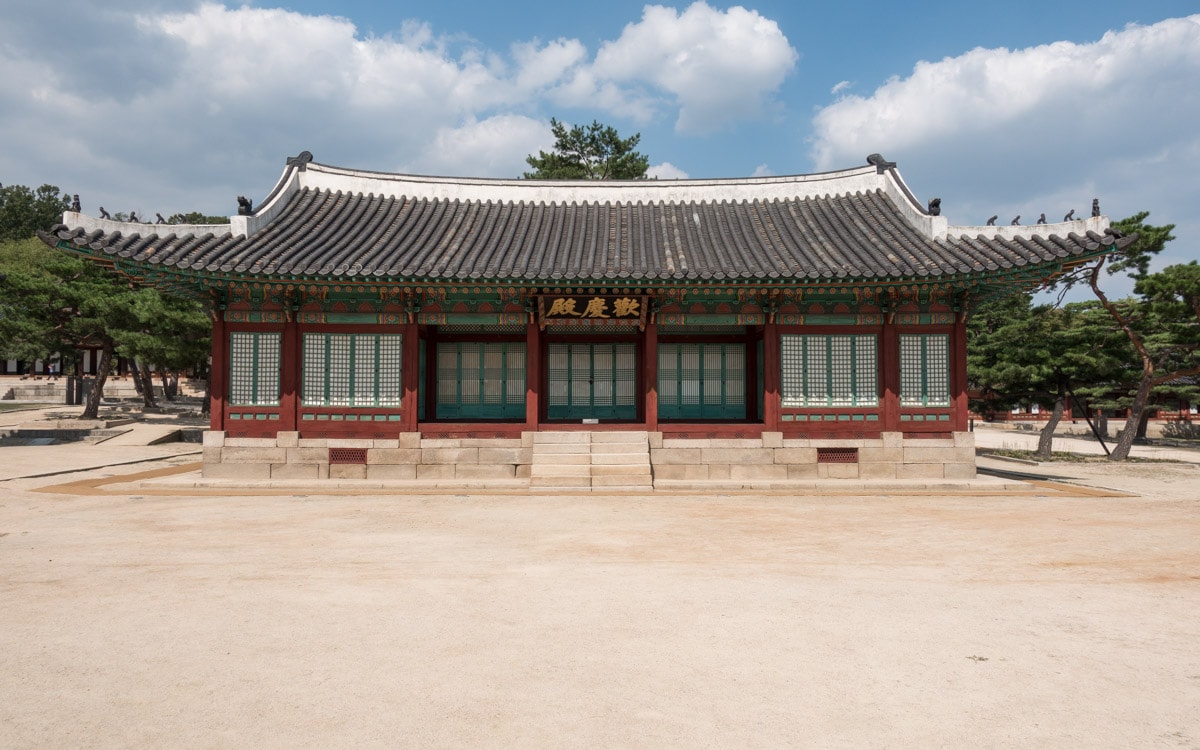
Hwangyeongjeon Hall, near Gyeongchunjeon Hall, was the sleeping residence for kings, princes, and their wives while they were at Changgyeonggung Palace.
The hall was originally built in 1483. It was destroyed by the Japanese invasion in 1592, rebuilt in 1616, and then destroyed again by fire in 1830. The building seen today was built in 1834.
Similar to Gyeongchunjeon, a small structure used for palace workers and for storage was located nearby.
Dae Janggeum, a female physician, attended to King Jungjong at this location. She was the only Joseon Dynasty female physician to attend to a king. She also delivered the baby of Queen Janggyeong, the second wife of Jungjong in 1515. In 1522, she gained the trust of the king by treating the illness of Queen Dowager. After this, she became the head royal physician which was unheard of at the time. She attended to King Jungjong until he died at this location in 1544, after 39 years of rule.
Crown Prince Sohyeon also died at this location in 1645.
Jagyeongjeon Site
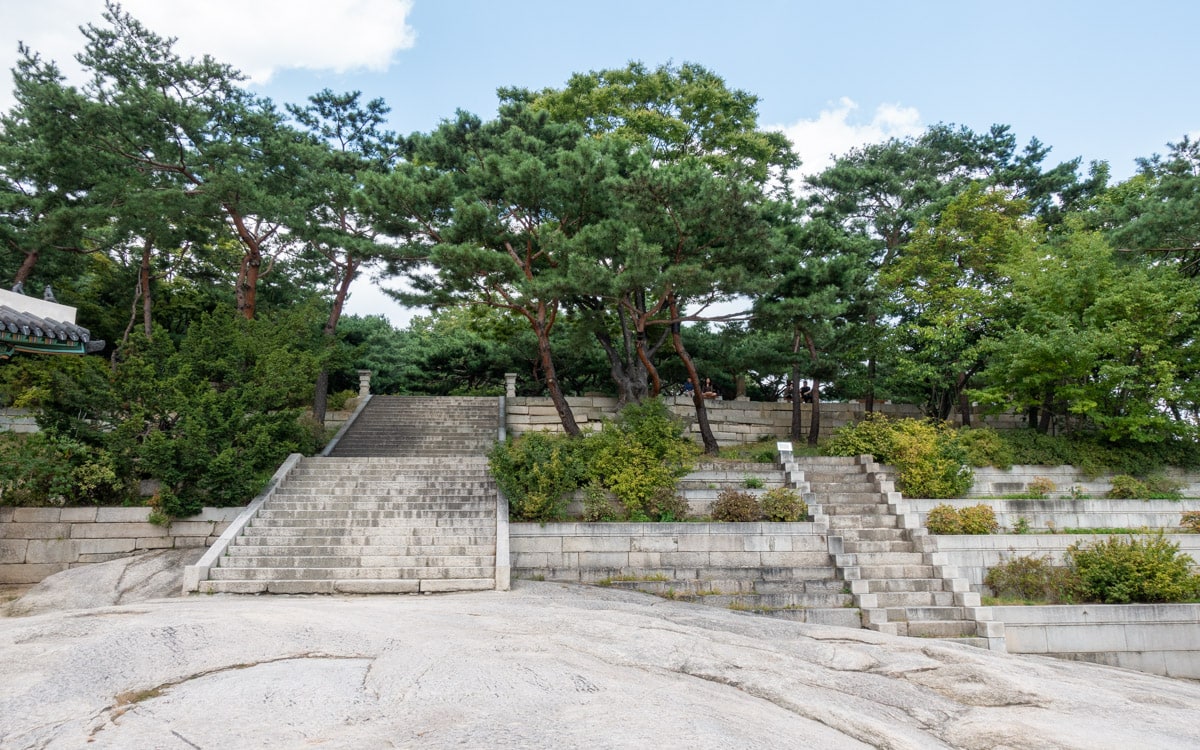
The Jagyeongjeon Site, was the location of the residence of the queen mother. It was in built in 1777 by King Jeongjo for his mother, Queen Heongyeong. It is situated at a spot above Changgyeonggung Palace. The hall and its terraced rear garden offered a beautiful view of the surrounding area.
In the late 19th century, buildings in the area were removed. A royal library was built on this spot during the Japanese occupation.
The library was removed in 1992.
Myeongjeongjeon Hall
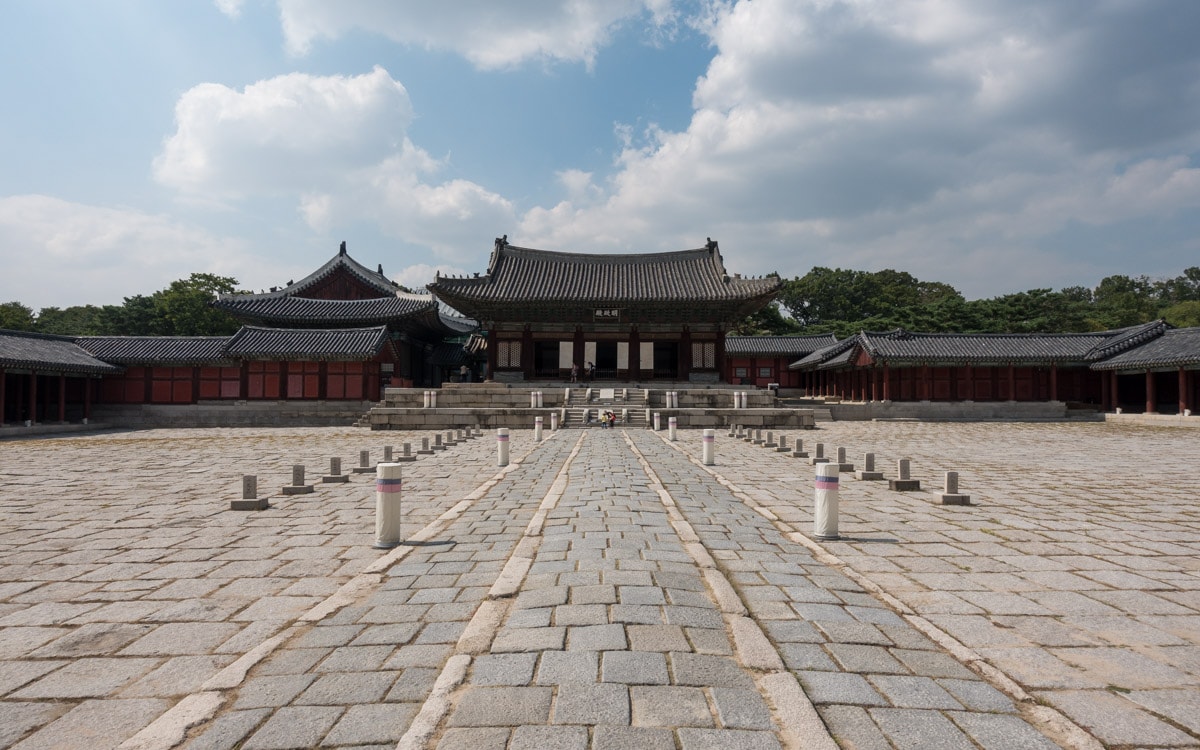
Myeongjeongjeon Hall is the main hall of Changgyeonggung Palace. Rebuilt in 1616, it is now the oldest remaining main hall of all the palaces in Seoul. It was originally built in 1484 during the reign of King Seongjong. The modest one story structure is built upon a two tiered woldae, or elevated stone yard This is a common feature of other royal residences.
Wide and flat rectangular stones can be found in the courtyard in front of the building. At the center of the courtyard is a three level walkway that adds dignity to the hall. The center walkway was used solely by the king.
Grand feasts of food and ceremonies were often held in the courtyard for the mothers and grandmothers of the king.
Enclosing the courtyard is Myeongjeongjeon Gate. The area surrounding the gate, known as a haenggak, or roofed wall, was used during funeral preparations by royal guards.
Punggidae
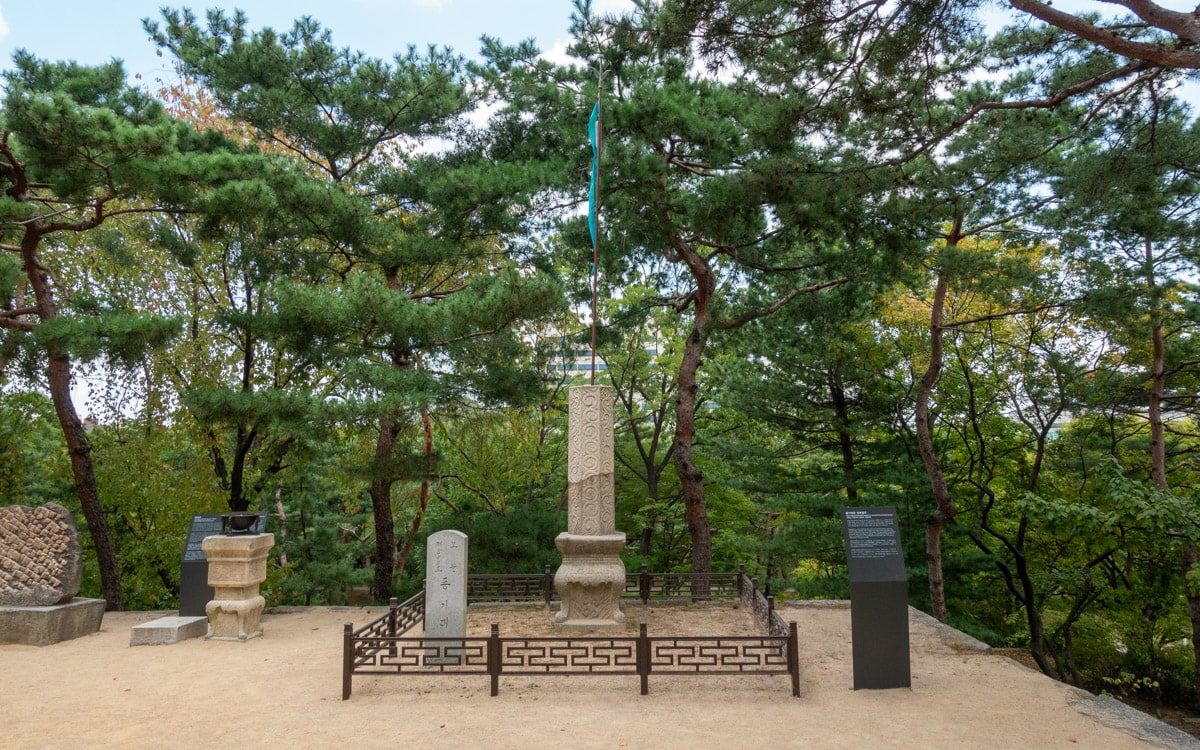
Punggidae is a stone measuring instrument used to detect the speed of wind and the direction it is blowing. Punggidae is decorated with scroll designs and believed to have been constructed sometime in the 18th century.
To use the instrument, a pole was inserted into a hole at the top of the stone. A piece of cloth was attached to the end of the pole. When the wind picked up, the piece of cloth would wave in the air. This would indicate the wind speed and direction.
Sungmundang Hall
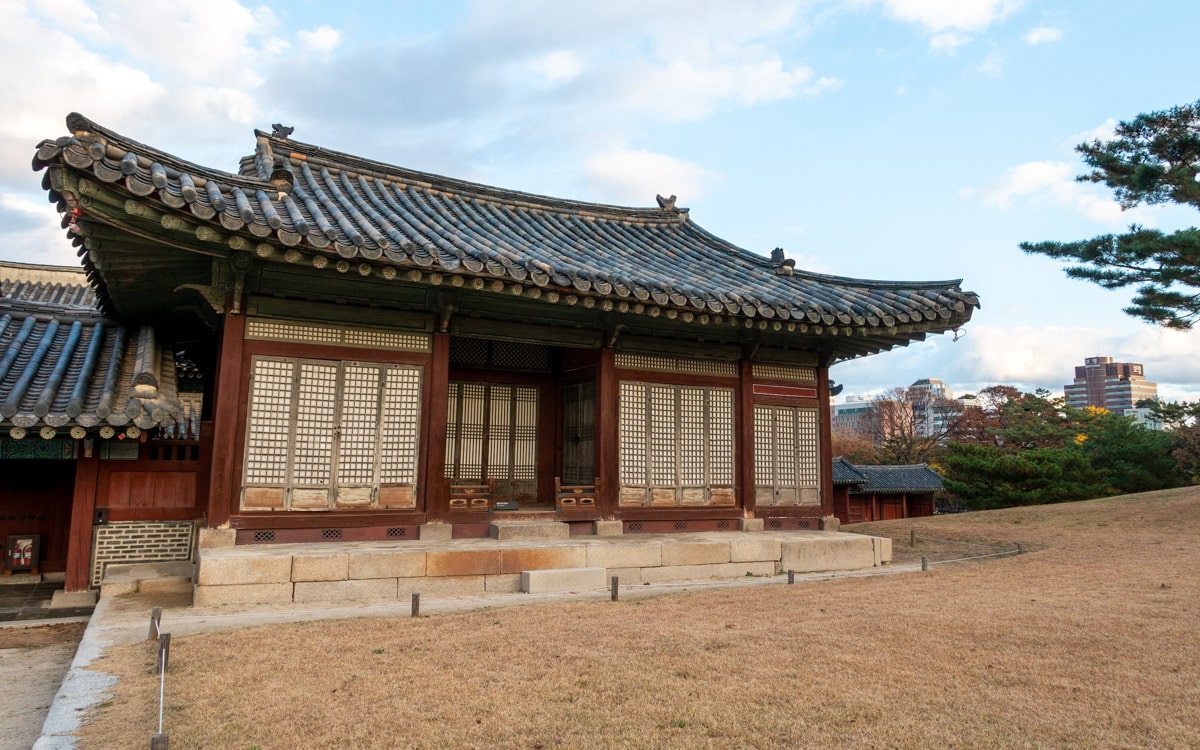
Sungmundang Hall was used for banquets and conferences. It was here where the king would discuss state affairs with officials and literature with scholars. It is believed that the hall was first built around 1616 under the rule of King Gwanghaegun, who ruled from 1608 to 1623.
In 1830, the building was destroyed by a fire. It was rebuilt later that same year.
The building name plaque written by King Yeongjo over 300 years ago still remains to this day.
Taesil Shrine
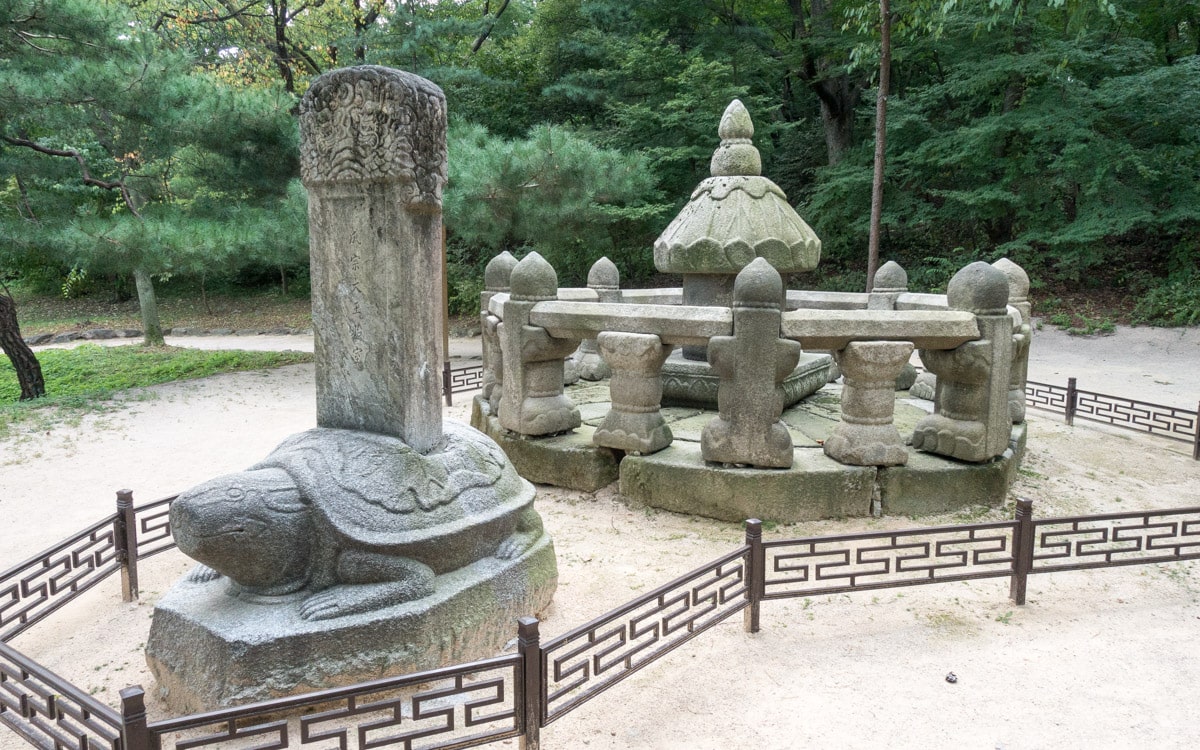
Taesil are shrines which stored the placenta and umbilical cords of the children of the royal family. Next to the shrine is an inscribed stone tablet with a story about the placenta of King Seongjong. This stone tablet is known as a taesilbi. These shrines are found at many locations all around Korea.
During the occupation of Korea, the Japanese moved almost all the Joseon royal family taesil to Seosamneung Royal Tomb. Seosamneung is located northwest of Seoul to Seosamneung Royal Tomb in Goyang-si, Gyeonggi-do.
The taesil of King Seongjong (1457–1494) was moved here from Gwangju, Gyeonggi-do Province. Seongjong was the ninth king of the Joseon Dynasty. He ruled until his death on January 20, 1494. The shrine was moved here by the Japanese for research as it was the best preserved.
Tongmyeongjeon Hall
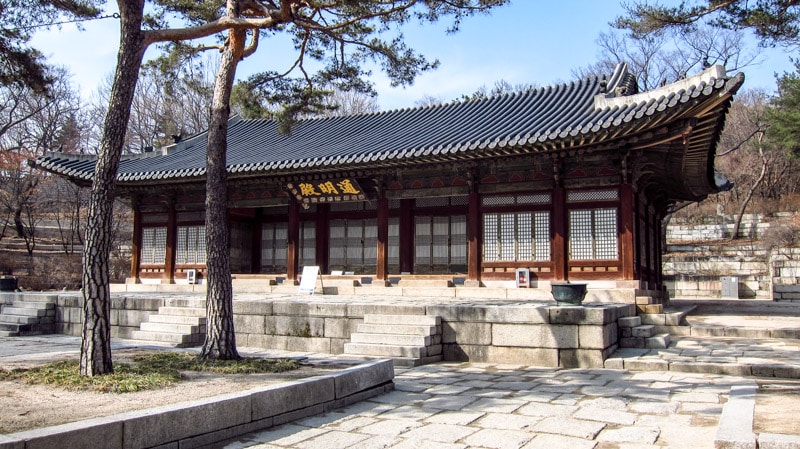
Tongmyeongjeon Hall, next to Yanghwadang Hall, served as the residential quarters for the king and queen at Changgyeonggung Palace. It was built in 1484. The building has been destroyed and rebuilt many times over the years, most recently in 1833.
Surrounding the hall is a woldae, or an elevated stone terrace. This feature is similar to those of important buildings such as Jeongjeon Hall and Yeongnyeongjeon Hall (Hall of Eternal Peace) at Jongmyo Shrine.
The center section of the hall is composed of a wooden floor with an ondol, or heated floor, on both sides of the center.
Yanghwadang Hall
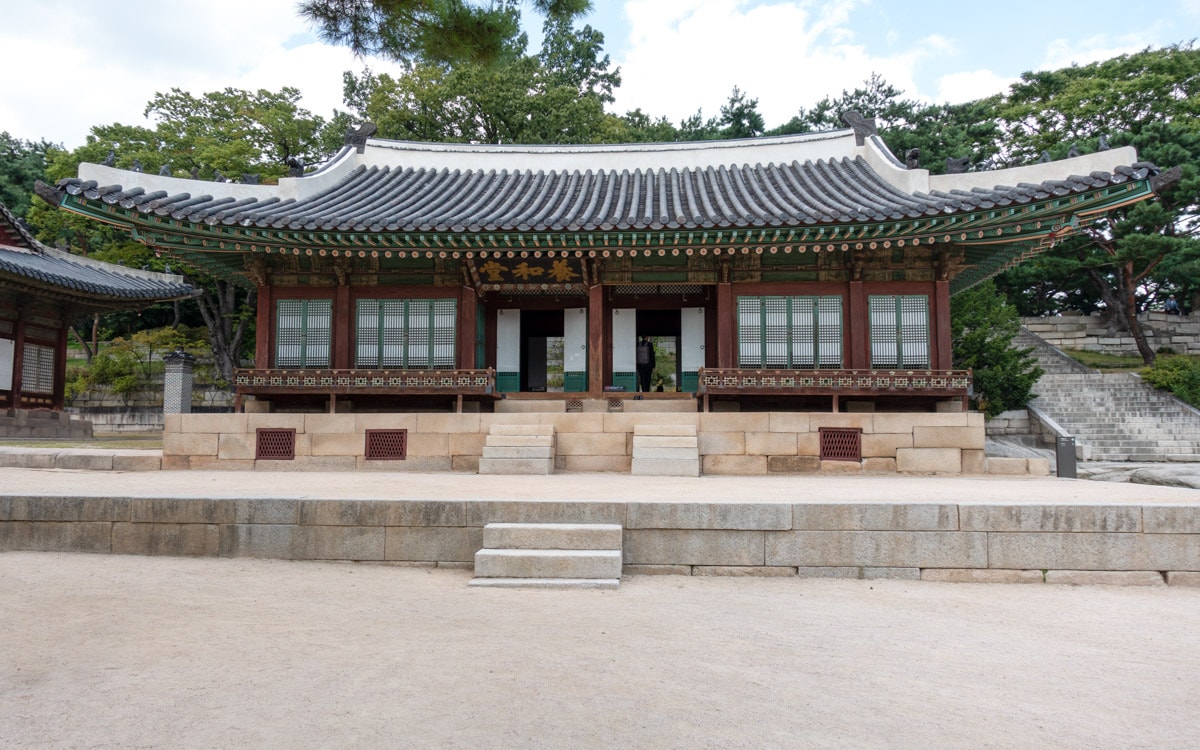
Yanghwadang Hall, next to Tongmyeongjeon, was the residential quarters of the dowager queen or widow of the king. During the second Manchu invasion of Korea, King Injo took refuge here. The invasion occurred in 1636 when the Qing Empire of China invaded the Joseon Dynasty.
The hall was built during the reign of King Seongjong in 1484. Seongjong was the 9th king of the Joseon Dynasty and ruled from 1469 to 1494.
The structure has been destroyed an rebuilt multiple times over the years. It was destroyed by the Japanese during their invasion of Korea.
Yanghwadang was rebuilt in 1616 during the reign of King Gwanghaegun. The building was destroyed by fire during the Injo revolution in 1624. It was rebuilt after the revolution.
During the Second Manchu invasion of Korea in 1636, King Injo took refuge and lived in this hall. King Injo was the sixteenth Joseon Dynasty king and ruled from 1623 to his death in 1649. He fled to this location from Namhansanseong Fortress on Namhan Mountain, southeast of Seoul.
The building was yet again destroyed by fire in 1830 and rebuilt in 1833.
Changgyeonggung Palace Information
Hours
Tuesday: 9:00 AM – 9:00 PM
Wednesday: 9:00 AM – 9:00 PM
Thursday: 9:00 AM – 9:00 PM
Friday: 9:00 AM – 9:00 PM
Saturday: 9:00 AM – 9:00 PM
Sunday: 9:00 AM – 9:00 PM
Admission
Adult : 1,000 won
Child : 500 won
Admission is included with the Integrated Ticket Of Palaces.
Address
185 Changgyeonggung-ro, Jongno District, Seoul, South Korea
GPS Coordinates: 37.578849, 126.995730
How to Get Here
Take Subway Line 4 to Hyehwa Station (Exit 4).
Changgyeonggung Palace Video
Map
Additional Resources
Klook
Klook offers discounted tickets and reservations for attractions and services in Seoul—from theme parks and museums to tours and transportation.
Viator by TripAdvisor
Book tours, activities, and unique experiences in Seoul—from sightseeing to cultural events and outdoor adventures—offered by local providers.
Rakuten
Save with cashback on hotels and travel services. Sign up and you could earn $30 cashback on your first purchase over $30.
Book Recommendations
Prefer a physical guide? Fodor’s Seoul offers detailed recommendations, maps, and travel tips for the city.
Nearby Sights
Daehan Hospital
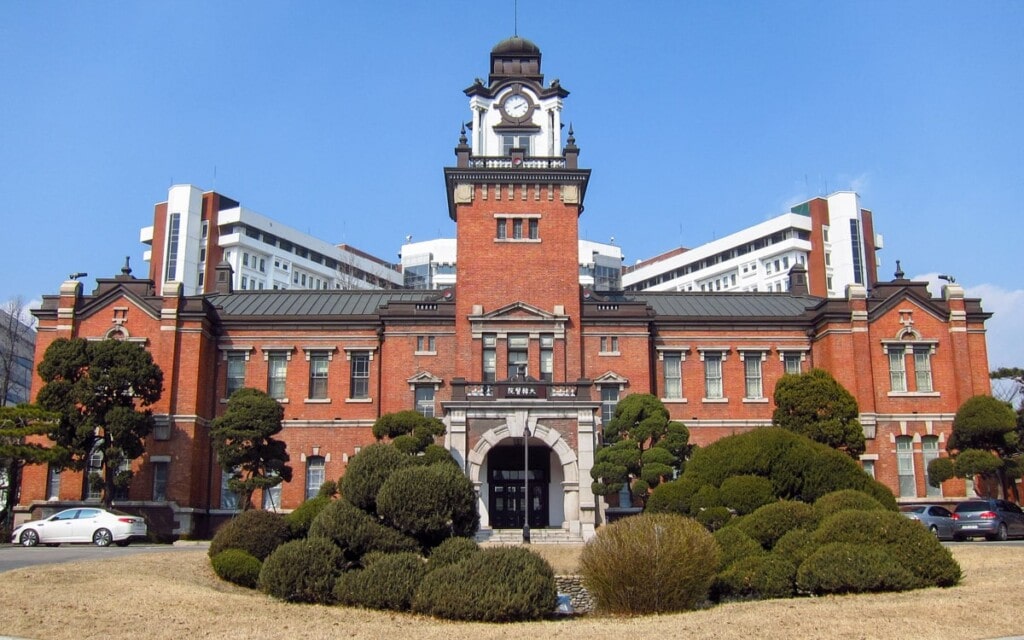
This red brick building was once the main building of Daehan Hospital, the leading medical and hygiene institution during the Great Han Empire (1897-1910). The building is now located on the grounds of the Seoul National University Hospital. In August…
National Children's Science Center
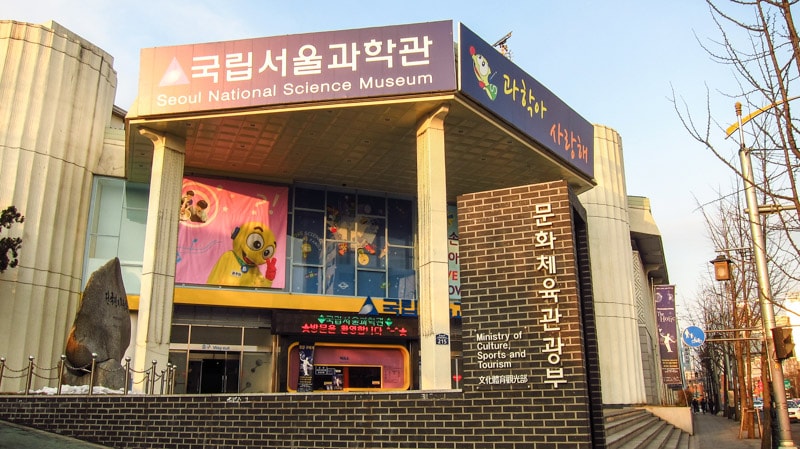
Just north of the main gate of Changgyeonggung Palace is National Children's Science Center which features interesting exhibits for both children and adults. This museum was formerly known as the Seoul National Science Museum. The museum which is often missed…
Changdeokgung Palace
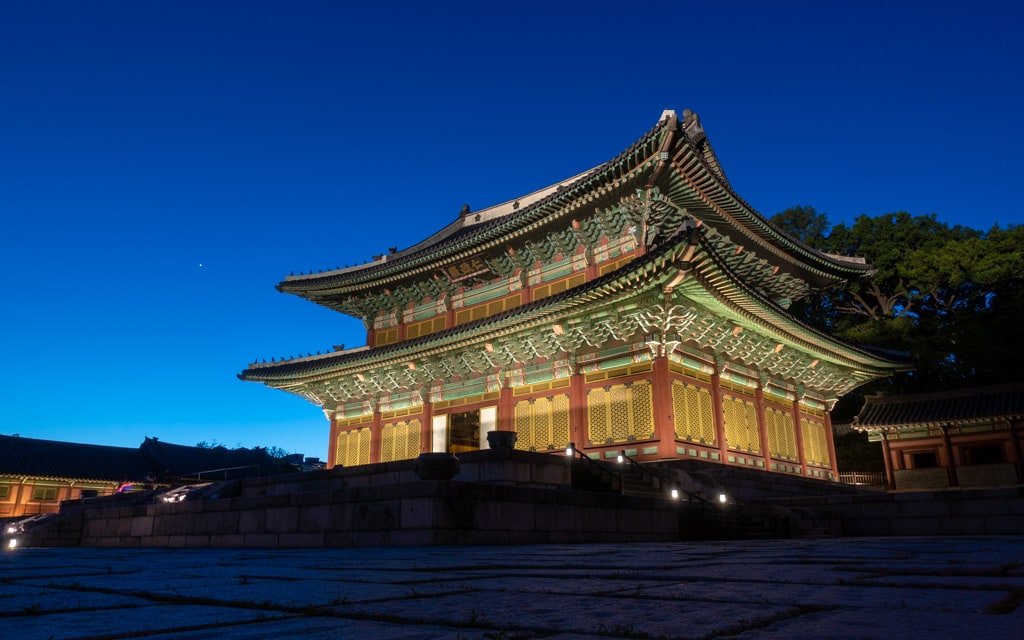
Changdeokgung Palace is a grand royal residence located east of Gyeongbokgung Palace. It is the best preserved of the remaining Joseon palaces. The palace is the second oldest in Seoul after Gyeongbokgung and was used as a secondary palace when…
Huwon Secret Garden
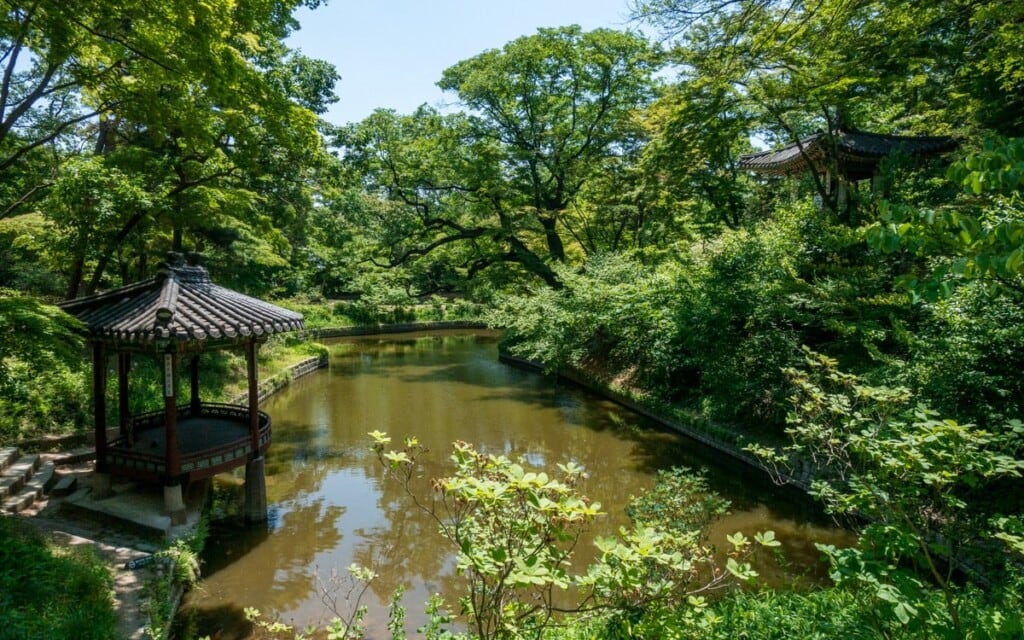
Huwon Secret Garden is a rear garden at Changdeokgung Palace that flows naturally with nature and was used as a place of leisure by members of the royal family. The garden, which has also been known as Bukwon, Geumwon, and…
Tteok Museum
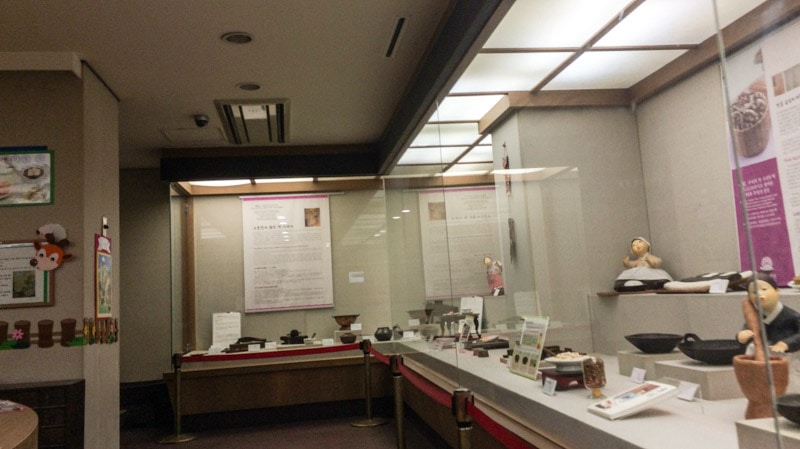
The Tteok Museum features displays of 50 different types of tteok, or rice cakes, and utensils used to make the dish enjoyed by generations of Koreans. The museum, located in Jongno-gu just east of Insadong, first opened in December, 2002.…
Marronnier Park
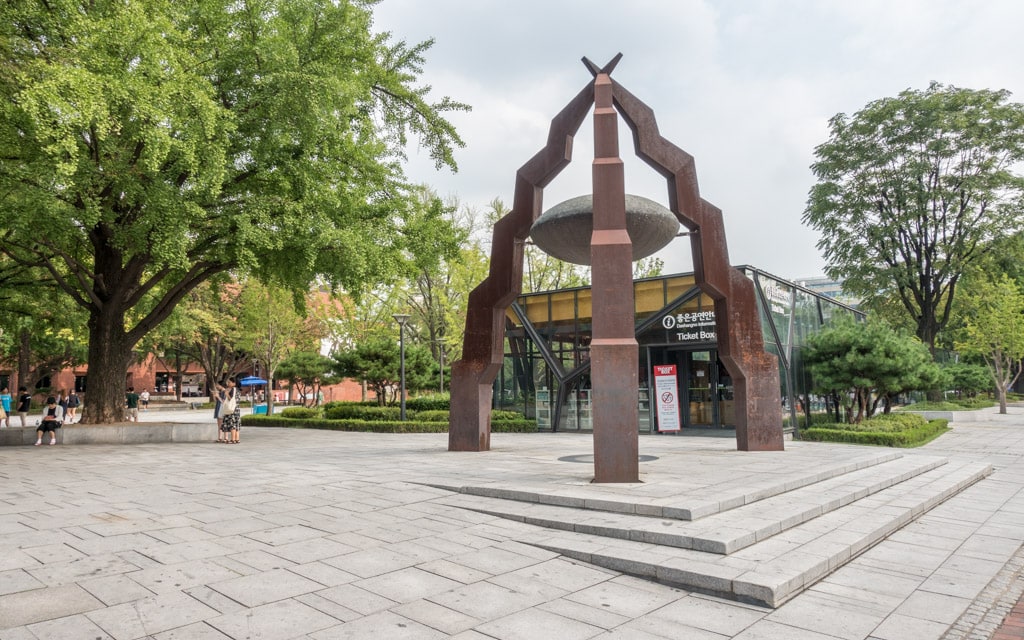
Marronnier Park is a park located in the Daehangno district of Seoul named after the large marronnier (chestnut tree) growing in the center of the park. The Marronnier tree originates from Italy and France in the Mediterranean where in the…
Last Updated on Dec 1, 2025