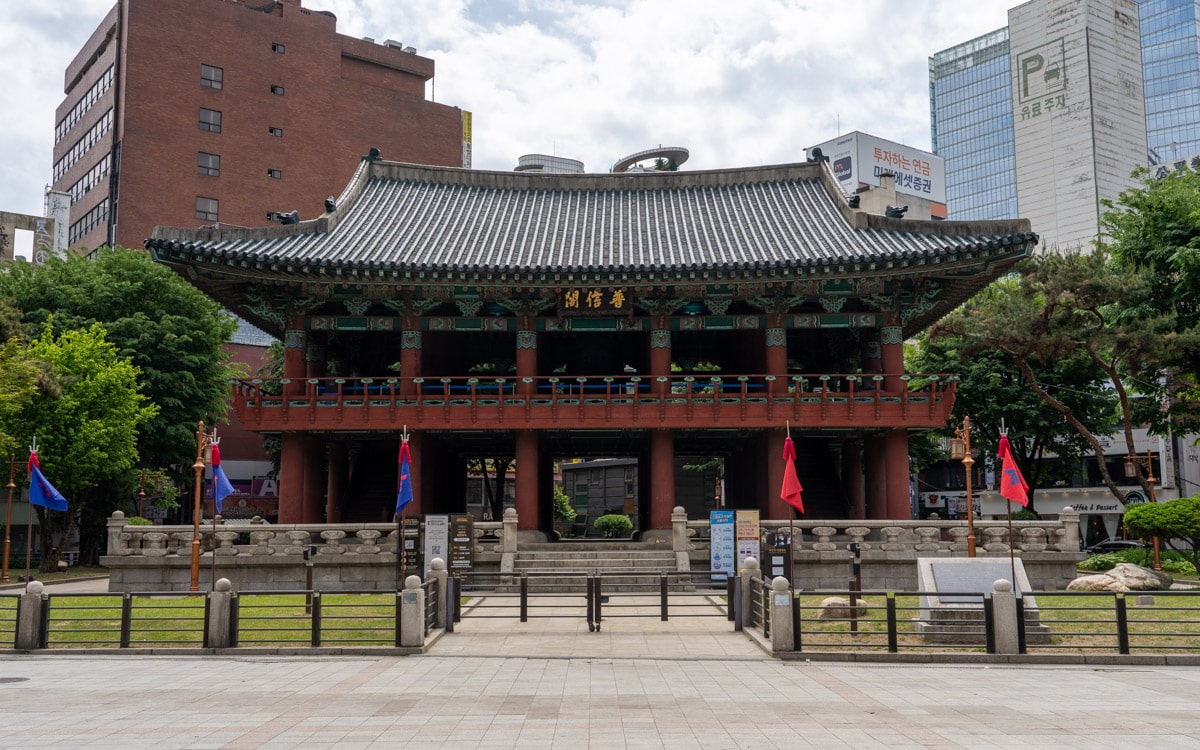
Located in the heart of Insa-dong is Bosingak Belfry. This historic bell pavilion, or bell tower, stands out in a sea of modern skyscrapers in the Jongno District. The Jongno District gets its name from Jongno, a major road which runs west to east through the heart of central Seoul. In English, Jongno means “Bell Street.”
The original bell pavilion dates back to 1396 during the reign of Taejo, the first king of the Joseon dynasty. During this period, the king ordered the construction of a fortress wall (Hanyangdoseong). The purpose of the wall was to protect Hanyang (present day Seoul) from invasions. When completed, the fortress wall had eight gates. This included Sukjeongmun Gate, Heunginjimun Gate (Dongdaemun Gate), and Sungnyemun Gate (Namdaemun Gate). These gates allowed citizens in and out of the city while keeping invaders out.
Each morning at 4:00AM, the bell hanging inside the pavilion was rung 33 times. Known as paru, the gates along the city wall opened at this time and people could pass through. The 33 rings represented the 33 cheon (heaven) in Buddhism. At the end of the day, at 10:00PM, the bell was rung 28 times. Known as injeong, at this time, the gates along the city wall closed. The 28 rings represented the location of the stars in the heavens. The bell was also rung during times of emergency such as fires or invasions.
The pavilion has gone by different names over the years. This includes Jongnu, Jonggoru, Jonggak, and Ingyeongjeon. Also, over the centuries, the pavilion has suffered the consequences of fires and wars. But each time, it was rebuilt. The gate was rebuilt once again in 1895 under the rule of King Gojong and given the name, Bosingak. The pavilion as seen today dates back to 1979.
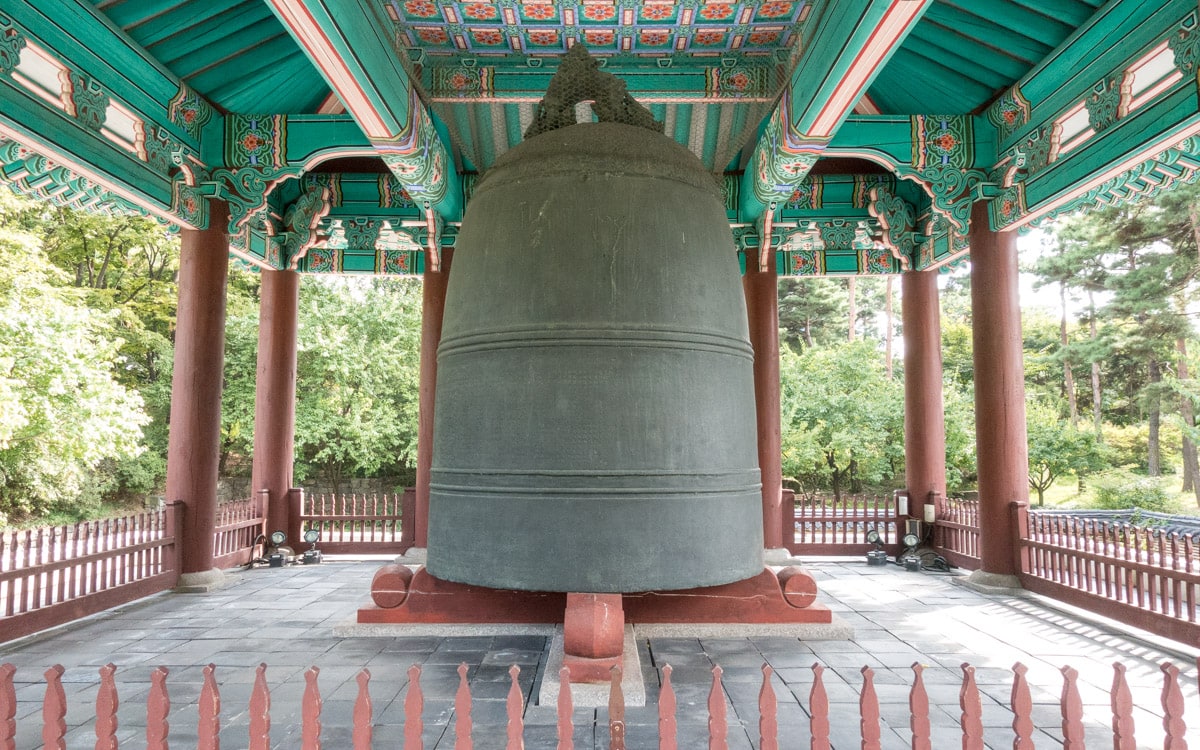
The original bronze bell which hung in the pavilion melted during a fire in 1455. In 1468, a new bell was recast and placed inside the pavilion, where it hung for centuries. Today, the bell is on display at the National Museum of Korea. The bell hanging in the pavilion today dates back to 1985.
Each year on December 31st, a New Year’s Eve event takes place at the pavilion. The event, which attracts thousands of people, features musical performances, celebrities, and a bell-ringing ceremony. The ringing of the bell at midnight symbolizes hope and happiness for the new year.
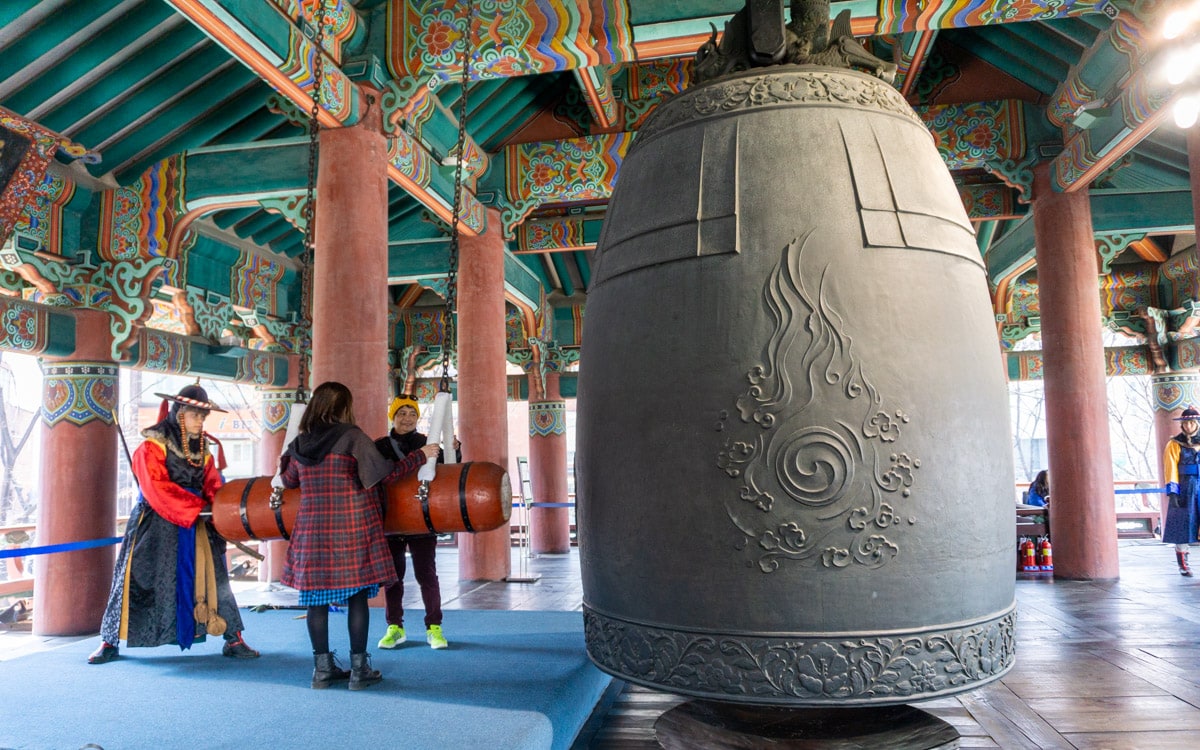
Everyday, except Mondays, visitors to Bosingak Belfry can take part in a bell tolling ceremony. This ceremony, which takes place between 11:00AM and 12:20PM, allows visitors to experience the ringing of the bell. During the ceremony, with the help of the royal guards, visitors are allowed to ring the bell 12 times, signaling noon. The ceremony is free and open to all visitors. Reservations are required and can be made by visiting http://royalguard.or.kr/.
Located nearby are many sights of interest including Cheonggyecheon Stream, Tapgol Park, and Gwanghwamun Square.
Bosingak Belfry Information
Hours
Admission
Free
Address
54 Jong-ro, Jongno District, Seoul, South Korea
GPS Coordinates: 37.569749,126.983805
How to Get Here
Take Subway Line 1 to Jonggak Station (Exit 4)
Bosingak Belfry Video
Map
Additional Resources
Klook
Klook offers discounted tickets and reservations for attractions and services in Seoul—from theme parks and museums to tours and transportation.
Viator by TripAdvisor
Book tours, activities, and unique experiences in Seoul—from sightseeing to cultural events and outdoor adventures—offered by local providers.
Rakuten
Save with cashback on hotels and travel services. Sign up and you could earn $30 cashback on your first purchase over $30.
Book Recommendations
Prefer a physical guide? Fodor’s Seoul offers detailed recommendations, maps, and travel tips for the city.
Nearby Sights
Seungdong Presbyterian Church
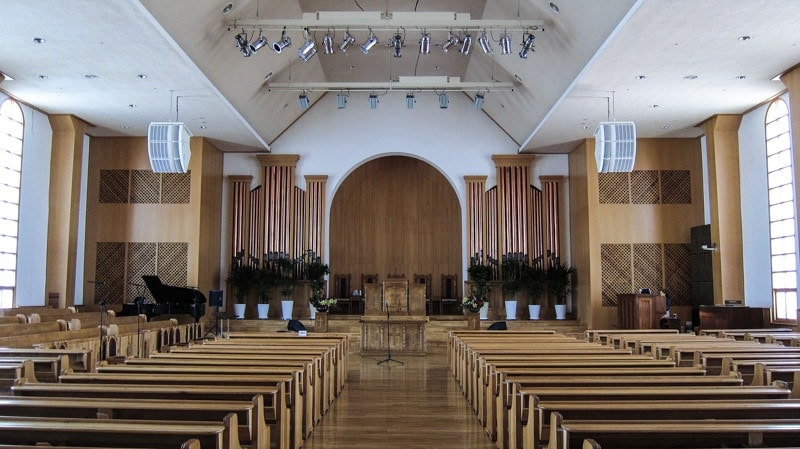
Seungdong Presbyterian Church, located near Insa-dong, was established in 1893 by Samuel Foreman Moore (1860-1906). Over the years, the church has been relocated and renamed many times. Before being renamed Seungdong, it has been known by as Gondanggol, Jungang, and…
Cheonggyecheon Stream
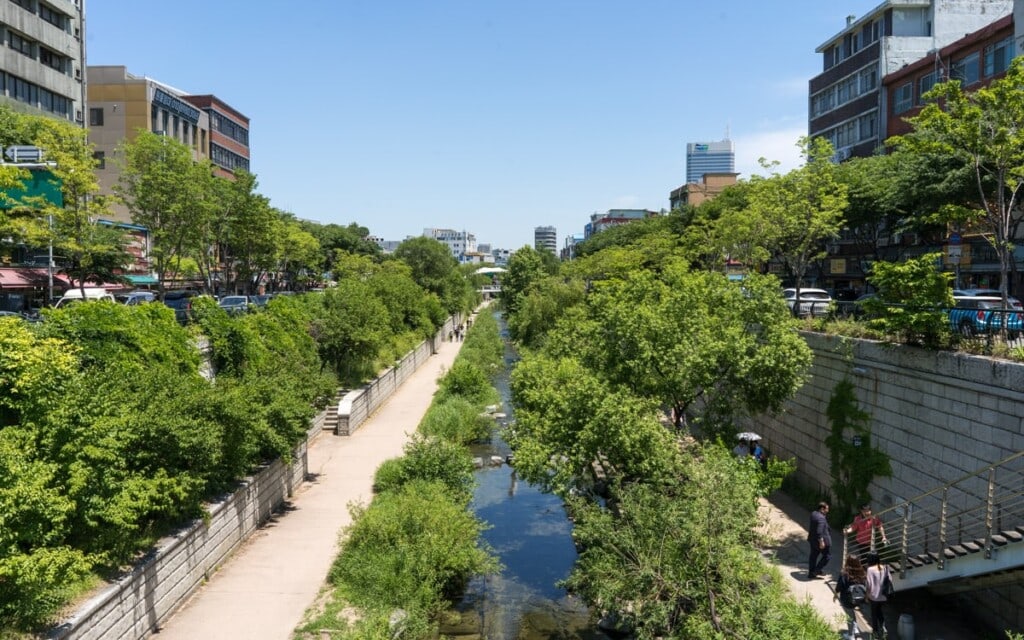
Cheonggyecheon Stream is an 8.4 km (5.2 mi) waterway and public space flowing through the heart of downtown Seoul from west to east. During the Joseon Dynasty, the stream was known as Gaecheon, meaning open stream. Over the years, multiple…
Tapgol Park
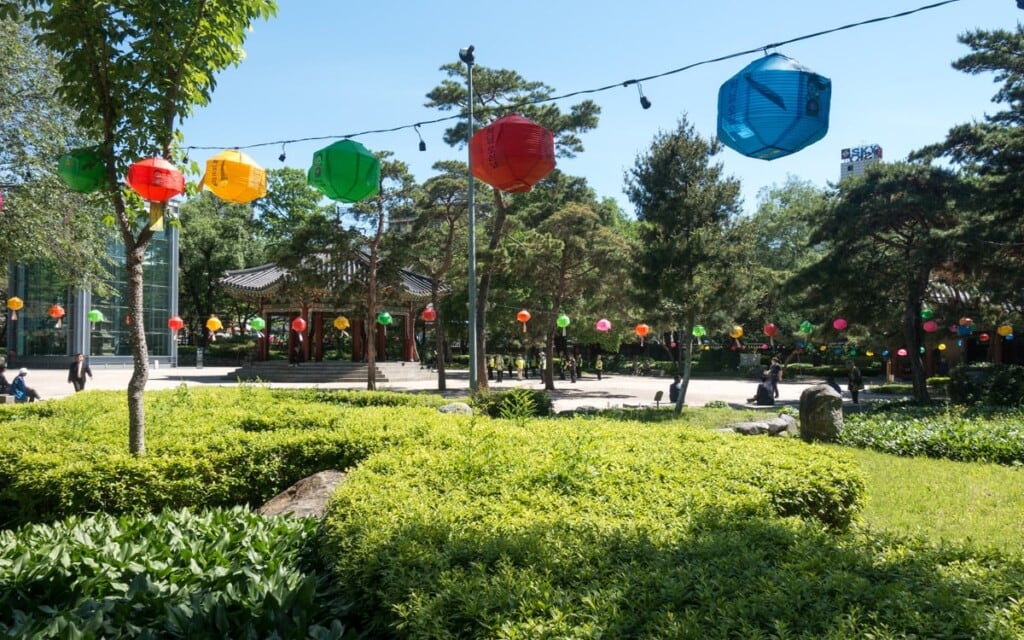
Tapgol Park is a public park that lies at the center of Seoul, near Insa-dong. It was here in 1919 where the March 1st Korean Independence Movement began. This movement called for the independence of Korea from Japanese rule. The…
Jogyesa Temple
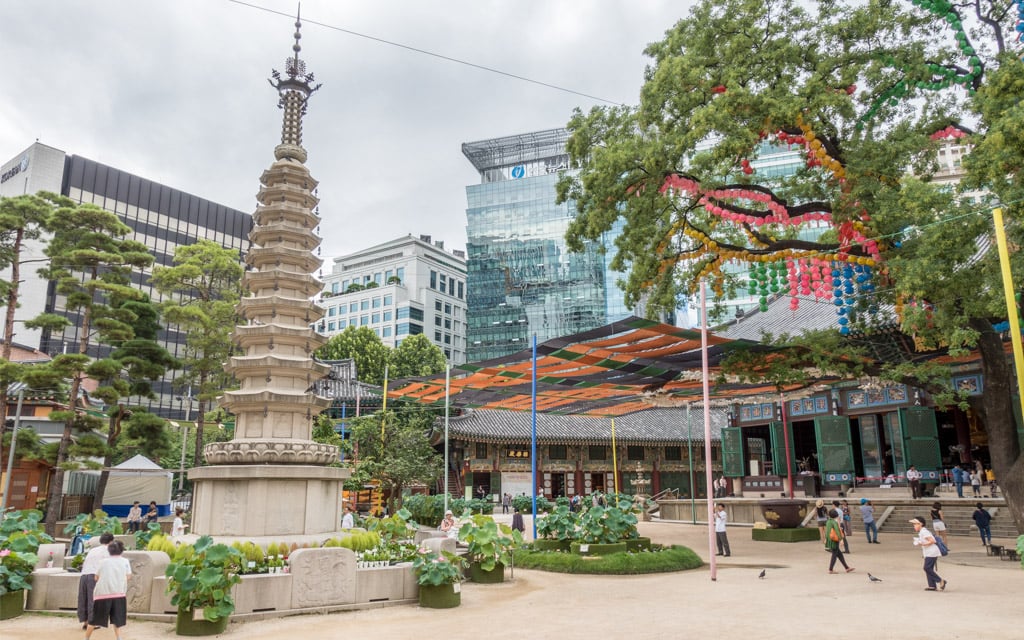
Jogyesa Temple is one of the most important Buddhist temples in Korea and a symbol of Korean Buddhism. It is located in the heart of the city near Insa-dong. Since 1936, it has been the head temple of the first…
Ssamzigil
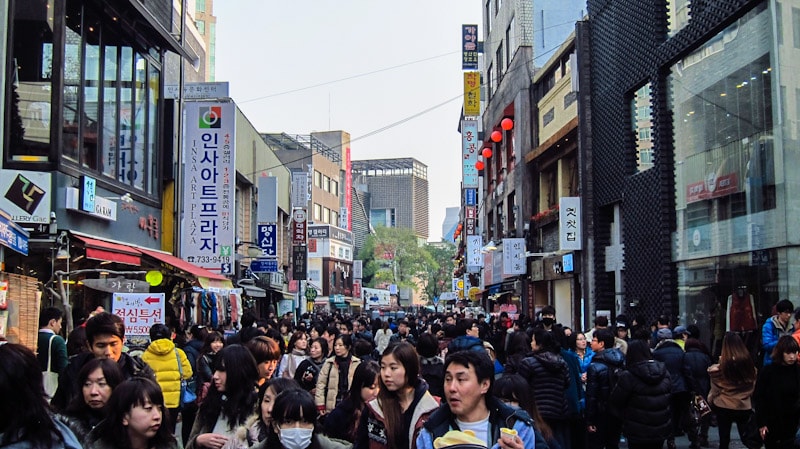
Ssamziegil, also known as Ssamziegil, is a colorful shopping and culture complex in Insa-dong that features cafes, galleries, and workshops. The complex's design uniquely blends contemporary elements with traditional Korean charm. The complex opened in 2004 and is now a…
Last Updated on Feb 6, 2026