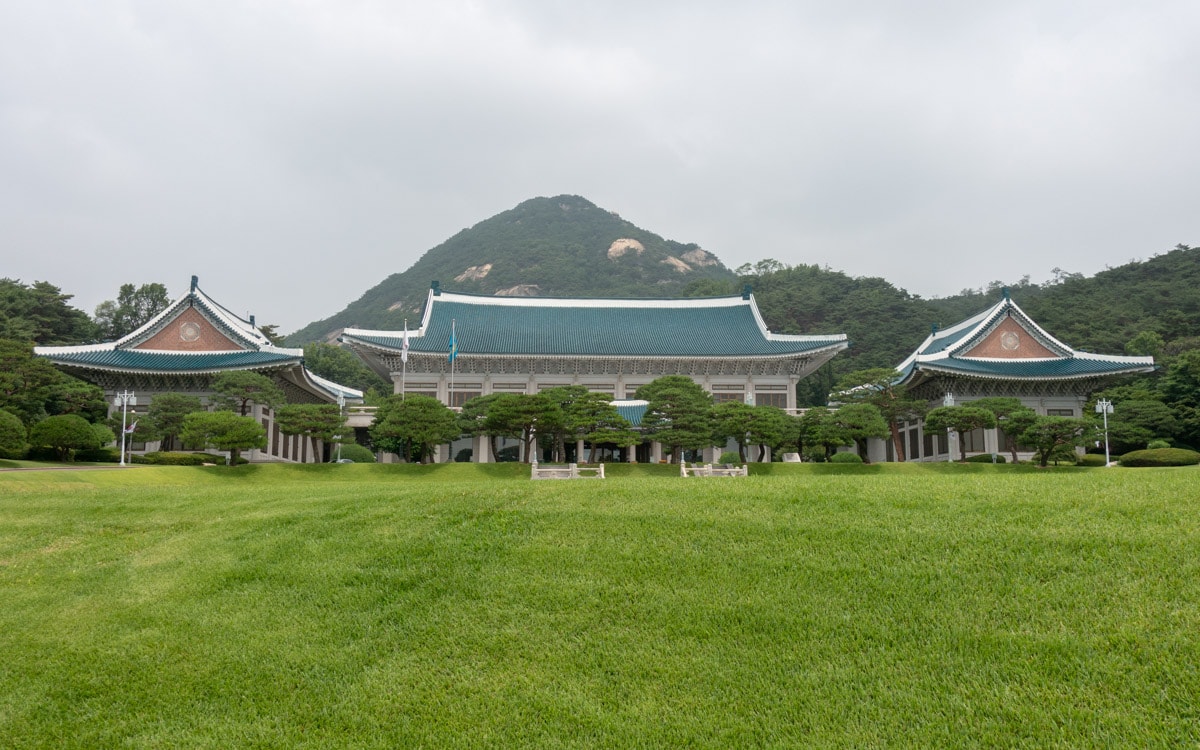
Cheong Wa Dae, or Blue House, is the official residence of the President of the Republic of Korea. It was built with traditional Korean architectural styles. The name comes from the translation of Cheong Wa Dae which means “pavilion of blue tiles.”
In 1104, King Sukjong built a royal villa at this location. When Gyeongbokgung Palace was built in 1395, the villa was used as a rear palace garden.
The area of Cheong Wa Dae was used by the Governor-General of Korea as his residence and office during the Japanese occupation of Korea in the first part of the twentieth century. This building was known as Gyeongmudae.
After the occupation, the Republic of Korea was founded. Gyeongmudae was used as the residence and office of the president, who at the time was Syngman Rhee.
On December 30, 1960, President Yun Bo-seon renamed the residence as Cheong Wa Dae, after its beautiful blue tiles. These tiles are now a cultural icon of Korea.
Tour of Cheong Wa Dae (Blue House)
Reservations are required to take tours.
Learn more about taking a tour of Cheong Wa Dae.
Cheong Wa Dae (Blue House) Information
Hours
Closed
Admission
Tours are free
Address
1 Cheongwadae-ro, Jongno-gu, Seoul, South Korea
GPS Coordinates: 37.586216,126.974825
How to Get Here
Take Subway Line 3 to Gyeongbokgung Station (Exit 5).
Map
Nearby Sights
National Folk Museum of Korea
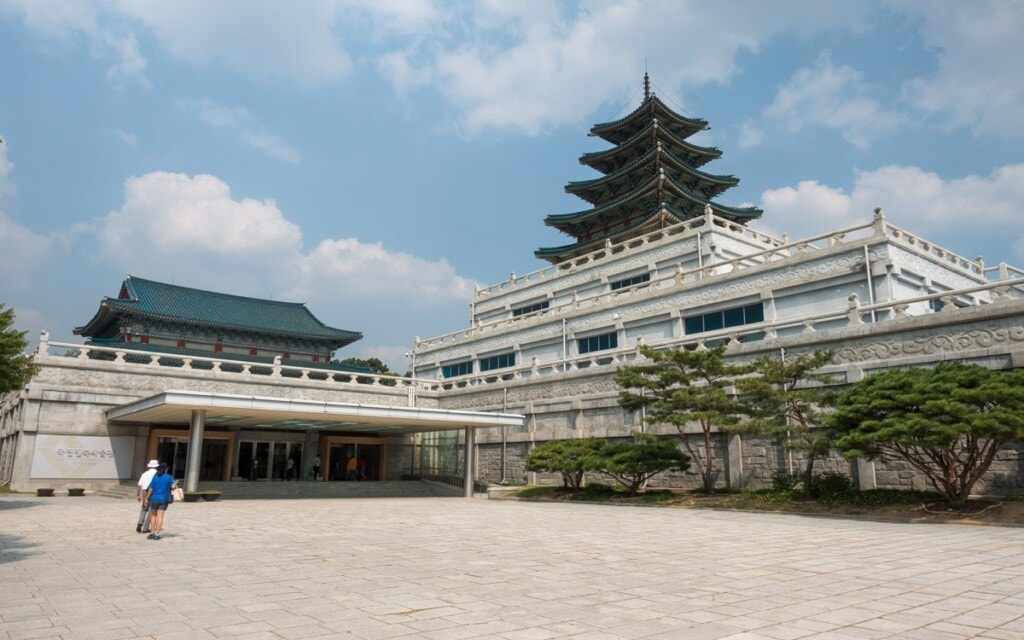
The National Folk Museum of Korea is a museum on the grounds of Gyeongbokgung Palace, not to be confused with the nearby National Palace Museum of Korea which is also found on the palace grounds. The museum dates back to…
Samcheong-dong
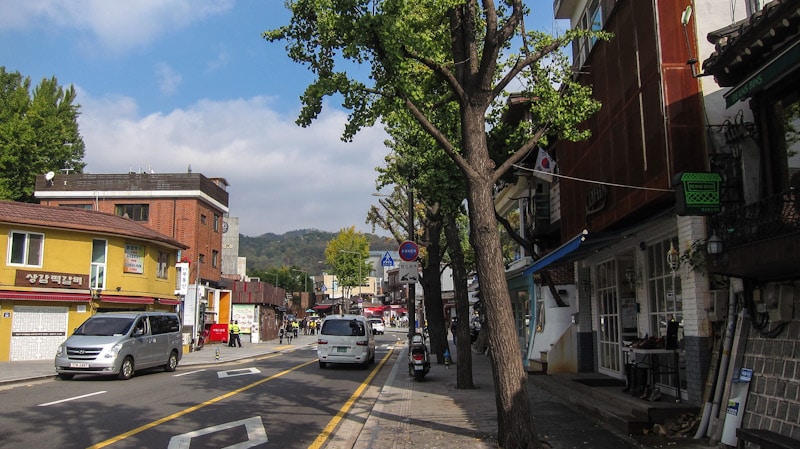
Samcheong-dong is an upscale neighborhood of Seoul that lies in a scenic area east of Gyeongbokgung Palace and Cheong Wa Dae (Blue House). The clean water and beautiful mountains in the area inspired the name of this trendy, youthful neighborhood.…
Tongin Market

Tongin Market is a traditional market located west of Gyeongbokgung Palace and Seochon Village. The compact market features about 80 different shops along a 200-meter (656-foot) covered alleyway. In addition to restaurants and banchan shops, the market also features Korean…
Bukchon Hanok Village

Bukchon Hanok Village is a historic village dating back more than 600 years to the Joseon dynasty which features hanok or Korean traditional houses. Bukchon means “northern village.” The quaint residential village lies in a hilly neighborhood north of Cheonggyecheon…
Gyeongbokgung Palace

Gyeongbokgung Palace, located north of Gwanghwamun Square, is one of the most iconic sights in all of Korea thanks to its long and storied history. Construction of Gyeongbokgung Palace was completed in 1395 at the beginning of the Joseon dynasty…
Cheongun Literature Library
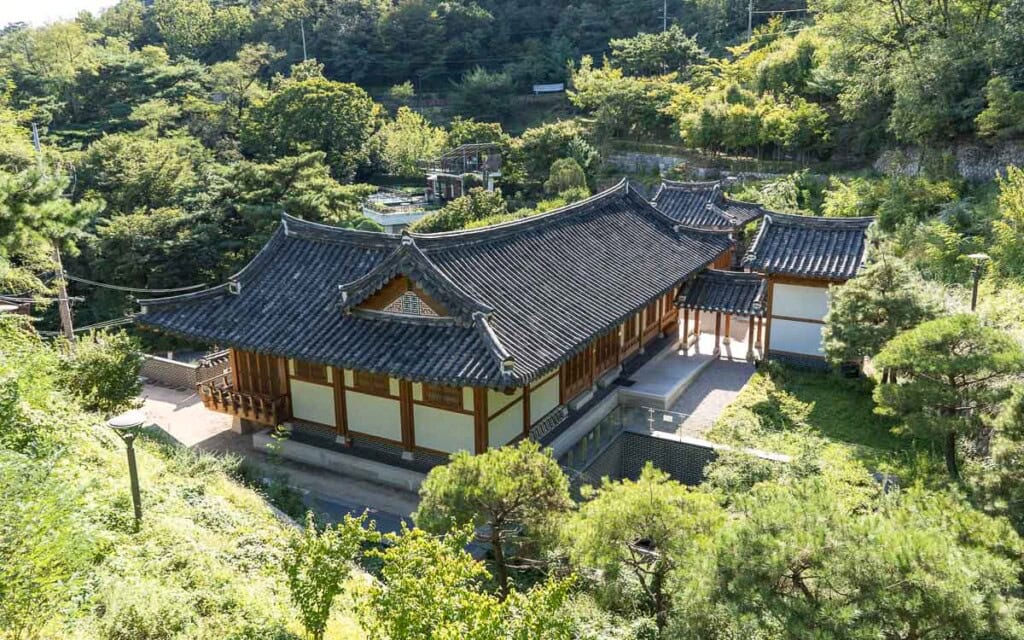
Cheongun Literature Library, the first hanok public library in Seoul, sits surrounded by nature at the foot of Inwangsan Mountain. Built by the Jongno-gu Office, it blends traditional architecture with the surrounding landscape. Cheongun Literature Library Information Name: Cheongun Literature…
Additional Resources
Klook
Klook offers discounted tickets and reservations for attractions and services in Seoul, from theme parks and museums to tours and transportation.
GetYourGuide
GetYourGuide offers tours, attraction tickets, and day trips in Seoul and nearby areas. You can book ahead before your trip.
Airalo
Airalo is a popular eSIM provider used by travelers around the world. It offers South Korea data plans you can buy before you arrive. Check that your phone is compatible first.
Viator by TripAdvisor
Book tours, activities, and unique experiences in Seoul, from sightseeing to cultural events and outdoor adventures, offered by local providers.
Book Recommendations
Prefer a physical guide? Fodor’s Seoul offers detailed recommendations, maps, and travel tips for the city.
Last Updated on Oct 26, 2026