If you plan to use buses, the metro, or taxis in Seoul, a T-money card is the most convenient way to pay your fares. This rechargeable smart card works across the city’s public transportation system, including the Seoul Subway, the Seoul Bus network, and taxis, and can also be used throughout much of South Korea. You will also get small fare discounts on buses and the subway compared to buying single tickets, and you will not have to deal with cash or ticket machines each time you ride.
In addition to public transit, you can use it at convenience stores, retail shops, vending machines, and even some attractions.
Where to Buy a T-money Card

Seoul Metro has rolled out new ticket kiosks across Lines 1 to 8, but machine types can still vary by station and operator. There are still several easy ways to buy a physical T-money card.
To purchase a new card, use one of these options:
- Convenience Stores: Most reliable option. Check CU, GS25, 7-Eleven, or emart24 near stations and airport terminals.
- New Ticket Kiosks (Lines 1 to 8): You can buy transit products here, including T-money cards. South Korea-issued cards and simple-pay options work for selected functions such as single-use tickets, commuter passes, and Climate Card charging. For prepaid T-money top-ups, use KRW cash at the kiosk. Overseas-issued card support is being expanded in phases.
- AREX Express Train Pre-Order (Official App): If you take the AREX Express Train, you can pre-buy a T-money card in the official AREX app and receive it from onboard crew on the way to Seoul Station.
- Third-Party Pre-Order (Airport Pickup): Third-party sites like Klook offer T-money cards for airport pickup. Some cards come preloaded, which can help you use transit right after arrival. Check package details before checkout.
- Incheon AirportT-money Vending Machines: Located near the Airport Railroad gates at the airport. Some machines are cash only and bills only (no coins), so carry small KRW notes. For child or youth discounted fares, use a convenience store counter for purchase and date-of-birth registration.
- Station Information Centers: If needed, ask staff at the Customer Safety Center near the gates.
Child/Youth discount reminder: For riders under 18, register date of birth at a convenience store to activate child or youth fare.
A standard physical card usually costs around 3,000 to 5,000 won. This is the one-time card purchase fee. You then add balance separately.
Important: You can use T-money for the AREX All Stop Train, but not for gate entry on the AREX Express Train. The Express Train requires its own reserved-seat ticket.
Recharging Your Card
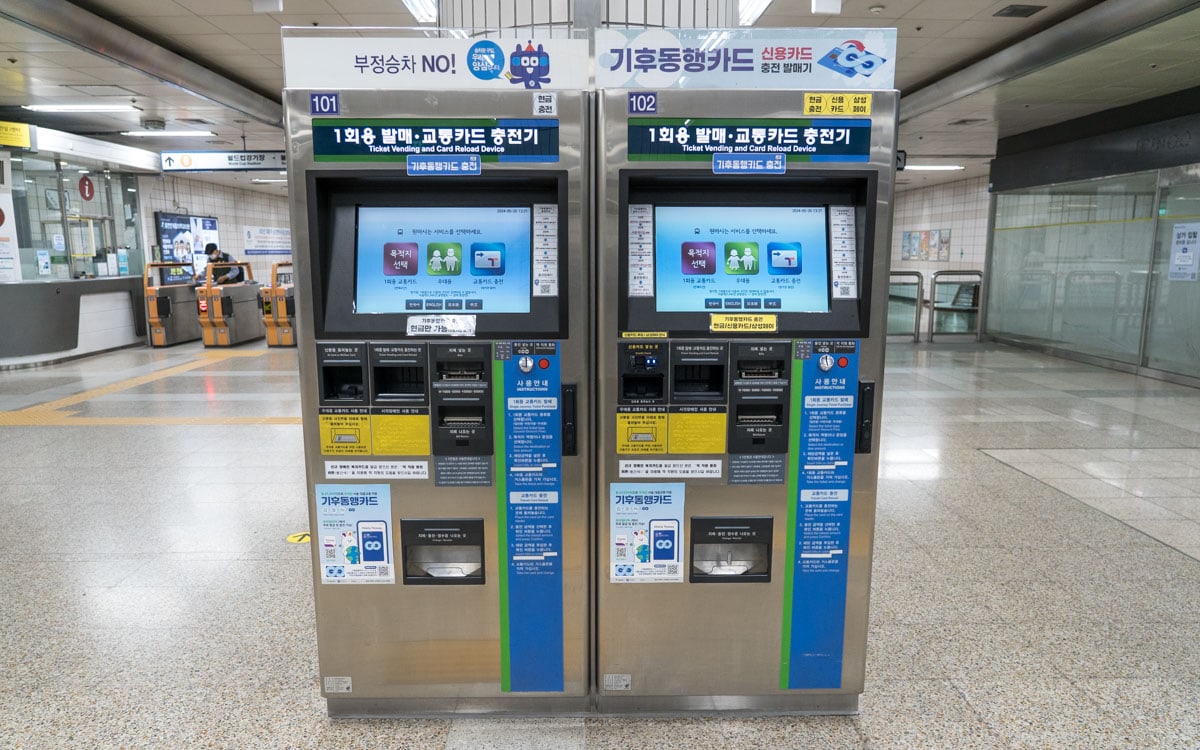
Adding money is simple, and KRW cash is still the most reliable method for prepaid T-money top-ups. Digital T-money in Apple Wallet is now available, but in-wallet top-ups currently require a South Korea-issued card, so cash top-up remains the most reliable option for most visitors.
Seoul Metro’s older cash-only vending machines have been in service since 2009, and replacement with new kiosks began in September 2025 in phases. Depending on the station and line, you may still see older machines, newer kiosks, or both.
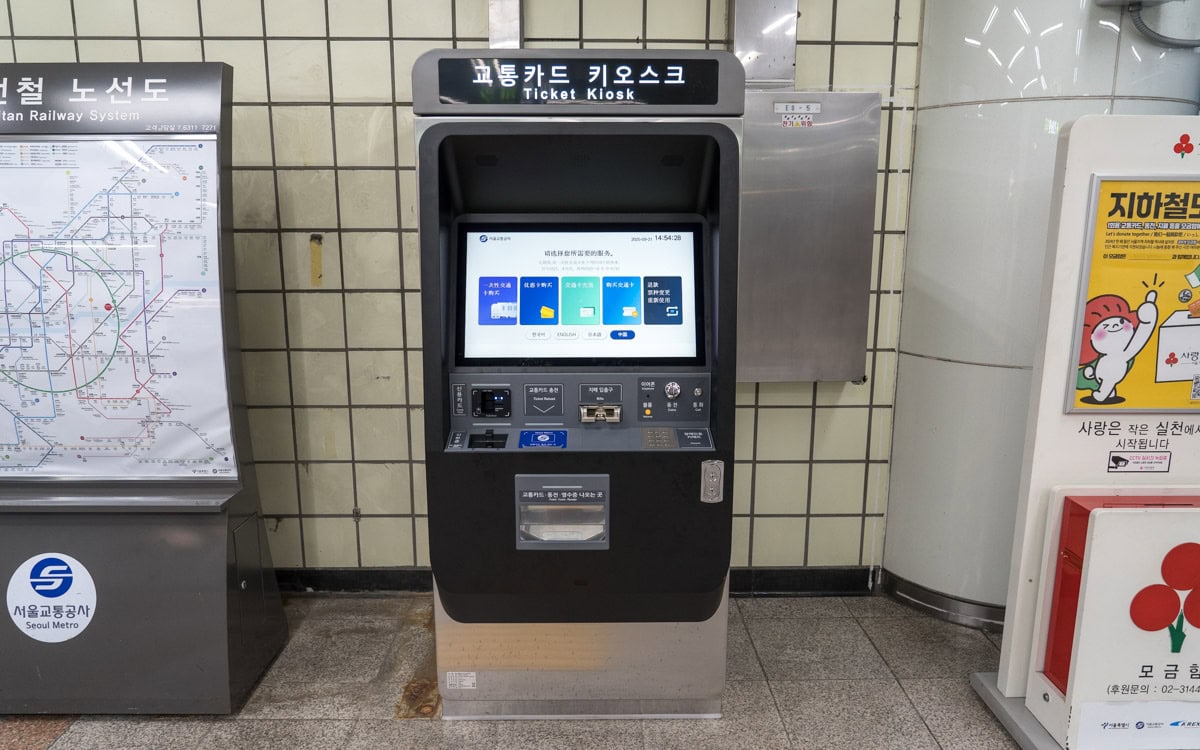
At the new kiosks, South Korea-issued cards and simple-pay options are available for selected functions (such as single-use tickets, commuter passes, and Climate Card functions). Prepaid T-money top-up at kiosks remains cash-only for now. Seoul Metropolitan Government says overseas-card support with these new kiosks is being expanded in phases over the next few years.
To reload at both old and new station kiosks, select English, place your card on the reader, choose the amount, and insert cash.
You can also top up at convenience stores with the T-money logo.
How to Use T-money for Transportation
T-money works with tap-on and tap-off. Tap when entering a subway station or boarding a bus. On buses, tap again when you get off. On some village buses, boarding and exiting may use the same door, so tap off before you step out.
If you forget to tap off a bus, your next trip may be charged as a longer route and you can lose transfer benefits.
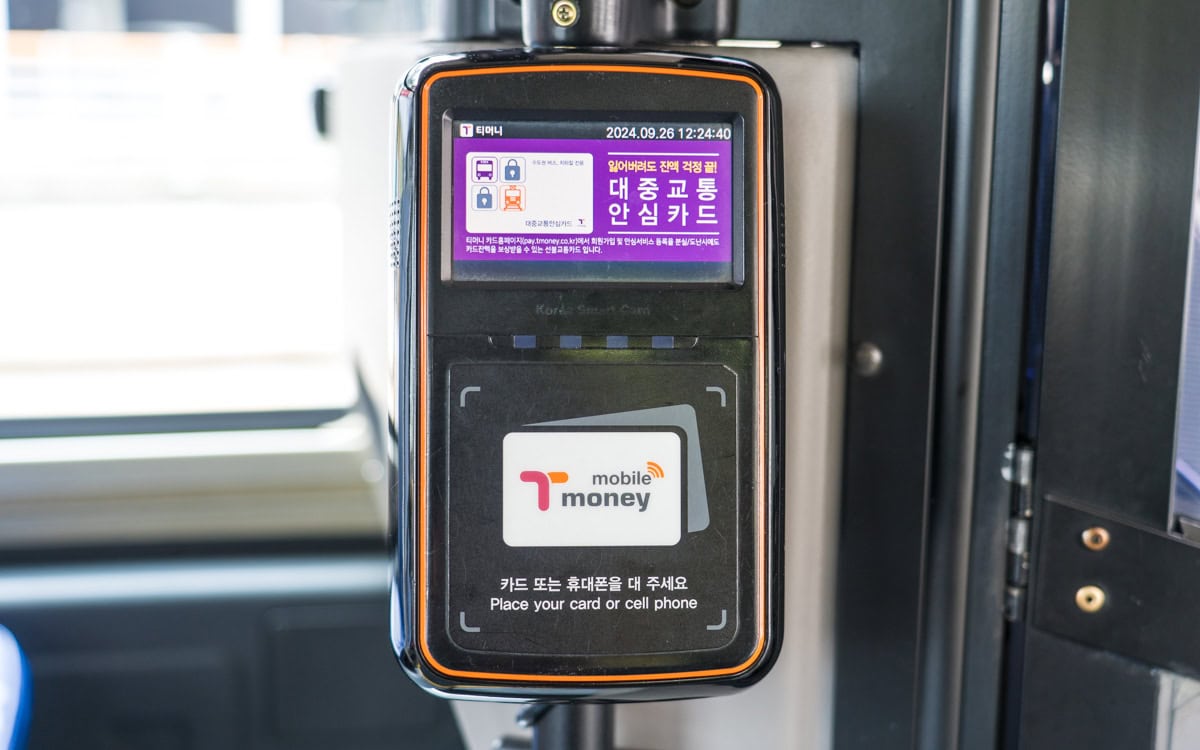
Seoul uses a distance-based fare system. If you use the same transit card and tap off each ride, bus and subway transfers are usually discounted when you transfer within 30 minutes. From 9 PM to 7 AM, that window is 60 minutes. You can get up to 4 transfer discounts (5 total rides), and longer trips may cost more due to distance charges.
Tip: If you tap into the wrong subway gate for your direction, tap out and re-enter at the same station on the same line within 15 minutes using the same transit card. On eligible sections, this is treated as a re-ride transfer, so you are not charged an extra base fare.
Retail, Taxi, and Vending Machine Payments
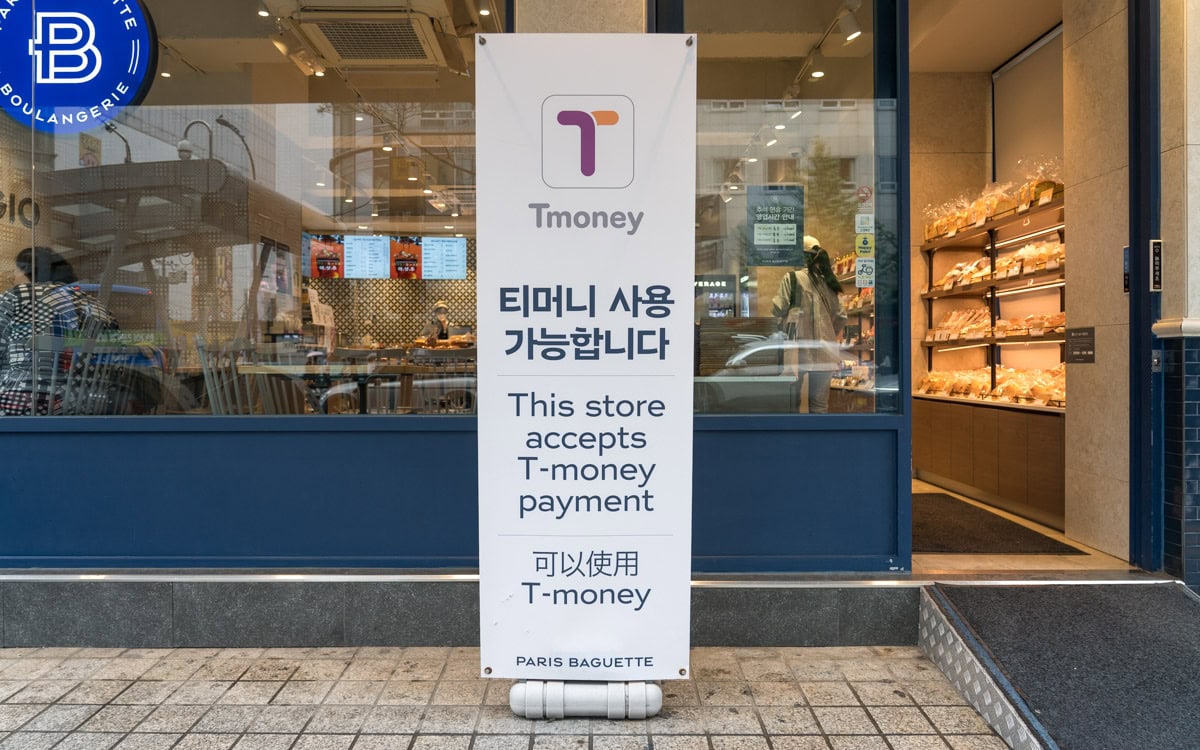
T-money is also accepted at many convenience stores (GS25, CU, 7-Eleven, Emart24), plus some vending machines and retail stores.
Most Seoul taxis support T-money. Look for the T-money logo on the in-car terminal and tap at the end of the ride. Keep enough balance on your card before boarding.
If your remaining balance is small near the end of your trip, spending it at a convenience store is often better than paying a refund fee.
Which Card Should I Buy?
Choose based on your actual itinerary:
- Traveler A (Airport + multiple cities): Use T-money. It works nationwide and is the most flexible.
- Traveler B (Seoul-only, heavy transit use): The Climate Card can save money if you take many rides every day.
- Traveler C (Seoul base + day trips): Usually better with T-money, since Climate Card service boundaries can be restrictive outside Seoul.
T-money vs. Climate Card
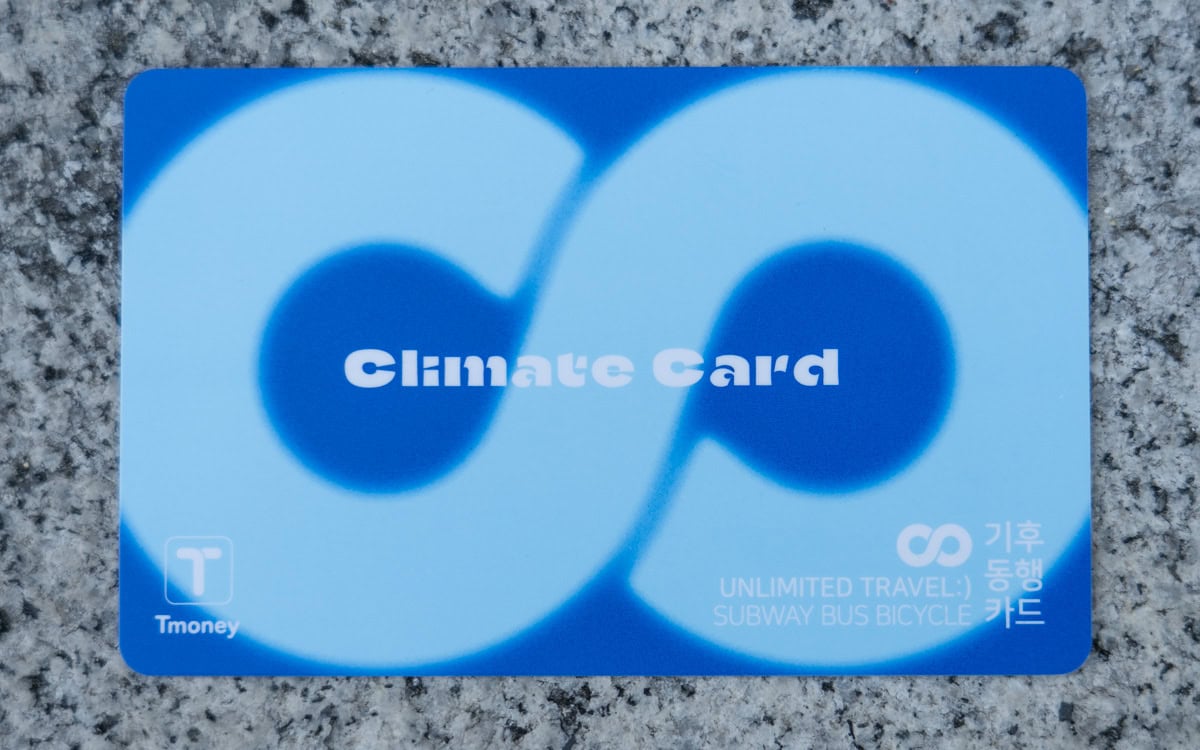
The Climate Card offers unlimited 1, 2, 3, 5, or 7 day rides on eligible Seoul subway lines and Seoul-licensed buses. It does not cover the Sinbundang Line, airport or intercity buses, non-Seoul-licensed buses, or subway trips that end outside the service area
The Climate Card works on the AREX All-Stop train between Seoul Station and Gimpo Airport. It also works when traveling from Seoul toward Incheon Airport, where you can exit at Terminal 1 or Terminal 2. You cannot board at Incheon Airport T1 or T2 with a Climate Card. For trips from Incheon Airport into Seoul, use T-money card or buy an AREX All-Stop single-journey ticket. AREX Express is a separate service and requires its own ticket.
Getting a Refund
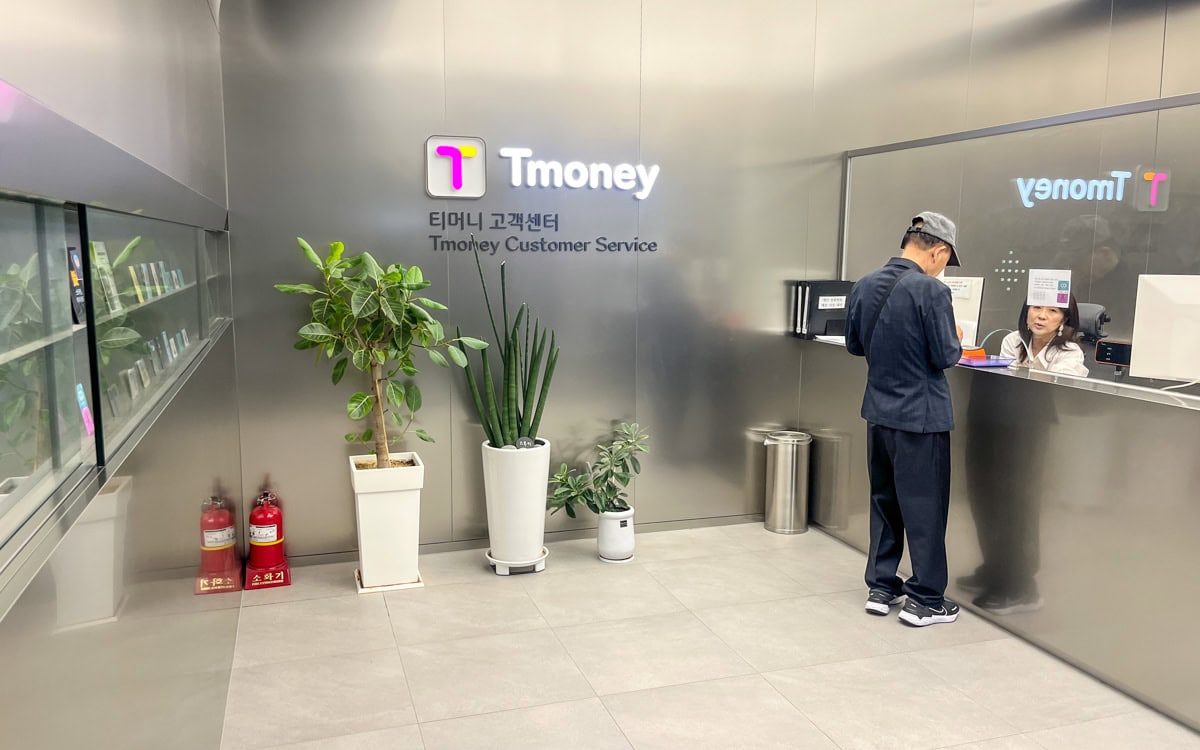
For refunds, rules vary by card type and refund location. As a practical rule, lower balances are usually handled at convenience stores (service fee applies), while higher balances or special cases may require a station service desk or T-money Town.
- Up to 20,000 won: Most major convenience stores can process refunds (500 won fee).
- 20,000 to 50,000 won: Use a subway station Customer Safety Center / Information Center (T-money service desk). Some convenience stores may handle up to 30,000 won depending on chain, but station desks are the most reliable option.
- Over 50,000 won: Visit T-money Town (Seoul City Tower 1F near Seoul Station Exit 10).
Do not use the Refund Deposit Machine for standard T-money prepaid balance. That machine is for single-use subway cards with deposit handling.
Common T-money Mistakes to Avoid
- Forgetting to tap off buses: You can lose transfer discounts and may pay a higher fare on your next ride.
- Trying to use T-money for AREX Express gates: AREX Express requires separate reserved-seat ticketing.
- Loading too much money: Large balance refunds can require extra steps. Top up in smaller amounts.
Frequently Asked Questions
Do I need a T-money card?
If you are planning to travel by bus, it is recommended to have a T-money card, as most buses no longer accept cash fares. If you are traveling by metro, you can use cash to buy single-journey tickets, but paying for each trip with cash is not ideal.
Does a T-money card expire?
The physical card has no fixed expiration date. Stored prepaid balance has a validity period of 5 years, but can often be reactivated by simply topping up at a machine.
Can I use T-money outside Seoul?
Yes. It works in major cities like Busan and Jeju, as well as many regional bus systems nationwide.
Can one T-money card pay for multiple people?
On many city buses, yes, if you tell the driver the number of passengers before tapping. For subway gates, each passenger needs their own card.
Are there youth discounts?
Yes. Child (ages 6 to 12) and teen (ages 13 to 18) fares require age registration when the card is set up. You can ask a convenience store attendant to register the birthdate (bring a passport for verification).
Can I buy KTX or SRT with T-money?
No. KTX and SRT are long-distance high-speed rail lines and require separate tickets.
Can I recharge with Apple Pay or Google Pay?
You can now add T-money to Apple Wallet on iPhone and Apple Watch. However, adding money in-wallet currently requires a South Korea issued credit card, so for most visitors the most reliable method is still topping up with cash at subway kiosks or convenience stores. Seoul’s foreign-card tap payment rollout is expanding in phases, but coverage is not yet systemwide.
Can I just tap my own credit card instead of buying T-money?
Not reliably yet. Foreign-card transit payment is still being rolled out in phases, so a physical T-money card remains the most dependable option.
Can I buy a child or teen T-money card at airport vending machines?
If you need a child or teen discounted fare card, use a convenience store counter and ask staff to register the card with the traveler’s birth date (passport may be requested). For youth fares, this is the most reliable method.
What if I tap into the wrong subway gate?
On eligible subway sections, if you tap out and re-enter at the same station on the same line within 15 minutes using the same transit card, it is handled as a re-ride transfer. This is generally applied once per subway trip and is for transit cards (not single-use tickets or commuter passes).
Last Updated on Feb 24, 2026