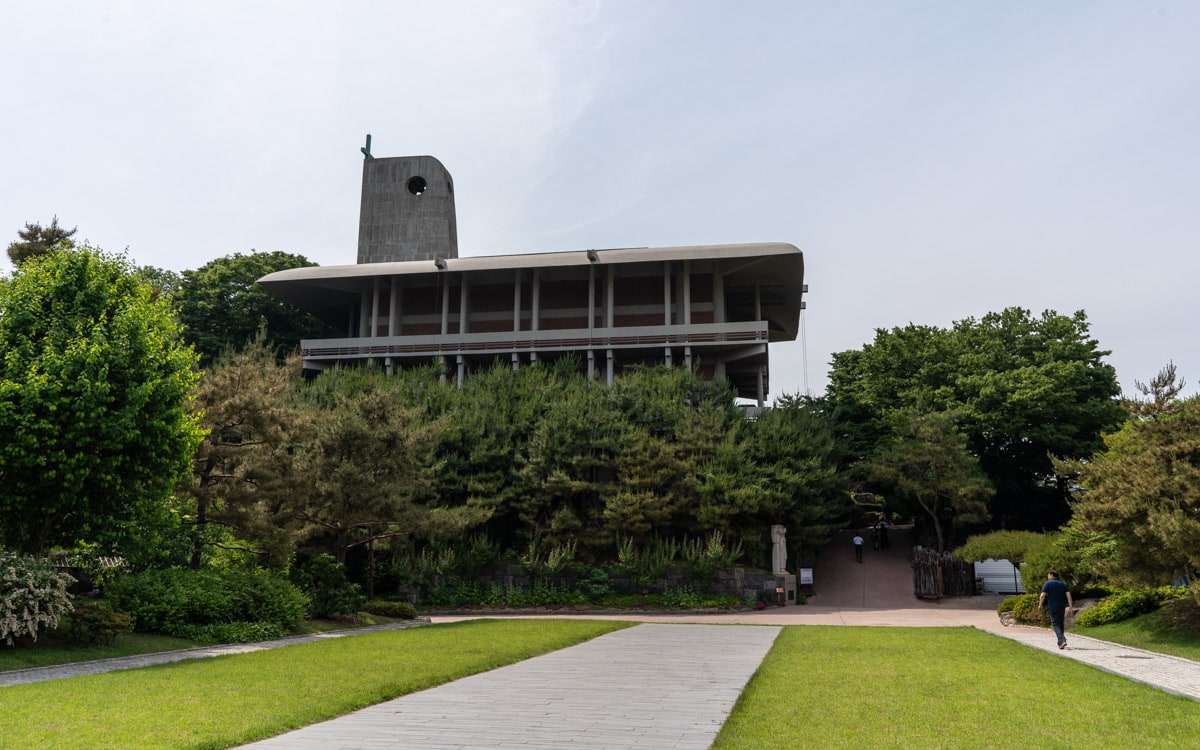
Jeoldusan Martyrs’ Shrine is a Catholic shrine on the Han River dedicated to those who gave up their lives during the Byeongin persecutions of 1866. In late 1866, nine French missionaries were martyred. This caused two attempted invasions into Korea by a French fleet. After the attempted invasions, the Joseon government punished, targeted, and brutally murdered many French and native Korean Roman Catholics. The place became known as “beheading mountain.”
The property was acquired by the Catholic Church in 1956. In 1962, a monument was erected at this location in honor of those who were executed here.
In 1967, a church and museum were built here in honor of the 100th anniversary of the persecution. These new buildings were built in the hope of remembering these martyrs and also in deepening the faith of believers.
In 1968, relics of the martyrs were enshrined in the basement of the church. Today, the church holds the relics of twenty nine martyrs, including one who is unknown.
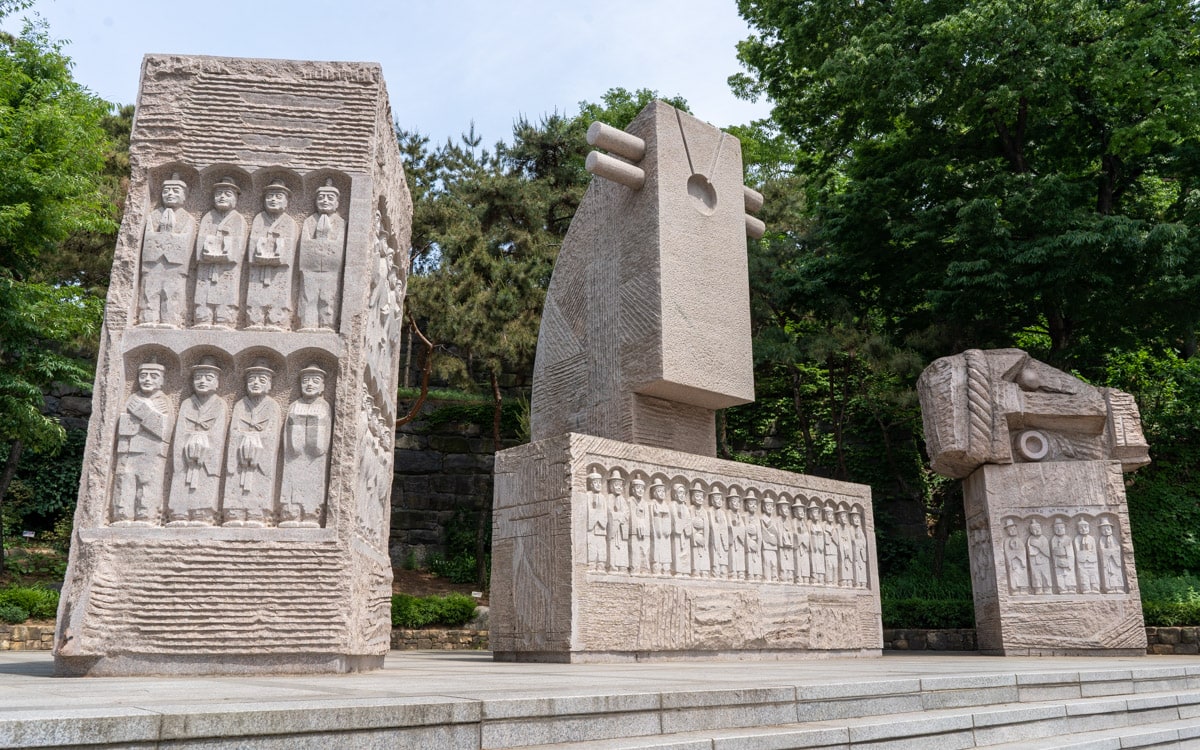
On May 3, 1984, Pope John Paul II visited Jeoldusan Martyrs’ Shrine to pay respect to the martyrs. He visited during the 200th anniversary of Catholicism in Korea. Mother Teresa visited the shrine a year later in 1985.
On November 7, 1997, the shrine was designated as a site of national historical significance. In August 2008, the museum was renamed “The Korea Catholic Martyrs’ Museum.”
On the other side of the shrine is Yanghwajin Foreign Missionary Cemetery.
Table of Contents
Jeoldusan Martyrs Shrine Hours
Jeoldusan Martyrs' Museum Grounds24 hours
Jeoldusan Martyrs' Museum
9:30-17:00
Admission
FreeHow to get to Jeoldusan Martyrs Shrine
Take Subway Line 2 or Line 6 to Hapjeong Station (Exit 7).Map
Additional Resources
Book Recommendation: Fodor’s Seoul
While The Seoul Guide provides plenty of information about traveling to Seoul, sometimes it helps to bring a book with you on your journey. Want to visit Gwangjang Market, hike Bukhansan National Park, visit an ancient palace, or sing karaoke all night long? The book I always recommend is Fodor's Seoul, which provides expert recommendations including sights to see, restaurant reviews, maps, and essential trip-planning information for everything related to Seoul.
Learn more about Fodor's Seoul
Rakuten
Save money while exploring Seoul with Rakuten's cashback program. By booking hotels through Rakuten, visitors can earn cashback rewards and enjoy significant savings. Exclusive partnerships and deals make stays in Seoul more affordable, freeing up funds for attractions, dining, and other experiences. I use Rakuten for cashback on all of my hotel stays in Seoul.
If you sign up using the link below, you will get $30 cashback after your first purchase over $30.
Klook
Klook is a reliable online platform offering discounted tickets and reservations for attractions and services in Seoul. It covers theme parks, museums, transportation, WiFi, tours, and more. Travelers can save time and money by booking through Klook's user-friendly interface, with secure transactions and helpful customer support.
If you sign up using the link below, you will get $5 off your first order.
Last Updated on Dec 25, 2021