A stone arch built to express Korea’s independence
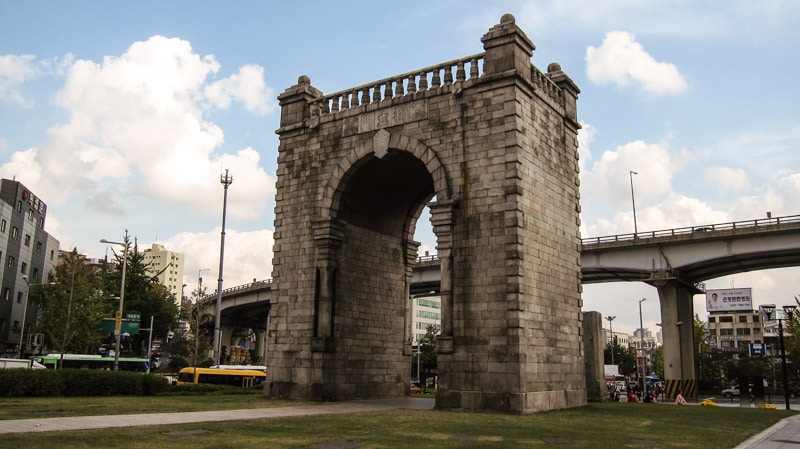
Dongnimmun, also known as Independence Gate
Dongnimmun Gate (Independence Gate) is a memorial built to honor the Korean people and their fight for national independence over foreign intervention. The gate is located in the southeastern corner of Seodaemun Independence Park near Seodaemun Prison History Hall.
A gate known as Yeongeunmun once stood at this location. It was here where Chinese and other foreign envoys were received and greeted. Envoys received their tribute from Joseon monarchs here as they arrived in Korea.
During the late 1800s, Joseon politics were in the midst of disarray. A movement known as the Gabo Reform, which took place from 1894 to 1896, aimed to reform the government through sweeping internal and systemic changes.
Due to foreign intervention, the reform was unsuccessful, causing Korea to fail at gaining national independence.
The design of the gate was inspired by the Arc de Triomphe in Paris, France
A new symbolic monument and gate was desired at this location after the Meiji Japanese army defeated the Qing Chinese army in the First Sino-Japanese War from 1894 to 1895.
On November 21, 1896, the foundation stone for Dongnimmun was laid. The gate was built to symbolize the continued determination of a free Korea without foreign interference. Construction on the gate was completed on November 20, 1897.
Construction was supervised by Sim Uiseok. The project had the approval of the king and support from the Independence Club, whose leading figures included Seo Jaepil. The design was modeled after the Arc de Triomphe in Paris, France.
In 1897, King Gojong proclaimed the Korean Empire and became its first emperor.
Made of granite, the gate features a large rainbow-shaped passageway. The gate stands 14.28 meters (47 feet) high and 11.48 meters (38 feet) wide. A stone staircase on the left side of the gate leads up to the top. A plaque over the arch features plum blossoms which were a symbol of the Great Han Empire.
Dongnimmun Gate (Independence Gate) was originally located 70 meters (230 feet) to the southeast. In 1979, the gate was restored and moved to its current location.
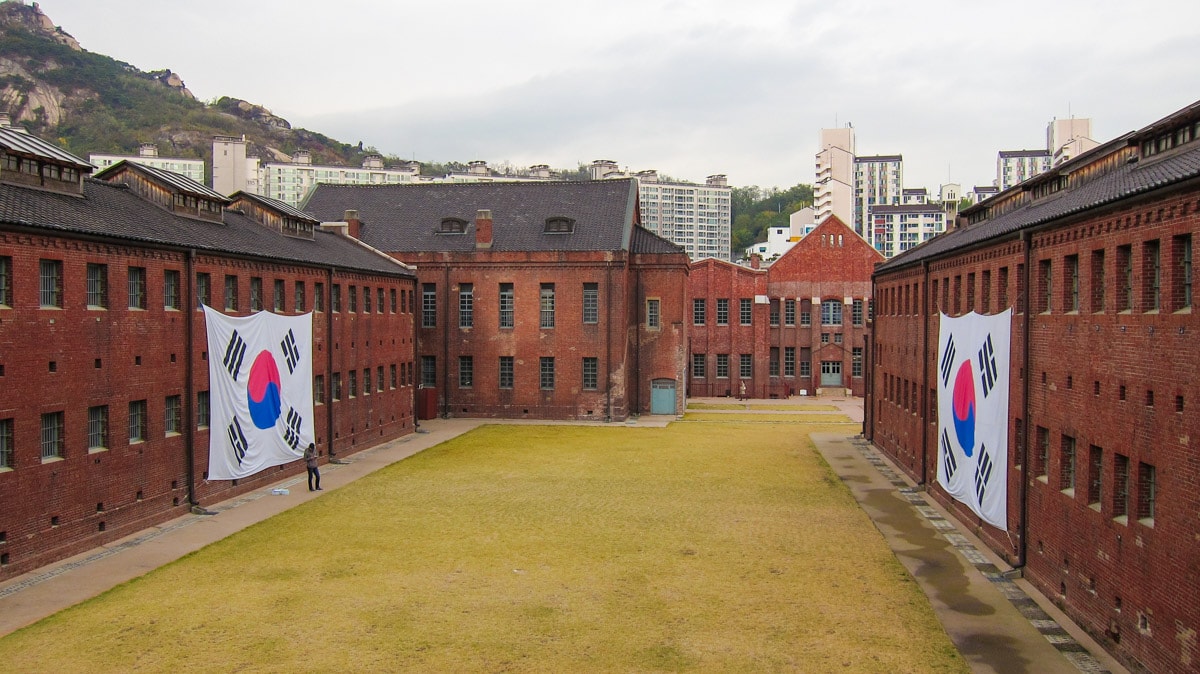
Seodaemun Prison History Hall is a museum and memorial in a former prison. Its preserved buildings and exhibits commemorate Korean independence activists imprisoned during Japanese rule.
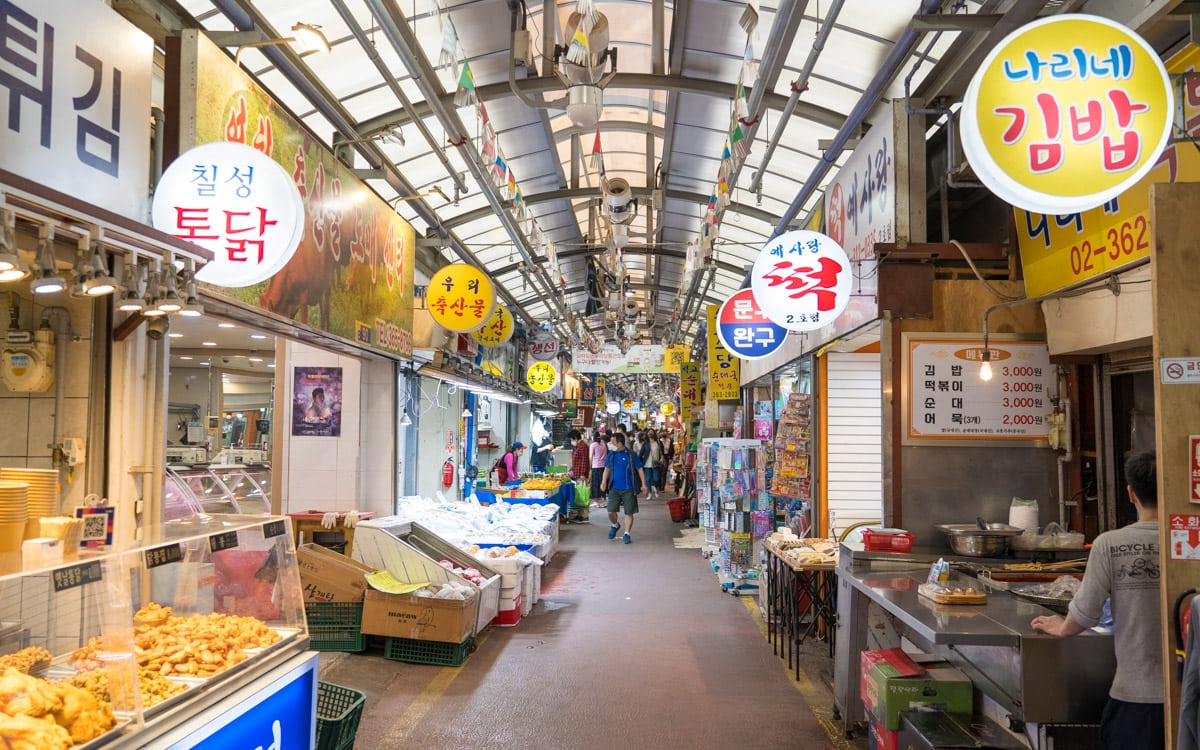
Yeongcheon Market is a covered traditional market in Seodaemun-gu. Its narrow alley has stalls selling produce, household goods, and street food such as twisted doughnuts and tteokbokki.
Airalo is a popular eSIM provider used by travelers around the world. It offers South Korea data plans you can buy before you arrive. Check that your phone is compatible first.