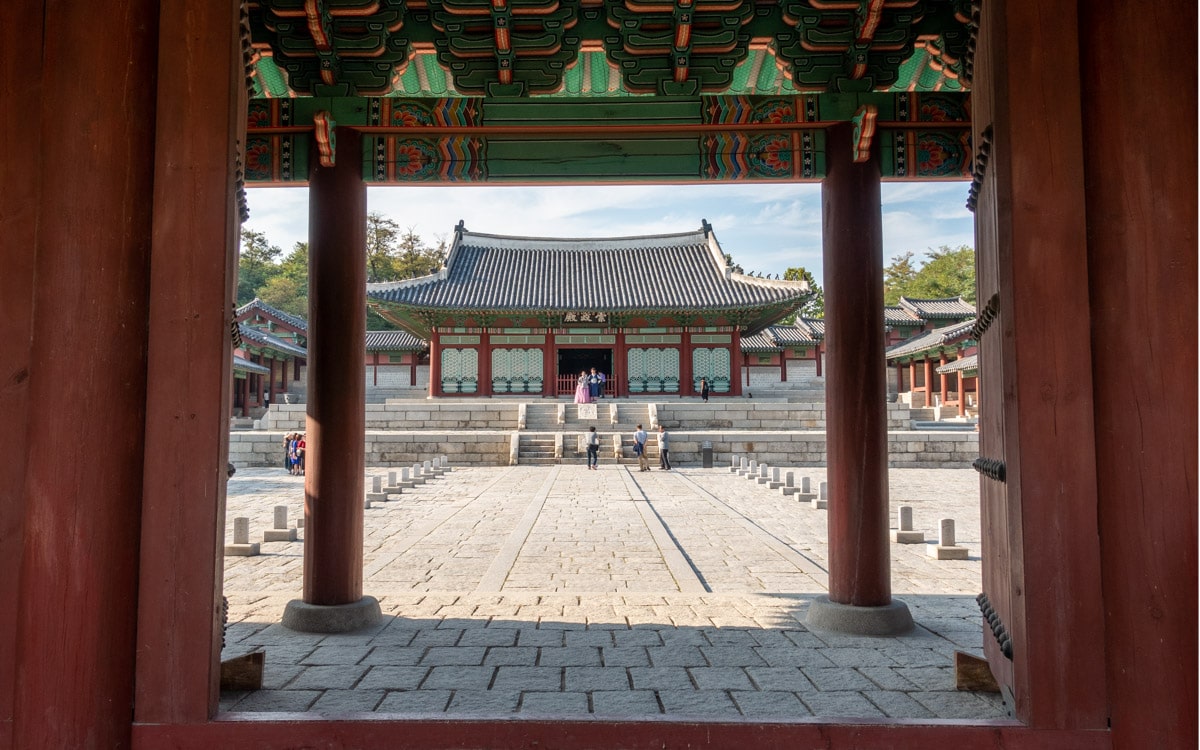
Gyeonghuigung Palace, one of five grand palaces built during the Joseon Dynasty, served as a secondary royal villa for the king during daily excursions. It was also used as a place of shelter during times of emergency. For over 200 years, ten kings resided at this location.
Construction began in 1617 during the 9th ruling year of King Gwanghaegun of Joseon, who reigned from 1608 to 1623.
Before 1760, the palace was known as Gyeongdeokgung or Seogwol, meaning palace in the west. In 1760, the palace was renamed to Gyeonghuigung.
Sungjeongjeon Hall and Jajeongjeon Hall were used by the king and the royal council for meetings and lectures. During this free time, the king would use these halls for his own personal living room.
A small bridge known as Geumcheongyo can be found crossing the Geumcheon stream near the front entrance of the Seoul Museum Of History.
By the early 1900s, about 100 buildings made up Gyeonghuigung Palace. During the Japanese occupation of Korea most of these buildings were either destroyed or removed to make way for schools for Japanese children.
In the 1990s, reconstruction work was started to restore the decayed royal residence to its former glory. Though many of the gates and halls have since been restored, it still looks very different from its original design and features. In 2002, the area was reopened to the public.
Table of Contents
What to see at Gyeonghuigung Palace
Geumcheongyo Bridge
Geumcheongyo Bridge is stone bridge built in 1619 during the reign of Gwanghaegun located across a stream near the entrance to the Seoul Museum of History. The stream, known as Geumcheon, runs between the bridge and Heunghwamun, the front gate of the palace.
A goblin was engraved into the stone of one of the rainbow shaped posts. It was believed that these goblins and other menacing figures warded off the evil spirits.
During the Japanese occupation, the bridge was completely buried. In 2001, the government of Seoul restored it to its former glory.
There is a bridge by the same name at Deoksugung Palace.
Heunghwamun Gate
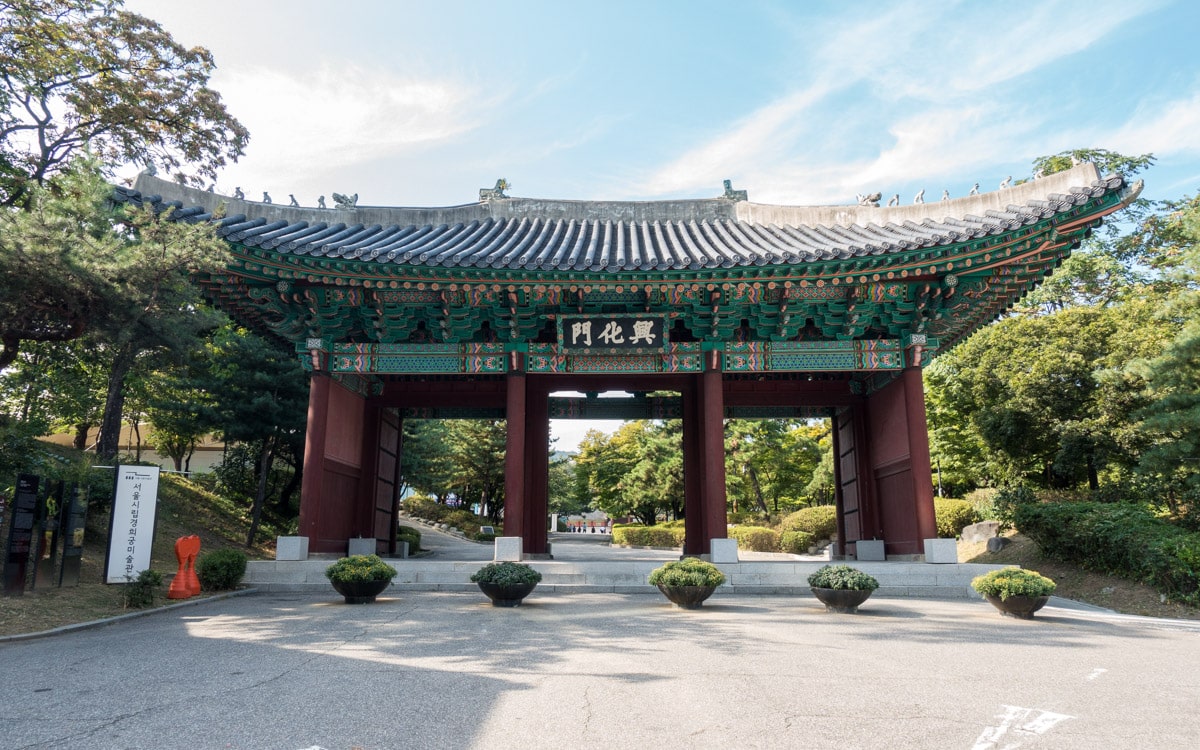
Heunghwamun Gate is the front gate of Gyeonghuigung Palace. When originally constructed, it faced east and was located at the current site of the Salvation Army building. In 1932, during the Japanese occupation, the gate was relocated to a shrine known as Bangmunsa who honored Ito Hirobumi.
Ito Hirobumi, who was four times the Prime Minister of Japan, went on to become the first Resident General of Korea (1905-1909) during the occupation of Korea by Japan.
In 1988, Heunghwamun Gate was moved to its current location and designated as Seoul Tangible Cultural Property Number 19.
Jajeongjeon Hall
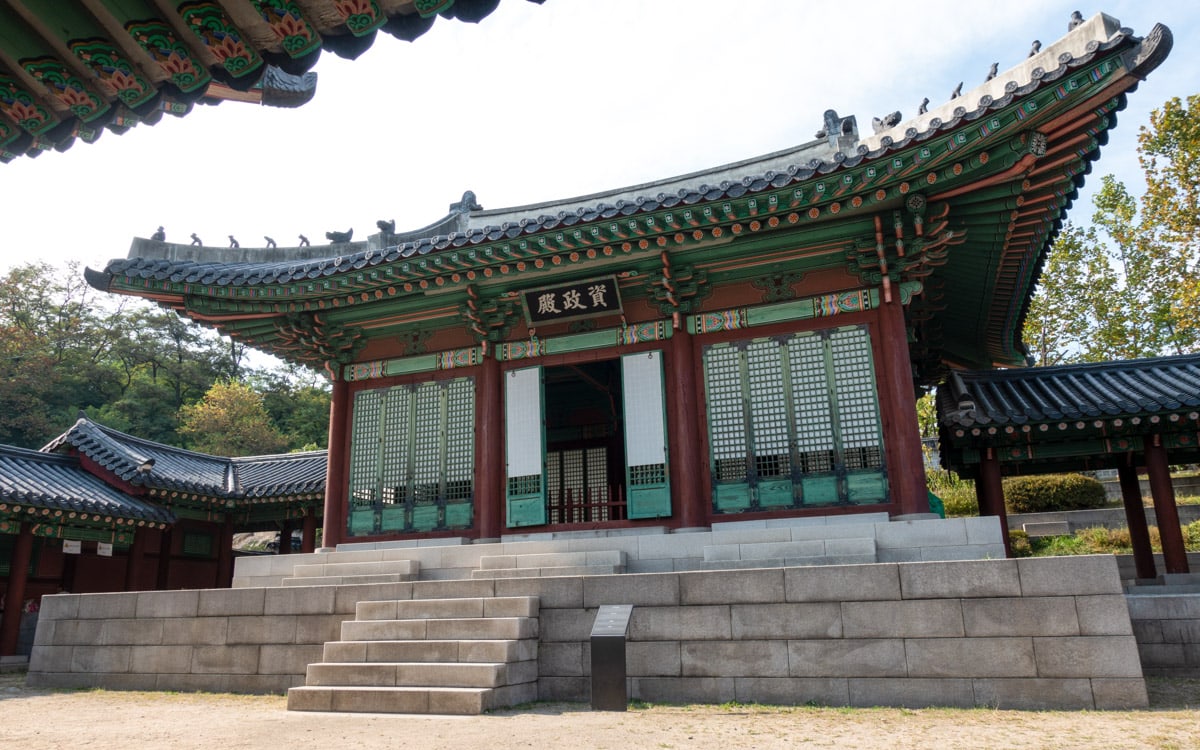
Jajeongjeon Hall was a hall that was used by the king for meetings with his royal council and also for his own personal use as a living room. In this building, the king held meetings with his subjects and also supervised academic competitions.
When King Sukjong died in 1720, the hall was then used as a binjeon. This was the name of the location in the royal residence where the coffin of a king or queen was held prior to burial. It was also used to temporary hold the eojin, or royal portrait or memorial tablet of the king.
The building was dismantled during the occupation of Korea by the Japanese. After, the government of Korea restored the building to its original design according to Seogwoldoan, which includes sketches of buildings of the western palace.
Jajeongjeon Hall was constructed between 1617 and 1620.
Seoam Rock
Seoam Rock, behind Taeryeongjeon Hall, is a large stone formation well known for its design and for Amcheon, the natural fountain that flows within. Originally, it was known as Wangam which means ‘King’s Rock’ which is why it is believed that King Gwanghaegun built Gyeonghuigung Palace here.
In 1708, during the 34th year of the reign of King Sukjong, the name was changed to Seoam Rock which literally means ‘Propitious Rock’.
King Yeongjo, the twenty first king of the Joseon Dynasty, was known to spend much of his time here while he was at the palace.
A stone tablet, known as Sabangseok, personally engraved with Chinese characters by Sukjong, was once located here but has since been lost and nowhere to be found.
Sungjeongjeon Hall
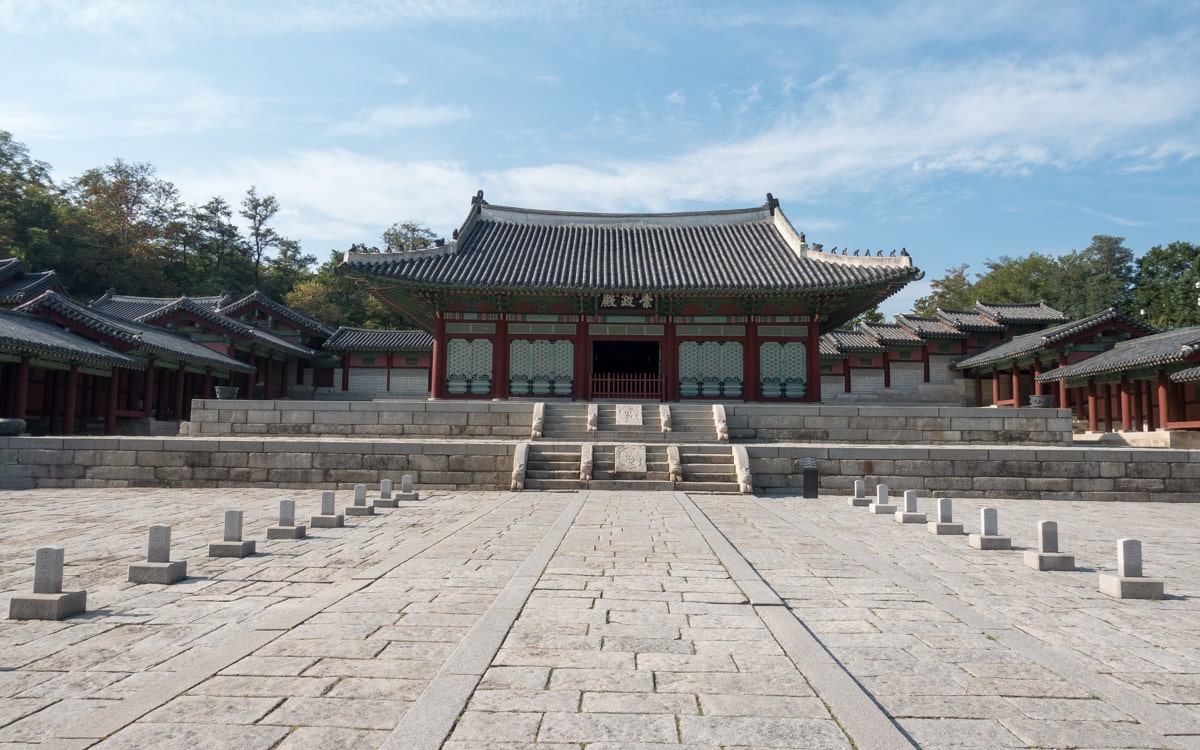
Sungjeongjeon Hall is the main hall of Gyeonghuigung Palace. At this location, the king would hold many morning meetings and ceremonies. The hall was also used for royal banquets and receptions for important foreign visitors and officials.
Construction began in 1618, during the tenth year of the reign of King Gwanghaegun. He was the 15th king of the Joseon dynasty and ruled from 1608 to 1623. He also ordered the rebuilding of Changdeokgung and other royal residences.
The inauguration ceremonies of King Gyeongjong (20th king of the Joseon Dynasty from 1720-1724), King Jeongjo (22th king of the Joseon Dynasty from 1776-1800), and King Heonjong (24th king of the Joseon Dynasty from 1834-1849) were held here.
Taeryeongjeon Hall
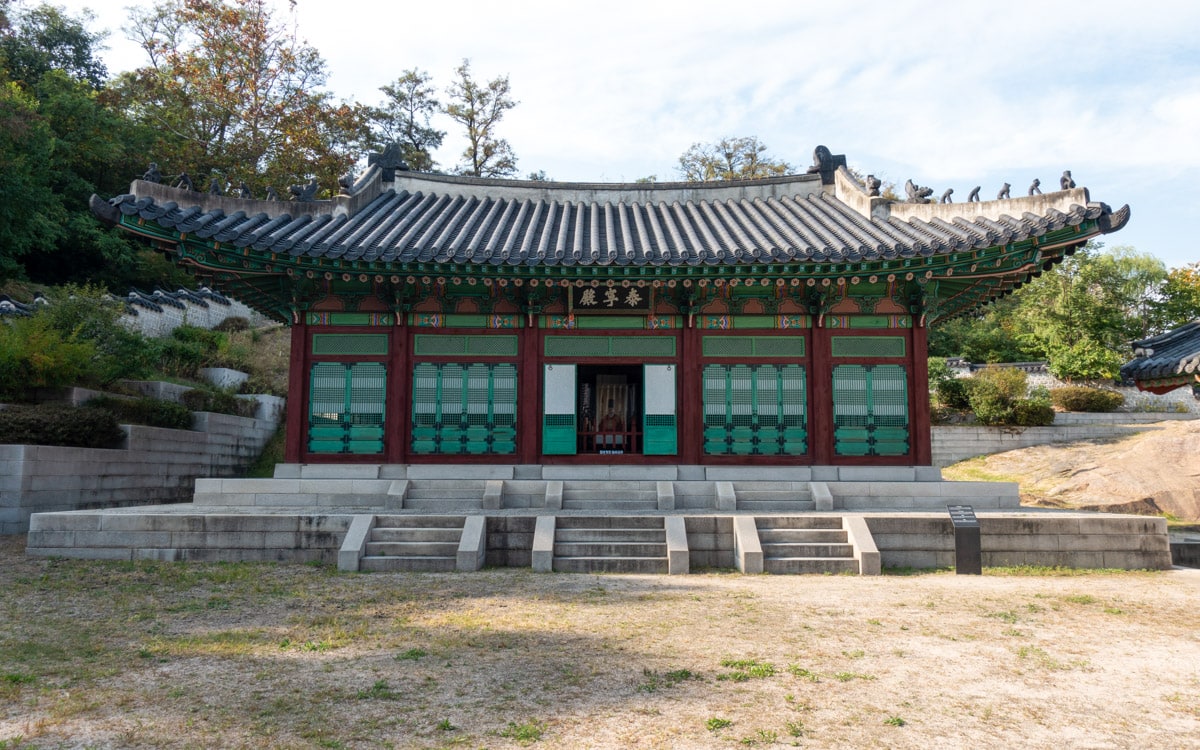
Taeryeongjeon Hall is located in a back corner of Gyeonghuigung Palace. It contains the portrait of King Yeongjo who ruled from 1724 to his death in 1776. Originally, this building had no specific purpose or use.
In 1744, during the 20th year of the reign of Yeongjo, it was renovated to display his own portrait. This is unique do to the fact that Yeongjo dedicated his own portrait during his reign. This is unlike other halls such as Seonwonjeon Hall at Changdeokgung Palace which kept the portraits of past kings.
The building was removed during the Japanese occupation. In 2000, it was finally restored and now features five sections on the front side and two sections on the sides. The tablet which hangs at the front was inspired by Han Seok-bong, a calligrapher during the Joseon Dynasty.
Gyeonghuigung Palace Hours
Weekdays: 9:00-18:00
Weekends: 10:00-18:00
Admission
FreeHow to get to Gyeonghuigung Palace
Take Subway Line 5 to Seodaemun Station (Exit 4).
After exiting, continue straight and make a right at the Naeil Newspaper Office.
Continue for 10 minutes.
Map
Additional Resources
Rakuten
Save money while exploring Seoul with Rakuten's cashback program. By booking hotels through Rakuten, visitors can earn cashback rewards and enjoy significant savings. Exclusive partnerships and deals make stays in Seoul more affordable, freeing up funds for attractions, dining, and other experiences. I use Rakuten for cashback on all of my hotel stays in Seoul.
If you sign up using the link below, you will get $30 cashback after your first purchase.
Klook
Klook is a reliable online platform offering discounted tickets and reservations for attractions and services in Seoul. It covers theme parks, museums, transportation, WiFi, tours, and more. Travelers can save time and money by booking through Klook's user-friendly interface, with secure transactions and helpful customer support.
If you sign up using the link below, you will get $5 off your first order.
Learn more about KlookLast Updated on Jul 5, 2023