A restored riverside pavilion known for its sword-washing legend and literary history.
Segeomjeong Pavilion in Seoul, Korea
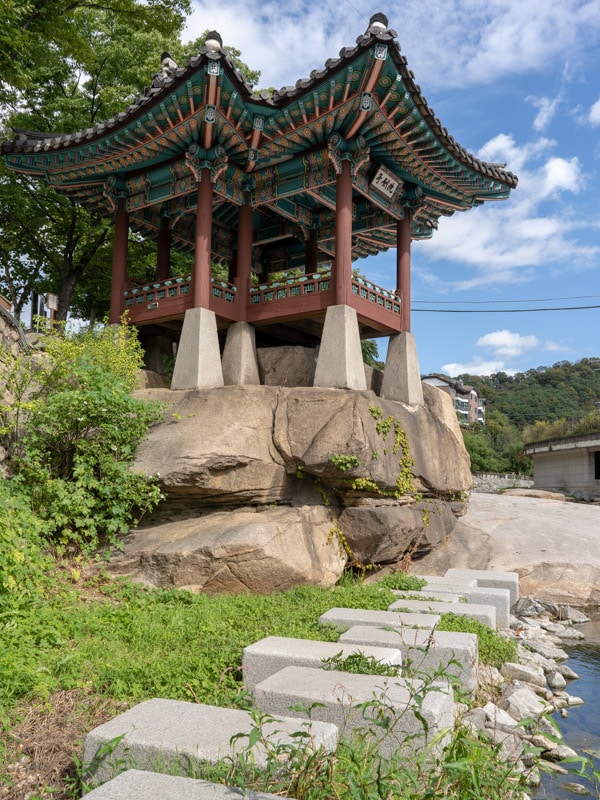
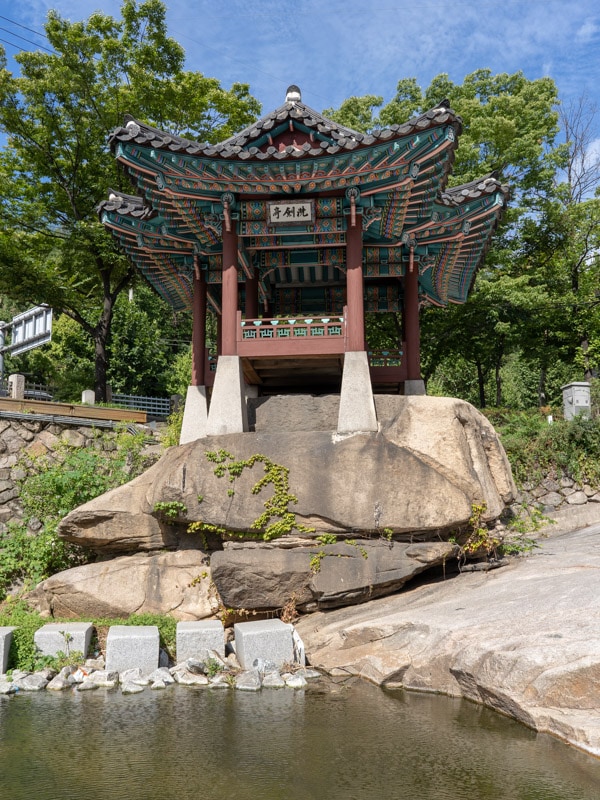
Segeomjeong Pavilion is a pavilion located on Hongjecheon Stream at the base of Mount Bugaksan in northwest Seoul. Due to its location, surrounded by nature, and built on a stream, the pavilion has been mentioned in many literary works, poems, and essays over the years.
While historians aren’t exactly sure when the pavilion was first built, its history dates back hundreds of years. For centuries, ordinary citizens, visiting Chinese officials, and warriors have stopped here to refresh, prepare for battle, or enjoy the surrounding views. It was considered one of the best places to refresh on a hot summer day.
Hongjecheon Stream, a tributary of the Hangang River
Hongjecheon Stream, which runs for 13.92 kilometers (8.6 miles), is a tributary of the Hangang River. Hongjecheon flows through Jongno-gu, Seodaemun-gu, and Mapo-gu.
The stream was previously known as Hongjewoncheon due to its location near the Joseon-era Hongjewon rest area. Today, the stream is popular for its waterfall and bicycle path.
According to one account of the Injo Coup of 1623, its leaders gathered here before entering the capital through Changuimun Gate. The sword-washing story is part of the legend surrounding the pavilion’s name.
Their mission was to dethrone King Gwanghae, the fifteenth king of the Joseon dynasty. After the coup, people began to call the pavilion Segeomjeong, literally meaning “The Sword Washing Pavilion.”
In 1746, King Yeongjo ordered the relocation of Chongyungcheong, one of five military bases, to the north of Seoul near Hongjecheon Stream. At this time, Yeongjo also decided to completely rebuild the pavilion as a place of rest and leisure.
After a year of construction, the pavilion was completed. From this point on, the pavilion was officially known as Segeomjeong.
Path in front of the pavilion
A pool found along Hongjecheon Stream
Segeomjeong was well maintained from the 18th century into the early 20th century. By the 1930s, during Japan’s occupation of Korea, the area, including the pavilion, had fallen into disrepair.
In 1941, a fire at a nearby paper factory spread to the pavilion and destroyed it.
The pavilion’s foundation stones remained until its reconstruction in 1977.
Colorful underside of the roof, Segeomjeong Pavilion, Seoul, Korea
In 1977, the government of Seoul decided to reconstruct the pavilion. Without any building plans, the government relied on an 18th-century painting by Gyeomjae Jeong Seon (1676–1759) as a reference for rebuilding. The painting depicted Segeomjeong with a low wall erected behind it, a gate near a road, and a smaller gate near the stream.
After the reconstruction of Segeomjeong, photographs of the pavilion from the early 20th century were discovered. At this point, authorities realized that the reconstruction differed from the original pavilion.
The large flat rocks in front of the pavilion were used for state ceremonies
Just below the pavilion is a large, flat rock. This rock is known as canopy rock or chailam (차일암). A state ceremony for washing away draft records, called secho (세초), took place here. The banquet that followed was called sechoyeon (세초연).
During this ceremony, paper drafts used during the creation of the Annals of the Joseon Dynasty were placed into the stream, erasing any writings. The paper was then sent to the Royal Paper Mill across the river for recycling.
After the ceremony, the king would host a feast at the pavilion.
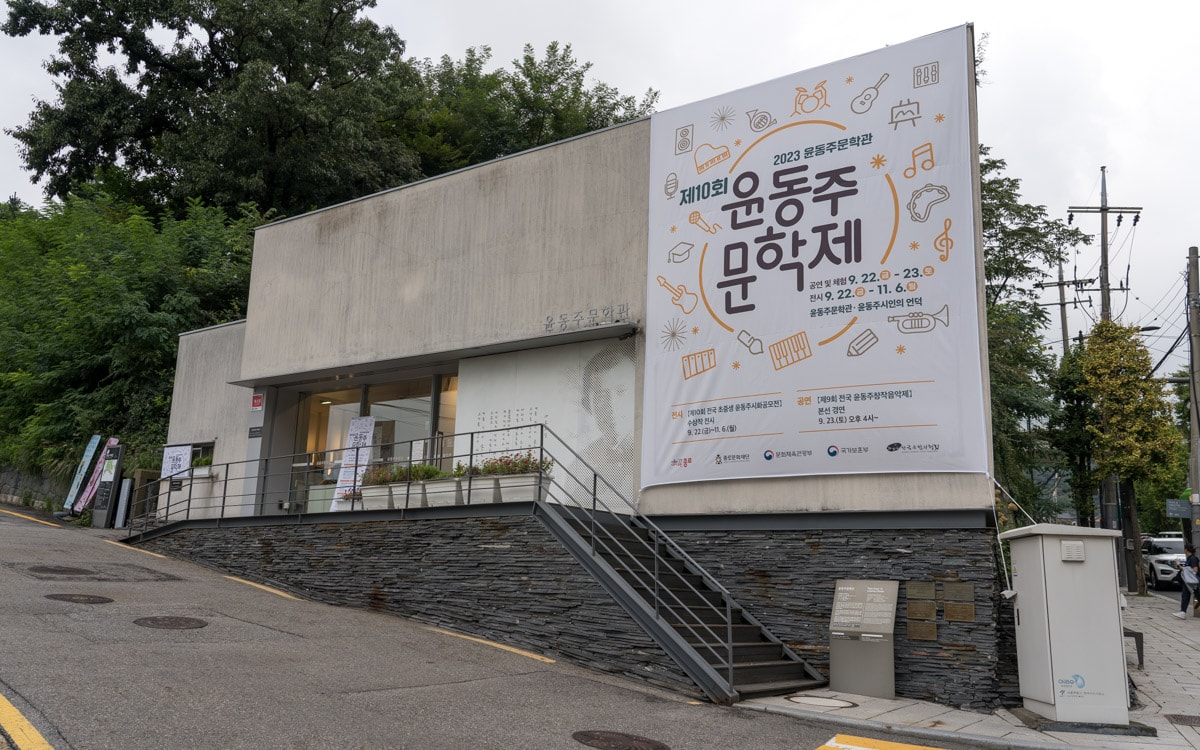
A road and a motel adjacent to the small pavilion
Today, residences, buildings, and roads surround the small pavilion. While much of the original atmosphere has disappeared with modernization, visitors who walk down to the stream and the pavilion might forget for just a moment that they are in a metropolis as big as Seoul.
Hours and Admission
Hours
Daily Open 24 hours
Admission
Free
Getting to Segeomjeong Pavilion
Jongno-gu, Seoul, on Hongjecheon Stream near Hongjimun Gate.
Address 244 Segeomjeong-ro, Jongno-gu, Seoul, South Korea 서울특별시 종로구 세검정로 244 View on Google Maps
By subway
Gyeongbokgung Station, Line 3, Exit 3
Take bus 1020 toward Jeongneung to Segeomjeong, Segeomjeong Catholic Church. Walk toward Hongjecheon Stream and take the steps down to the pavilion.
By bus
Segeomjeong, Segeomjeong Catholic Church stop
Bus 1020 stops here. Walk toward Hongjecheon Stream and take the steps down to the pavilion.
Airalo is a popular eSIM provider used by travelers around the world. It offers South Korea data plans you can buy before you arrive. Check that your phone is compatible first.