
Located on a peaceful pond, Gyeonghoeru Pavilion treats visitors to some of the most beautiful views at Gyeongbokgung Palace. The pavilion was once used for entertainment when important foreign visitors visited the palace.
The name Gyeonghoeru is a reference to the king and how he can succeed and be a great leader when he is surrounded by the right people.
A two-story pavilion was built here in 1412 during the reign of King Taejong. About 60 years later, during the reign of King Seongjong (1469-1494), the pavilion began to tilt. It was decided that the pavilion would have to be rebuilt.
Gyeonghoeru Pavilion was burned down by the Japanese in 1592 during the Imjin War.
The current pavilion was built in 1867 during the reign of King Gojong. The pavilion is one of the few structures at the palace that survived the Japanese occupation of Korea from 1910 to the end of World War II in 1945.
A stone wall once surrounded the pond but was removed during the occupation. Part of this wall was restored between 2004 and 2005.

Gyeonghoeru is one of the largest elevated pavilions in Korea by floor area. The location offered great views of Mount Inwangsan and the surrounding palace grounds.
The wooden structure was built with two floors. The first floor consists of 48 stone columns that symbolize yearly astronomical events.
The second floor consists of bays set at different levels. The highest-ranking officials sat closest to the center. The center bays symbolize heaven, earth, and man. Around them are 12 bays that symbolize each month of the year. Around them are 24 more bays that symbolize the 24 seasonal subdivisions.

The railings of the bridge leading to the pavilion feature stone animals. These sculptures were created to keep evil spirits away.
The man-made pond that surrounds the pavilion was used by royalty for boating in the summer months. Gyeonghoeru was originally surrounded by a gate that allowed access to only the highest officials and the king.
The architectural design of Gyeonghoeru symbolizes heaven, earth, man, and time.
Gyeonghoeru Pavilion is located to the west of Gangnyeongjeon Hall, the residence of the king.
The pavilion has been designated National Treasure Number 224.

Visiting Gyeonghoeru Pavilion
You can view the pavilion from the palace grounds during a regular visit to Gyeongbokgung Palace. Going inside requires a reservation for a special tour, when tours are offered.
Hours and Admission
Hours
Regular Gyeongbokgung Palace hours apply to viewing the pavilion from the grounds.
March–May and September–October
9:00 AM–6:00 PM
June–August
9:00 AM–6:30 PM
November–February
9:00 AM–5:00 PM
Last admission is one hour before closing.
Closed Tuesdays. If Tuesday is a public holiday or substitute holiday, the palace opens and closes on the following non-holiday day.
On November 19, 2026, the palace opens at 10:00 AM for the national college entrance examination. Closing time remains 5:00 PM.
Admission
Viewing the pavilion from the grounds is included with admission to Gyeongbokgung Palace.
International visitors aged 19–64: 3,000 won.
Ages 18 and under and 65 and over: free with valid ID.
Visitors wearing hanbok enter free.
Interior entry requires a reservation for a special tour, when tours are offered.
Getting to Gyeonghoeru Pavilion
Jongno-gu, Seoul, inside Gyeongbokgung Palace, west of Gangnyeongjeon Hall.
Address
Gyeonghoeru Pavilion (Korean: 경회루)
Gyeongbokgung Palace, 161 Sajik-ro, Jongno-gu, Seoul, South Korea
서울특별시 종로구 사직로 161 경복궁 경회루
By subway
Gyeongbokgung Station, Line 3, Exit 5
Follow the signs to the palace entrance. Inside the palace, follow the signs to Gyeonghoeru, west of Gangnyeongjeon Hall.
By bus
Gyeongbokgung stop (경복궁)
Buses 109, 171, 272, 601, 606, 710, 1020, and 7025. Walk to Gwanghwamun Gate and enter the palace, then follow the signs to Gyeonghoeru, west of Gangnyeongjeon Hall.
Map of Gyeonghoeru Pavilion
Nearby Sights
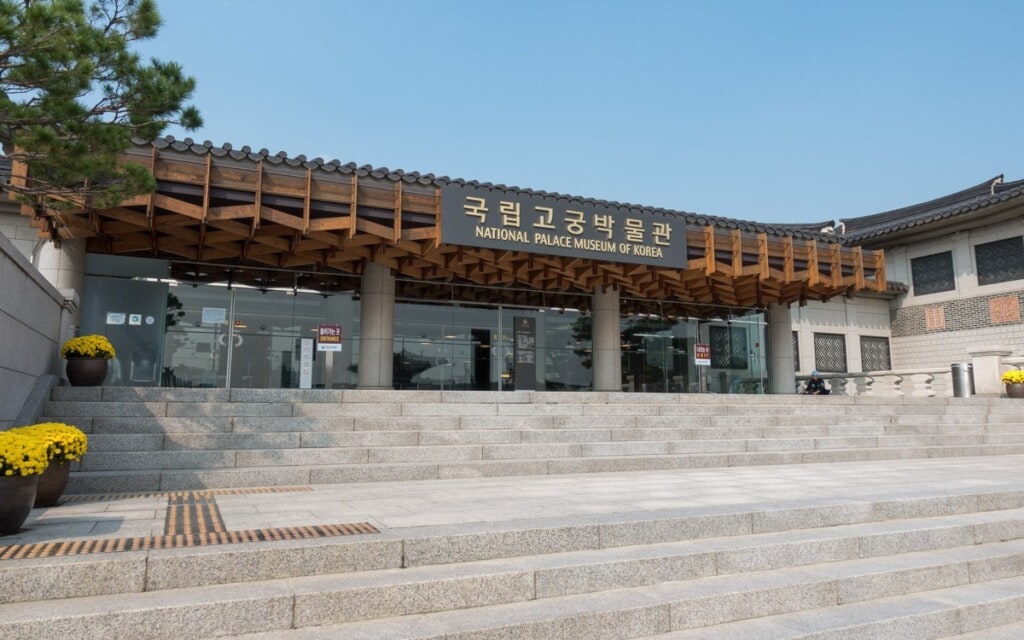
National Palace Museum of Korea
The National Palace Museum of Korea displays artifacts from the Joseon royal court, including paintings, ceremonial objects, and royal possessions. It stands on the grounds of Gyeongbokgung Palace.
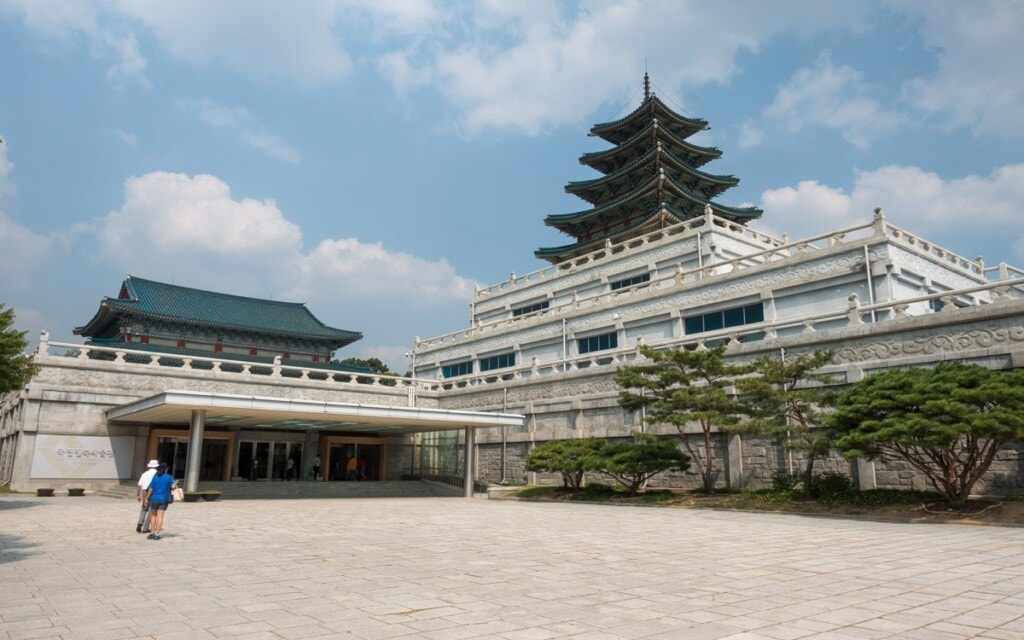
National Folk Museum of Korea
The National Folk Museum of Korea explores everyday Korean life through exhibits on farming, household traditions, and life-cycle rituals. Outdoor displays include traditional buildings and folk objects.
Last Updated on Nov 18, 2026